
GLP-1 medications can be helpful for eligible people, but digestion may change while using them. Some people notice nausea, early fullness, smaller meals, or constipation. This can happen because GLP-1 medications may slow digestion and reduce appetite, which can make it easier to eat less fiber, sip fewer fluids, and move less than usual..
Constipation on GLP-1 medication is not something to ignore or panic about. The safest first step is usually gentle: more fluids, gradual fiber, softer meals, small portions, and medical guidance when symptoms feel strong, unusual, or ongoing.
This guide focuses on GLP-1 constipation relief foods and simple gut-friendly habits. It does not replace advice from a doctor, pharmacist, or registered dietitian. Do not stop, change, or skip medication doses without talking to the prescriber.
For a broader supplement overview, readers can also visit the Best Gut Health Supplements guide.The Best Weight Loss Supplements guide may also help if you are comparing supplements as part of a weight-management routine.
Quick Navigation
ToggleQuick Answer: What Foods Help GLP-1 Constipation?
The best foods for GLP-1 constipation are usually gentle, fiber-rich, water-rich, and easy to tolerate in smaller portions. Good starting options include oats, berries, kiwi, chia seeds, ground flaxseed, cooked vegetables, soups, sweet potatoes, lentils, beans in small amounts, whole grains, and prunes or prune juice in modest portions.
The key is not to add everything at once. A sudden jump in fiber can make bloating, gas, or constipation worse. Fiber works best when it is increased slowly and paired with enough fluid.
Swipe left or right to view the full table on mobile.
| Food Type | Why It May Help | Gentle Way To Start | Watch Out For |
|---|---|---|---|
| Oats | Provide soluble fiber and can be easy on the stomach. | Start with a small bowl of oatmeal or overnight oats. | Large portions may feel too heavy if appetite is low. |
| Kiwi | Often used as a gentle food-first option for regularity. | Try one kiwi with breakfast or as a snack. | Avoid if allergic or not tolerated. |
| Berries | Add fiber, fluid, and antioxidants in a light portion. | Add a small handful to yogurt, oats, or a smoothie. | Too much fruit at once may bother sensitive digestion. |
| Chia or ground flaxseed | Can add fiber to small meals without needing a large portion. | Start with 1 teaspoon mixed into yogurt, oats, or a smoothie. | Needs enough fluid; too much too quickly may cause bloating. |
| Cooked vegetables | May be easier to tolerate than large raw salads. | Try cooked carrots, zucchini, spinach, green beans, or squash. | Cruciferous vegetables may cause gas for some people. |
| Beans or lentils | Provide fiber and plant protein. | Start with 1 to 2 tablespoons added to soup or a bowl. | Large servings may increase gas if the gut is not used to them. |
| Prunes or prune juice | May support bowel movement frequency for some people. | Start small, such as 1 to 2 prunes or a small amount of juice. | Too much may cause cramping, gas, or loose stools. |
Anna’s Note: The best GLP-1 constipation food is not always the highest-fiber food. It is the food your body can tolerate consistently, with enough water and without making nausea or bloating worse.
Why Constipation Can Happen On GLP-1 Medication
Constipation can happen on GLP-1 medication for several reasons. The medication may slow stomach emptying and make a person feel full sooner. Appetite may drop, meals may become smaller, and it may become harder to eat enough fiber-rich foods.
Some people also drink less because they are less hungry, feel nauseous, or forget to sip fluids throughout the day. Others eat more protein but fewer plants. That combination can make bowel movements slower or harder to pass.
Constipation may also become more noticeable during dose changes. If the medication dose increases and appetite drops quickly, food volume, fiber intake, and hydration may all change at the same time.
Swipe left or right to view the full table on mobile.
| Possible Cause | What It Means | Gentle Support Idea |
|---|---|---|
| Slower digestion | Food may move through the digestive system more slowly. | Use smaller meals, soft fiber foods, and medical guidance if symptoms are strong. |
| Lower appetite | Eating less can also mean getting less fiber and fluid from food. | Add small fiber boosters like berries, oats, chia, or cooked vegetables. |
| Less water | Fiber needs fluid to move comfortably through the gut. | Sip water, tea, broth, or other tolerated fluids throughout the day. |
| More protein, fewer plants | Protein is important, but a very low-fiber routine may worsen constipation. | Pair protein with a small fiber food instead of choosing one or the other. |
| Dose changes | Constipation or nausea may become more noticeable when the dose changes. | Track symptoms and discuss persistent or severe side effects with the prescriber. |
This does not mean every person using a GLP-1 medication will become constipated. It means digestion may need more support and attention than before, especially during the first weeks or after dose increases.
Sushi’s Note: When appetite gets quieter, hydration and fiber can get quieter too. A small daily plan helps the gut stay part of the routine.
Readers comparing GLP-1 medications with other weight-loss options may also find the Best Weight Loss Pills guide helpful.
Best GLP-1 Constipation Relief Foods
The best GLP-1 constipation relief foods are usually gentle, easy to portion, and realistic for a smaller appetite. The goal is not to force huge salads or giant fiber bowls. The goal is to add enough fiber and fluid in a way the stomach can tolerate.
Cooked foods may feel easier than raw foods for some people. Soups, oatmeal, soft vegetables, berries, kiwi, chia, flax, lentils, and small portions of beans can all fit depending on tolerance.
If nausea is present, bland and softer options may be easier. If bloating is present, large servings of beans, raw cruciferous vegetables, or too much fiber powder may be too aggressive at first.
Swipe left or right to view the full table on mobile.
| Food | Fiber Style | Gentle Serving Idea | Best Use |
|---|---|---|---|
| Oatmeal | Soluble fiber | Small bowl with berries or ground flaxseed. | Breakfast that adds fiber without a huge portion. |
| Kiwi | Fruit fiber and fluid | One kiwi with yogurt or as a snack. | Gentle regularity support for many routines. |
| Berries | Fruit fiber | Small handful in yogurt, oats, or a smoothie. | Light fiber when appetite is low. |
| Ground flaxseed | Mixed fiber | Start with 1 teaspoon in yogurt or oats. | Small fiber add-on that does not require a large meal. |
| Chia seeds | Gel-forming fiber | Start with 1 teaspoon soaked in yogurt, oats, or smoothie. | Adds fiber, but needs fluid and gradual use. |
| Cooked vegetables | Food-first fiber | Small serving of zucchini, carrots, spinach, squash, or green beans. | Easier option when raw vegetables feel too rough. |
| Lentils or beans | Fiber plus plant protein | Start with 1 to 2 tablespoons in soup or a bowl. | Helpful when tolerated, but easy to overdo. |
| Sweet potato | Starchy fiber | Small baked or mashed portion with protein. | Soft, filling, and easy to pair with meals. |
| Prunes or prune juice | Fruit fiber and natural sorbitol | Start with 1 to 2 prunes or a small splash of prune juice. | Occasional support, but too much may loosen stools. |
| Soup or broth-based meals | Fluid plus gentle food volume | Vegetable soup with lentils, chicken, beans, or whole grains. | Helpful when chewing a large meal feels difficult. |
A useful plate does not need to be huge. A small serving of protein plus one gentle fiber food may be enough to start. For example, Greek yogurt with berries and ground flaxseed, scrambled eggs with cooked spinach, or soup with lentils and vegetables can support fiber without overwhelming the stomach.
Anna’s Tip: If a food causes bloating, it does not mean all fiber is bad. It may mean the portion, timing, or fiber type needs to be gentler.
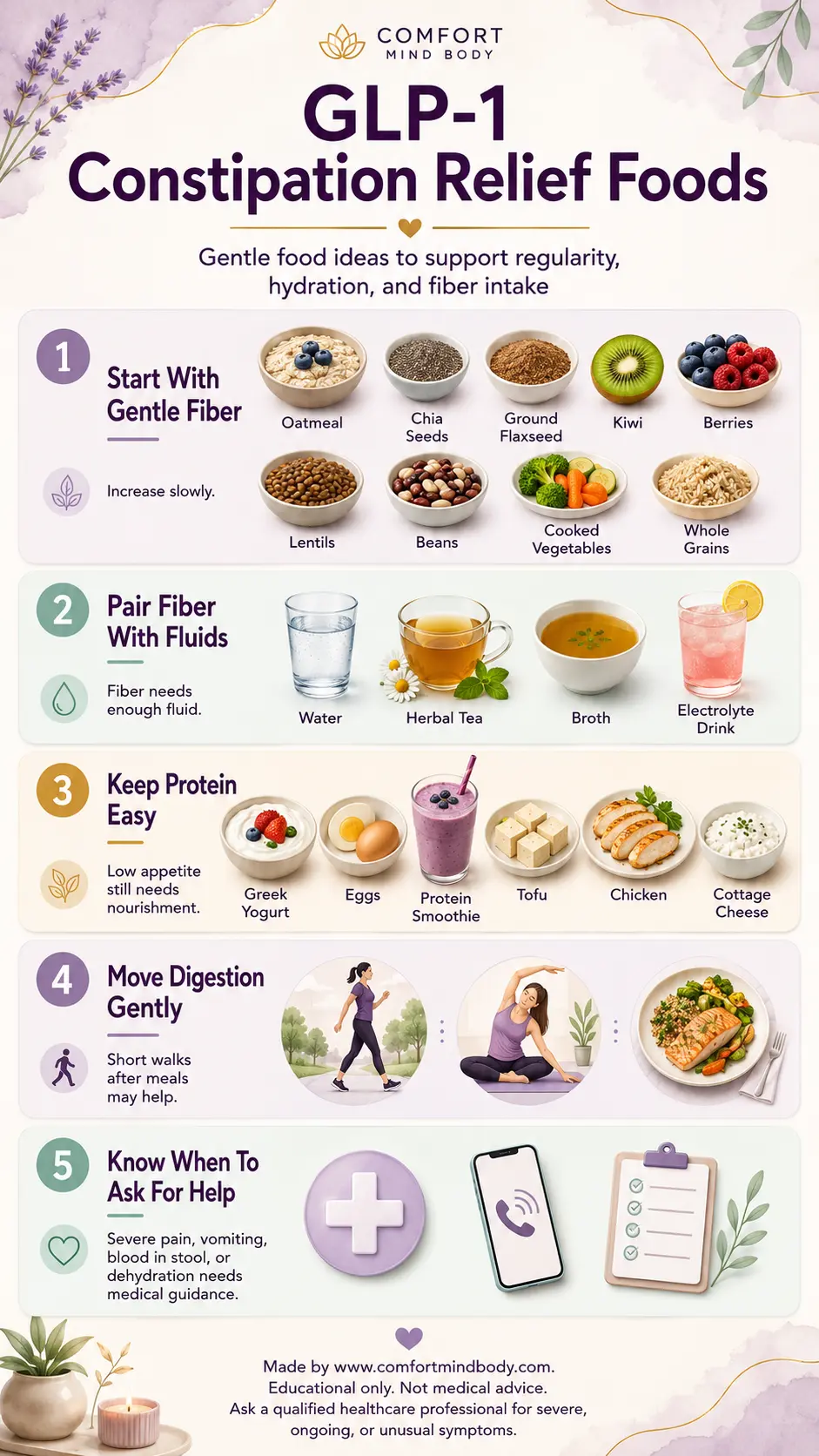
7-Day Gentle Fiber Ramp-Up Plan
A fiber ramp-up plan can help because constipation often gets worse when fiber jumps too quickly. The goal is not to hit a perfect number overnight. The goal is to build a routine the gut can tolerate.
This plan is gentle by design. Each day adds one small action. If bloating, gas, nausea, or constipation gets worse, pause and return to the last step that felt comfortable.
Day 1: Notice Your Starting Point
Before adding anything, notice what is already happening. Track bowel movements, water intake, nausea, bloating, and how much fiber you are already eating.
This helps you avoid guessing. It also gives you useful information if you need to talk with your prescriber or healthcare professional.
Day 2: Add One Soft Fiber Breakfast
Choose one gentle breakfast option. Try oatmeal with berries, Greek yogurt with ground flaxseed, or whole-grain toast with avocado.
Keep the portion small if your appetite is low. A tiny consistent habit is better than a big bowl that makes nausea or fullness worse.
Day 3: Add Cooked Vegetables
Add a small serving of cooked vegetables to one meal. Cooked carrots, zucchini, spinach, squash, green beans, or peeled sweet potato may feel easier than raw salad.
Cooked vegetables can support fiber intake without feeling too rough on the stomach.
Day 4: Add A Tiny Seed Boost
Try 1 teaspoon of ground flaxseed or soaked chia in yogurt, oats, or a smoothie. Pair it with water or another tolerated fluid.
Seeds are useful because they add fiber in a small amount of food, but they can cause bloating if the serving jumps too fast.
Day 5: Try A Small Bean Or Lentil Add-On
Add 1 to 2 tablespoons of lentils or beans to soup, a bowl, or a soft meal. This is enough to test tolerance without overwhelming digestion.
If beans usually cause gas, start smaller or skip this step for now.
Day 6: Build A Soup Or Soft Bowl
Create one soft, gut-friendly meal with fluid, protein, and fiber. Examples include chicken vegetable soup, lentil soup, turkey chili with beans in a small portion, or a soft bowl with rice, cooked vegetables, and protein.
This can be helpful when appetite is low because soup adds fluid and food volume together.
Day 7: Review What Helped
Look back at the week. Which foods felt easiest? Which caused gas, nausea, or bloating? Which helped bowel movements feel more regular?
Keep the two or three habits that worked best. Do not force the steps that made symptoms worse.
Free Gut Health Checklist
Add Fiber Gently In 7 Days
Want to support digestion without overwhelming your gut? Download the 7-Day Gentle Fiber Ramp-Up Checklist for simple daily steps, fiber-friendly food ideas, hydration reminders, and safety notes.
- One small fiber action per day
- Gentle ideas for bloating-sensitive routines
- Quick reminders for when to pause and ask first
Educational only. Not medical advice. Ask a qualified professional for severe, ongoing, or unusual symptoms.
Sushi’s Note: The gut usually prefers a staircase, not a jump. One tiny step that works is better than a perfect plan that feels awful.
Protein + Fiber When Appetite Is Low
GLP-1 medications can make appetite much quieter. That can be helpful for weight management, but it can also make it harder to eat enough protein, fiber, and fluid. If meals become too small or too repetitive, constipation may become more likely.
Many people focus on protein first, which makes sense. Protein helps support muscle, fullness, and healthy weight management. But protein without fiber can leave digestion feeling slower for some people.
The goal is not to force large meals. The goal is to pair protein with small, tolerable fiber foods.
Swipe left or right to view the full table on mobile.
| Small Meal Idea | Protein Source | Fiber Add-On | Why It Works |
|---|---|---|---|
| Greek yogurt bowl | Greek yogurt | Berries and ground flaxseed | Soft, simple, and easy to portion. |
| Protein smoothie | Protein powder or Greek yogurt | Chia, berries, spinach, or oats | Helpful when chewing a full meal feels difficult. |
| Eggs with cooked vegetables | Eggs | Spinach, zucchini, peppers, or avocado | Adds fiber and nutrients without a huge plate. |
| Soup with protein | Chicken, turkey, tofu, beans, or lentils | Vegetables, beans, lentils, or barley | Adds fluid, fiber, and protein together. |
| Tuna or chicken toast | Tuna, chicken, or cottage cheese | Whole-grain toast, avocado, or cucumber | Small but balanced when appetite is limited. |
If even small meals feel hard, a registered dietitian or healthcare professional can help create a plan that protects nutrition while respecting appetite changes. This matters because rapid under-eating can make fatigue, constipation, and muscle loss more likely.
For broader support with weight management basics, read the Healthy Weight Loss Guide. For supplement comparisons, the Best Weight Loss Supplements guide may help.
Hydration And Electrolytes For GLP-1 Constipation
Fiber needs fluid. When appetite is lower, thirst cues and drinking habits may change too. Some people sip less during the day because they feel full, nauseous, or simply out of their old routine.
This can make constipation worse. Even a good fiber plan may backfire if there is not enough fluid to help stool move comfortably.
Hydration does not have to mean forcing huge amounts of water at once. Small sips throughout the day may feel easier, especially if nausea or fullness is present.
Swipe left or right to view the full table on mobile.
| Hydration Option | When It May Help | What To Watch |
|---|---|---|
| Water | Best basic option for daily hydration. | Sip steadily instead of chugging if fullness is an issue. |
| Herbal tea | Warm fluids may feel soothing when appetite is low. | Avoid stimulant or laxative-style “detox” teas unless medically guided. |
| Broth or soup | Adds fluid, sodium, warmth, and gentle food volume. | Check sodium needs if blood pressure, kidney disease, or heart concerns apply. |
| Low-sugar electrolyte drink | May help when intake is low, sweating is high, or vomiting/diarrhea has occurred. | Ask first with kidney disease, heart disease, blood pressure issues, or fluid restrictions. |
| Water-rich foods | Adds fluid through foods when drinking feels difficult. | Try melon, berries, cucumber, oranges, soup, or cooked vegetables if tolerated. |
Electrolytes may be useful for some people, but they are not automatically needed for everyone. They matter more when fluid intake is low, sweating is high, vomiting or diarrhea happens, or a clinician recommends them.
For drink-focused options, the Best Drinkable Supplements guide can help compare hydration, protein drinks, fiber drinks, and wellness drinks more carefully.
Anna’s Tip: Hydration does not have to be dramatic. A glass nearby, a warm tea, or a broth-based meal can make the fiber plan easier to tolerate.
For drinkable options like protein shakes, fiber drinks, electrolytes, and green tea, see the Best Drinkable Supplements guide.
Foods And Habits That May Make Constipation Worse
When constipation happens on a GLP-1 medication, it is natural to look for one food or supplement that fixes everything. But sometimes the bigger issue is the pattern around meals, fluids, movement, and fiber timing.
Some habits may make constipation worse even when the overall weight-loss routine looks “healthy.” Very low-carb meals, high-protein shakes without fiber, too little water, skipping meals, and sudden fiber powder use can all backfire.
The goal is not perfection. It is to notice which patterns make digestion feel slower, harder, or more uncomfortable.
Swipe left or right to view the full table on mobile.
| Pattern | Why It May Worsen Constipation | Gentler Swap |
|---|---|---|
| Protein shakes with no fiber | Protein helps, but low-fiber routines may slow bowel habits. | Add berries, chia, flax, oats, or pair with a fiber-rich snack. |
| Very low-carb, low-plant meals | Fewer grains, beans, fruit, and vegetables can mean less fiber. | Add cooked vegetables, berries, lentils, chia, or small whole-grain portions. |
| Skipping meals all day | Less food volume may reduce bowel movement stimulation. | Use small meals, soup, yogurt bowls, smoothies, or soft protein-fiber pairings. |
| Low fluid intake | Fiber needs fluid to move comfortably. | Sip water, tea, broth, or other tolerated fluids throughout the day. |
| Sudden high fiber jump | Too much too fast may increase gas, bloating, or constipation. | Increase fiber slowly over several days or weeks. |
| Detox teas or harsh laxative products | May cause cramping, urgency, dehydration, or dependence concerns. | Ask a clinician about safe constipation options instead of using cleanse products. |
| Low movement | Movement can help support normal bowel motility. | Try a short walk after one meal if medically appropriate. |
If constipation started after a medication dose change or becomes hard to manage, the prescriber should know. Food and hydration can help some people, but medication side effects deserve proper support.
Sushi’s Note: Sometimes the problem is not one “bad food.” It is too little water, too little fiber, too little movement, and too much pressure all at once.
If eating feels rushed, stressful, or uncomfortable while appetite is lower, the Mindful Eating For Weight Loss guide may help.
Fiber Supplements On GLP-1: What To Know
Food-first fiber is often the gentlest place to start, but some people may still consider a fiber supplement while using a GLP-1 medication. This should be done carefully because fiber supplements can change stool bulk, fullness, bloating, and medication timing.
A fiber supplement should not be added aggressively. Starting with a full dose may cause gas, cramping, nausea, or constipation that feels worse. A smaller starting amount is usually easier to tolerate.
People taking prescription medications should ask a pharmacist or healthcare professional how to space fiber. This matters because some fiber supplements may affect how medications are absorbed if taken too close together.
Swipe left or right to view the full table on mobile.
| Fiber Supplement | Why People Use It | GLP-1 Caution |
|---|---|---|
| Psyllium | Regularity, stool bulk, and fullness support. | Needs enough fluid and may need spacing from medications. |
| PHGG / Sunfiber | Gentler fiber support for some people. | Still needs gradual use and tolerance tracking. |
| Methylcellulose | Non-fermentable fiber option some people use for regularity. | Ask about timing, hydration, and whether it fits the constipation pattern. |
| Wheat dextrin | Easy-to-mix fiber for drinks or soft foods. | May not be enough for everyone; check gluten sensitivity needs and tolerance. |
| Glucomannan | Fullness and fiber support. | Requires plenty of fluid and extra caution with swallowing issues, nausea, or digestive narrowing. |
Fiber supplements may help some people, but they are not automatically better than food. They also should not be stacked with multiple constipation products unless a clinician recommends it.
For a wider comparison of fiber, probiotics, enzymes, and digestive support, read the Best Gut Health Supplements guide.
Anna’s Safety Note: Fiber can be helpful, but it is still active in the body. If it makes constipation, nausea, bloating, or pain worse, pause and ask for guidance.
For a wider safety-first supplement framework, read the Best Weight Loss Supplements guide.
Optional GLP-1 Constipation Support Products To Compare
Some readers may want simple products to compare while working on fiber, hydration, protein, and bowel regularity during GLP-1 use. These options are not cures for constipation, and they should not replace medical guidance when symptoms are severe, ongoing, or unusual.
The safest approach is to keep the product purpose clear. Fiber may support stool bulk and regularity. Electrolytes may support hydration. Protein shakes may help when appetite is low. Food-first fiber can help build a steadier routine without relying only on powders or capsules.
Swipe left or right to view the full table on mobile.
| Category | Why Compare It | Careful Product Examples | Safety Note |
|---|---|---|---|
| Psyllium fiber | May support stool bulk, regularity, and fullness when used with enough water. | Compare psyllium fiber | Increase slowly. Ask first with swallowing issues, bowel narrowing, severe constipation, or medication timing concerns. |
| PHGG / Sunfiber | A gentler fiber option for some people who are sensitive to larger fiber jumps. | Compare Sunfiber / PHGG | Tolerance still varies. Start small and watch for gas, bloating, or stool changes. |
| Benefiber / wheat dextrin | May fit readers looking for a mild, mixable fiber option. | Compare Benefiber | Still needs gradual use and enough fluids. Ask a professional if symptoms are persistent. |
| Electrolytes | May support hydration when appetite is low, fluids are inconsistent, or nausea affects intake. | Compare Liquid I.V. or Compare Ultima | Check sodium, sugar, and medical fit, especially with blood pressure, kidney, heart, or fluid restrictions. |
| Protein shakes | May help maintain protein intake when GLP-1 appetite changes make full meals harder. | Compare Orgain or Compare Premier Protein | Protein alone does not fix constipation. Pair with fluids, fiber, and enough total food. |
| Food-first fiber | May support regularity while adding nutrients, texture, and meal satisfaction. | Chia, ground flax, oats, kiwi, berries, lentils, beans, cooked vegetables, and whole grains. | Add slowly. Big sudden fiber increases may worsen gas, bloating, or constipation. |
For a wider comparison of fiber drinks, protein shakes, electrolytes, and drinkable wellness products, readers can visit the Best Drinkable Supplements guide.
Affiliate note: Some links above may be affiliate links, which means Comfort Mind Body may earn a small commission at no extra cost to the reader. Product mentions are for comparison only and should not replace medical advice.
Anna’s Tip: For GLP-1 constipation, the goal is not to buy the strongest product. The goal is to build a gentle routine the body can tolerate: enough fluids, enough food, gradual fiber, simple movement, and medical support when symptoms feel serious.
What Not To Do For GLP-1 Constipation
GLP-1 constipation can feel frustrating, especially when appetite is already lower and meals feel different. Still, the wrong fix can make the situation worse.
The safest approach is not to panic, stack products, or force a huge amount of fiber overnight. Constipation support should be gentle, consistent, and guided when symptoms are strong or unusual.
Avoid using harsh detox products, laxative teas, or extreme “cleanse” plans as a main strategy. They may cause cramping, urgent diarrhea, dehydration, electrolyte problems, or rebound constipation. They also do not solve the reason constipation is happening.
Do not stop, skip, or change GLP-1 medication doses without speaking with the prescriber. If constipation is persistent, painful, or severe, the prescriber needs to know so the plan can be adjusted safely.
Swipe left or right to view the full table on mobile.
| Avoid This | Why It Can Backfire | Safer Direction |
|---|---|---|
| Doubling fiber overnight | A sudden jump may cause gas, bloating, cramping, or worse constipation. | Increase fiber slowly and pair it with enough fluid. |
| Using detox teas as a main plan | May cause cramps, diarrhea, dehydration, or rebound constipation. | Ask a clinician about safer constipation support if needed. |
| Stacking laxatives, fiber, and supplements | Too many products at once can make side effects harder to understand. | Use one clear strategy and ask a healthcare professional if symptoms persist. |
| Ignoring severe pain or vomiting | These may signal something more serious than simple constipation. | Seek medical guidance promptly. |
| Changing medication dose alone | Dose changes should be handled by the prescriber. | Contact the prescribing clinician about side effects. |
| Treating constipation as harmless forever | Persistent constipation can become more uncomfortable or complicated. | Track symptoms and ask for help if basic steps are not working. |
Sushi’s Note: Stronger is not always safer. Constipation support works best when it is steady enough for the body to trust.
When To Call A Doctor About GLP-1 Constipation
Food, fiber, hydration, and gentle movement may help mild constipation for some people. However, some symptoms should not be handled with home strategies alone.
A healthcare professional should be contacted if constipation is severe, worsening, painful, or not improving with basic steps. Medical guidance is also important if there are other symptoms such as vomiting, fever, dehydration, blood in stool, or severe abdominal pain.
This matters even more for people using prescription medication. GLP-1 side effects should be discussed with the prescriber, especially if they affect eating, hydration, bowel habits, or daily comfort.
Swipe left or right to view the full table on mobile.
| Call A Healthcare Professional If... | Why It Matters |
|---|---|
| Constipation is severe, worsening, or not improving. | The plan may need medical adjustment or safer constipation support. |
| There is severe or worsening abdominal pain. | Strong pain may need prompt medical evaluation. |
| There is vomiting or inability to keep fluids down. | Fluid loss can increase dehydration risk and may require care. |
| There is blood in stool or black stools. | Bleeding signs should not be managed with supplements or diet alone. |
| There is fever, severe weakness, dizziness, or dehydration signs. | These symptoms may need medical attention. |
| The person cannot pass stool or gas. | This can be a serious warning sign and should be evaluated promptly. |
| There is pregnancy, kidney disease, diabetes medication use, or multiple medications. | Constipation support, hydration, and medication timing may need personalized guidance. |
Do not feel embarrassed to bring up constipation. It is a real side effect and a real quality-of-life issue. The prescriber can help decide whether the food plan, hydration, medication timing, constipation treatment, or dose schedule needs review.
Anna’s Safety Note: Pain, vomiting, blood, dehydration, or symptoms that keep getting worse are not “normal adjustment.” Those are reasons to get help.
For the bigger weight-management foundation beyond GLP-1 side effects, start with the Healthy Weight Loss Guide.
Final Thoughts
GLP-1 constipation relief usually works best when the plan is steady, not extreme. The goal is to support digestion without overwhelming a stomach that may already feel full, slow, or sensitive.
For many people, the best starting point is simple: sip fluids, add fiber slowly, choose softer fiber-rich foods, pair protein with plants, move gently after meals, and talk to the prescriber if symptoms are persistent or severe.
Foods like oats, kiwi, berries, cooked vegetables, chia, ground flaxseed, lentils, beans in small portions, sweet potatoes, soups, and prunes may help some people. But the right choice depends on tolerance. If a food makes nausea, gas, bloating, or constipation worse, the portion or timing may need to change.
A GLP-1 medication plan should also protect nutrition. Very low intake, low fiber, low fluids, and constant nausea can make constipation harder to manage. If eating becomes difficult, a registered dietitian or healthcare professional can help create a safer plan.
The best constipation plan is not the most aggressive one. It is the one the body can repeat comfortably.
Anna’s Reminder: Relief should feel supportive, not punishing. Small meals, gentle fiber, steady fluids, and the right medical guidance can make the routine safer and easier to live with.
Frequently Asked Questions
What foods help constipation on GLP-1 medication?
Gentle fiber-rich and water-rich foods may help some people. Good starting options include oats, kiwi, berries, chia seeds, ground flaxseed, cooked vegetables, lentils, beans in small amounts, sweet potatoes, soups, and prunes or prune juice in modest portions. Fiber should be increased gradually and paired with enough fluid.
Does semaglutide cause constipation?
Constipation is listed among common gastrointestinal side effects for semaglutide products such as Wegovy. A prescriber should be contacted if constipation is severe, persistent, painful, or paired with vomiting, dehydration, or severe abdominal symptoms.
Does tirzepatide cause constipation?
Constipation is listed among common gastrointestinal side effects for tirzepatide products such as Zepbound. Anyone with worsening constipation, severe abdominal pain, vomiting, or dehydration signs should contact a healthcare professional.
What is the best fiber for GLP-1 constipation?
The best fiber depends on tolerance. Food-first options such as oats, berries, kiwi, cooked vegetables, chia, and ground flaxseed may be easier to start with. Some people use psyllium, PHGG, methylcellulose, or wheat dextrin, but fiber supplements should be started slowly and paired with enough fluid.
Can I take psyllium while on GLP-1 medication?
Some people may use psyllium for regularity, but it needs enough water and may need spacing from medications. Anyone taking prescription medication should ask a pharmacist or healthcare professional how to time psyllium safely.
Should I use laxatives for GLP-1 constipation?
Laxatives should be used carefully and ideally with guidance, especially if constipation is persistent, painful, or paired with nausea or vomiting. Avoid relying on detox teas or harsh cleanse products as a main strategy.
Are prunes good for GLP-1 constipation?
Prunes or small amounts of prune juice may help some people with constipation, but they should be started modestly. Too much may cause gas, cramping, or loose stools, especially when digestion already feels sensitive.
How much water should I drink with fiber?
Fluid needs vary by body size, activity, climate, medical conditions, and medication use. Fiber generally works better with steady fluids. People with kidney disease, heart disease, fluid restrictions, vomiting, diarrhea, or dehydration risk should ask a healthcare professional for personalized guidance.
What foods should I avoid if constipated on GLP-1?
It may help to limit patterns that worsen constipation, such as very low-fiber meals, protein shakes without fiber, skipping meals, low fluid intake, large amounts of cheese or heavy foods, harsh detox teas, and sudden high-dose fiber supplements. Tolerance varies, so tracking symptoms can help.
When should I call a doctor about GLP-1 constipation?
Call a healthcare professional if constipation is severe, worsening, or not improving, or if there is severe abdominal pain, vomiting, inability to keep fluids down, blood in stool, black stools, fever, dehydration signs, severe weakness, or inability to pass stool or gas.
Sources And Safety Notes
This guide is educational and is not a substitute for medical advice, diagnosis, or treatment. GLP-1 medications, constipation symptoms, fiber supplements, hydration needs, electrolyte use, and digestive side effects can affect people differently based on age, health history, medications, pregnancy status, kidney health, heart health, diabetes care, hydration, diet, and current symptoms.
Do not stop, skip, increase, decrease, or change GLP-1 medication doses without speaking with the prescribing clinician. If constipation is severe, painful, persistent, or paired with vomiting, dehydration, blood in stool, fever, severe weakness, or inability to pass stool or gas, seek medical guidance promptly.
Fiber should usually be increased gradually and paired with enough fluid. People taking prescription medications should ask a pharmacist or healthcare professional about timing fiber supplements safely.
Affiliate And Medical Disclosure
This article is for educational and informational purposes only. It is not medical advice and should not replace guidance from a doctor, registered dietitian, pharmacist, or qualified healthcare professional.
Some links on Comfort Mind Body may be affiliate links. This means the site may earn a small commission if a purchase is made through certain links, at no extra cost to the reader.
Affiliate partnerships do not determine safety guidance. GLP-1 digestive support, fiber supplements, protein products, hydration products, and wellness tools should be compared by label transparency, realistic claims, possible side effects, medication cautions, refund terms, and whether the product fits a healthy routine.
Helpful References
- Wegovy Prescribing Information
- Zepbound Prescribing Information
- MedlinePlus: Semaglutide Injection
- MedlinePlus: Tirzepatide Injection
- NIDDK: Eating, Diet, And Nutrition For Constipation
- NIDDK: Treatment For Constipation
- MedlinePlus: Constipation
- FDA: Concerns With Unapproved GLP-1 Drugs Used For Weight Loss
- FDA: Information For Consumers Using Dietary Supplements
- FDA: Mixing Medications And Dietary Supplements Can Endanger Your Health