
Welcome to a calmer way to plan Valentine’s Day for him. The day does not need the largest gift, a crowded restaurant, or an elaborate surprise. Instead, a thoughtful plan begins with something he already enjoys and a level of romance that fits the relationship.
This guide sorts ideas by setting, budget, time, energy, and relationship stage. It includes relaxed plans at home, dates outside, inexpensive gestures, first-Valentine options, and long-distance ideas.
Each one also includes a practical check, so the reader can choose one workable plan instead of collecting more possibilities.
Readers who already know they want something to wrap can use the Valentine’s Day gifts for him guide. The ideas below focus on what to do, how to adapt it, and which detail can make the day feel personal.
Quick Navigation
ToggleQuick Answer: How Can You Make Valentine's Day Special for Him?
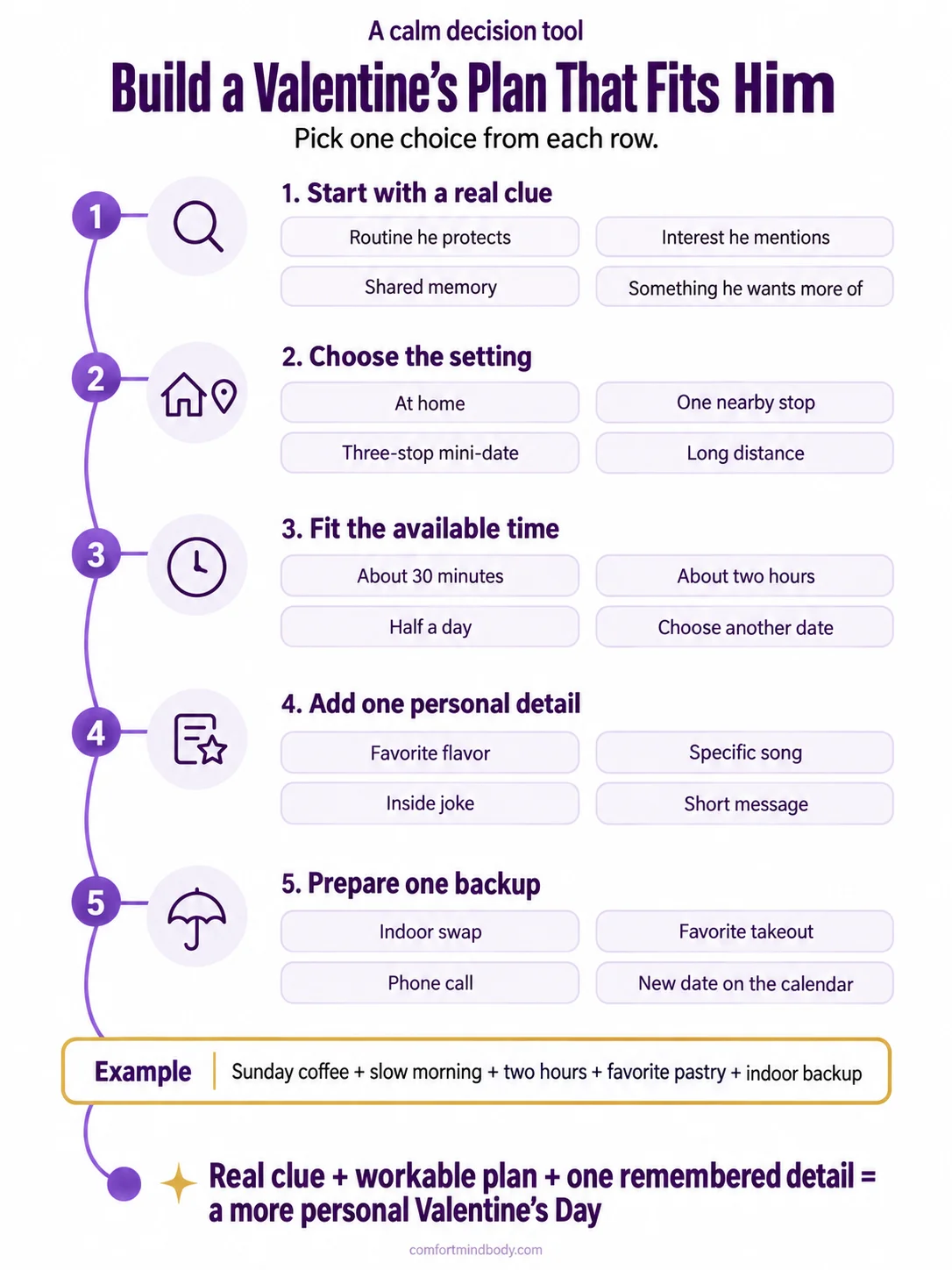
Start with one interest, routine, or shared memory he already values. Then choose an activity that fits the relationship, available time, and comfortable budget.
Finally, add one specific detail, such as a favorite meal, familiar joke, or short message. A flexible plan often feels more considerate because it can adapt to work, weather, energy, or childcare changes.
Anna's Note: Start with something he chooses when nobody is trying to impress anyone. It could be his Sunday coffee, a favorite game, a familiar walk, or the meal he requests twice. That ordinary preference is often a better clue than a generic list of romantic gestures.
Choose a Valentine's Day Plan That Fits
The right starting point changes with the relationship and the day itself. First, find the closest situation below. Then adjust the idea around his preferences instead of treating the row as a fixed formula.
On a smaller screen, swipe across the table to compare every column.
| Situation | Good starting point | Budget and time | Personal detail | Check first |
|---|---|---|---|---|
| First Valentine's Day | Coffee, dessert, or a shared-interest mini-date | Low to moderate; 60–90 minutes | Mention one recent moment the reader enjoyed | Expectations and a comfortable level of romance |
| Established relationship | A familiar favorite plus one new element | Flexible; two hours to a half day | A shared memory, tradition, or current interest | Work, childcare, energy, and reservations |
| At home | A favorite meal plus one focused activity | Low to moderate; one to three hours | Change the setting or re-create a memory | Food preferences, distractions, sound, lighting, and cleanup |
| Small budget | A letter, playlist, walk, game, or favorite treat | A chosen cap; flexible timing | One detail that shows close attention | Transport, ingredients, weather, and hidden costs |
| Long distance | A synchronized meal, activity, or message exchange | Low to moderate; 45–90 minutes | A shared ritual that works across time zones | Connection quality, shipping, time zones, and call fatigue |
| Last minute | Favorite takeout plus one planned activity | Variable; 30 minutes to two hours | One specific note rather than a generic apology | Availability and a backup plan |
| Low energy or sensory comfort | A quiet meal and low-stimulation activity | Low; 30–90 minutes | A favorite comfort routine | Seating, noise, lighting, scents, and the option to stop early |
Build the Plan in Five Simple Steps
Start With an Interest He Already Has
Look for clues in what he chooses without prompting. A regular activity, saved destination, current hobby, or often-mentioned meal can point toward a fitting plan.
Conversations may also reveal whether he wants quiet, novelty, movement, or an uninterrupted evening. Those details are more useful than assumptions about men.
Match the Plan to the Relationship Stage
A first Valentine’s Day often works best with a warm, low-pressure plan. Meanwhile, an established couple may prefer a shared memory or familiar tradition. Long-distance plans need clear timing and a backup.
For established adults seeking a more intimate direction, these romantic and intimate Valentine’s ideas for him keep that choice separate.
Set a Realistic Budget and Time Window
Decide the full budget before choosing the activity. Include transport, tickets, food, tips, parking, childcare, and supplies. Then count preparation and recovery time. A compact plan can feel generous when it does not strain the budget or tomorrow’s schedule.
Add One Personal Detail
One accurate detail is usually enough. Use a song from an early date, a dessert he orders, a private joke, or a short note. The detail should connect the plan to him rather than make the setup larger.
Keep a Flexible Backup
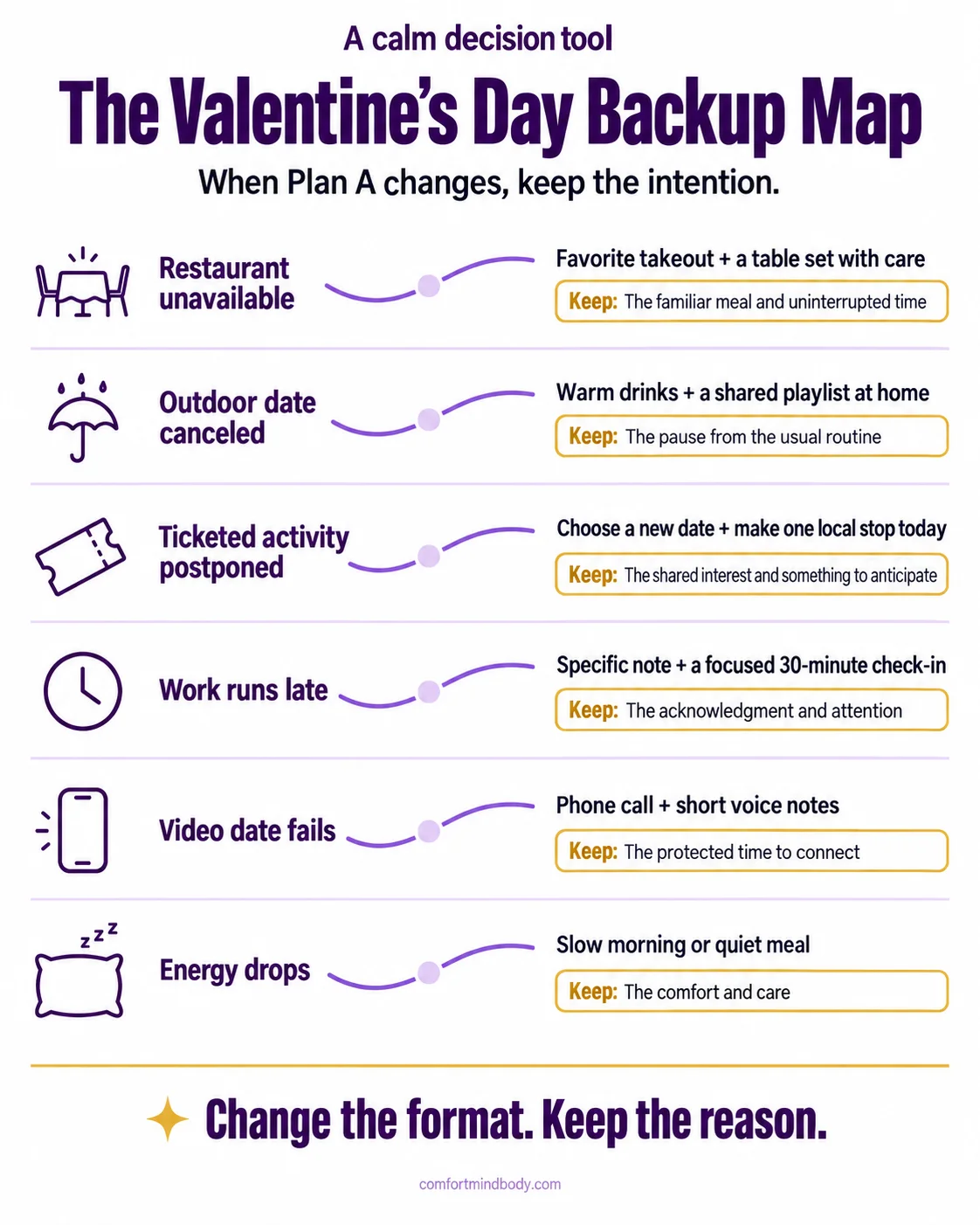
Weather, illness, work, childcare, and energy can change quickly. Therefore, prepare a smaller version with the same intention. A walk can become coffee at home with the planned playlist. A missed reservation can become takeout and a future booking.
At-Home Valentine's Day Ideas for Him
At-home plans work especially well when the setting feels slightly different from an ordinary evening. Clear one distraction, choose one activity, and leave enough space for conversation or rest.
1. Re-create a Favorite Date at Home
Choose one familiar part of an earlier date, such as the meal, music, or dessert. Then adapt it to the current home and schedule. Recall the shared moment without trying to reproduce every detail.
Best fit: An established couple with a shared memory that still feels warm.
Make it personal: Add one photo, song, or menu detail from that day.
Check first: Make sure the memory feels positive and the setup does not create more work than enjoyment.
2. Cook or Order His Favorite Meal and Add One Thoughtful Detail
Begin with a meal he already requests, whether it is cooked or ordered. Next, change one part of the routine. Use the nicer plates, add his preferred dessert, or write a short note. The detail matters more than whether every dish is homemade.
Best fit: A busy couple that wants a comfortable evening at home.
Make it personal: Choose the side, sauce, drink, or dessert he reliably picks.
Check first: Confirm allergies, dietary needs, delivery times, and who will handle cleanup.
3. Turn a Movie or Game Night Into a Focused Date
Choose one film, game, or shared challenge before the evening begins. Then set out a favorite snack and put notifications away. If shared humor suits the couple, the funny Valentine’s ideas guide offers more playful inspiration.
Best fit: Someone who relaxes through stories, games, or light competition.
Make it personal: Pick a title connected to an inside joke, memory, or current interest.
Check first: Agree on the choice, especially when the game is competitive.
4. Set Up a Coffee, Snack, or Dessert Tasting
Select three small options within one category, such as coffees, hot sauces, chocolates, or pastries. Compare them casually, then choose a favorite together. A tasting adds structure without hours of preparation and can accompany another plan.
Best fit: A curious taster who enjoys comparing flavors.
Make it personal: Include one familiar favorite and two options connected to places, memories, or flavors he likes.
Check first: Review allergies, caffeine, alcohol, serving sizes, and any equipment needed.
5. Learn Something Together
Choose a compact tutorial or beginner lesson that can be finished in one sitting. It might involve drawing, cooking, music, photography, or a simple repair. Keep the goal playful, and let both people be beginners.
Best fit: A couple that enjoys experimenting or laughing through imperfect results.
Make it personal: Select a skill connected to a future plan or a subject he has mentioned.
Check first: Confirm the supplies, length, difficulty, mess, and desire to participate.
6. Plan a Slow Morning Around a Familiar Routine
Valentine’s plans do not have to happen at night. Protect a quiet morning for coffee, breakfast, music, or a walk. Prepare one element in advance, so the day does not begin with a complicated schedule. This pace suits early risers and anyone avoiding crowded evening venues.
Best fit: A partner who values calm routines over late reservations.
Make it personal: Use his usual coffee order, breakfast, playlist, or walking route.
Check first: Coordinate wake-up time, work, children, pets, and rest.
Valentine's Day Date Ideas Outside the House
A date outside can still feel relaxed when the route is simple. Before leaving, check hours, reservations, access, travel time, and one indoor alternative.
7. Build a Three-Stop Mini Itinerary
Combine three nearby stops: one familiar favorite, one new place, and one unhurried ending. The route could include coffee, a bookstore, and a scenic overlook. Keeping the stops close reduces travel without creating a tightly timed tour.
Best fit: Someone who enjoys variety and exploring a neighborhood at an easy pace.
Make it personal: Let one stop connect to an interest and another to a shared memory.
Check first: Verify hours, parking, distance, accessibility, reservations, and a place to pause.
8. Book an Activity He Has Mentioned
Return to a real comment about a class, exhibit, show, game, or workshop. If the interest sounded casual, ask before buying nonrefundable tickets. A focused activity can still leave room to talk afterward.
Best fit: A partner who has named something specific he wants to try.
Make it personal: Pair the activity with a short note that recalls when he first mentioned it.
Check first: Confirm timing, skill level, clothing, cancellation terms, access, and total cost.
9. Revisit a Place Connected to a Shared Memory
Choose a café, park, street, or venue tied to a meaningful moment. Its value comes from the story already attached. Add something current afterward, so the date honors the past without trying to reproduce it.
Best fit: An established couple with a location that still carries a positive memory.
Make it personal: Mention one detail from the original day that stayed memorable.
Check first: Confirm the place still exists and fits current mobility and weather needs.
10. Explore a Destination Connected to His Interests
Pick one local place linked to something he follows. Options include a gallery, record store, market, historic site, arcade, garden, or bookstore. Let the interest lead the choice rather than the Valentine’s label.
Best fit: Someone who prefers a focused outing to a formal reservation.
Make it personal: Choose one display, shop, or neighborhood that connects directly to his current curiosity.
Check first: Review hours, admission, crowd levels, accessibility, photography rules, and how long he usually enjoys browsing.
11. Pair a Favorite Casual Meal With One New Stop
Start with a familiar meal. Then add one nearby stop, such as a dessert counter, view, small exhibit, or walk. The known favorite keeps the evening comfortable, while the second stop changes the routine.
Best fit: A partner who likes familiar food but still enjoys one small change of scene.
Make it personal: Let the new stop reflect a recent conversation, favorite flavor, or shared plan.
Check first: Confirm wait times, dietary needs, weather, hours, and any ticket requirement.
12. Choose an Outdoor Plan With a Weather Backup
Plan a walk, picnic, market visit, easy trail, or photo outing that fits the season and energy level. Then name the indoor backup. It can keep the theme through warm drinks or a photo-sorting session.
Best fit: A couple that enjoys fresh air without a formal venue.
Make it personal: Use a route, view, or outdoor ritual he already likes.
Check first: Review the forecast, daylight, trail or sidewalk conditions, transport, safety, access, and local closures.
Inexpensive Ways to Make Valentine's Day Special for Him
Smaller-budget plans work because they are specific. Set the spending cap first, then use memory, attention, or future time as the main value.
13. Write a Specific Letter and Add a Familiar Treat
Write about one quality, memory, or ordinary moment that matters. A few precise lines can feel warmer than borrowed phrases. Add his usual snack or drink if it fits the budget. The treat supports the message.
Best fit: Someone who values direct words or needs no large present.
Make it personal: Name what happened, what it revealed about him, and why it stayed memorable.
Check first: Keep the tone true to the relationship and choose food that fits his preferences.
14. Make a Short Playlist With Personal Notes
Choose five to ten songs and give each one a reason. The notes can reference a trip, joke, quiet morning, or future concert. A shorter list feels deliberate and leaves time to listen together.
Best fit: A partner who connects memories with music or enjoys discovering songs.
Make it personal: Mix shared favorites with one track that says something difficult to phrase.
Check first: Confirm the playlist platform, privacy settings, explicit-content preferences, and whether music feels meaningful to him.
15. Create a Small Memory Envelope
Place a few printed photos, ticket copies, captions, or written memories in one envelope. Keep the collection edited instead of using every image. The format stays easy to store and revisit.
Best fit: An established relationship with memories but limited storage space.
Make it personal: Include one ordinary memory that might otherwise never appear in a photo book.
Check first: Avoid embarrassing private material and irreplaceable original documents.
16. Offer Two Realistic Future-Date Choices
Write two date ideas that can happen within the next month. Include a rough time and cost, then let him choose. The gesture shows intention without locking either person into a date.
Best fit: A busy couple that wants something to anticipate after February 14.
Make it personal: Build each option around a different interest.
Check first: Make sure both choices fit the budget, travel range, season, and available calendar.
First Valentine's Day Ideas for a New Relationship
A first Valentine’s Day can be warm without defining the relationship through one evening. Clear expectations and a manageable plan make room for both people to enjoy it.
17. Choose Coffee or Dessert With a Natural End Time
A short café or dessert date can acknowledge the holiday without pressuring an entire evening. First, choose a place that supports conversation. Then keep any card or treat proportional to the relationship.
Best fit: A newer couple that wants a low-pressure celebration.
Make it personal: Choose a place connected to a recent conversation or a treat he has mentioned.
Check first: Confirm the plan, spending expectations, and existing commitments.
18. Plan a Shared-Interest Mini-Date
Choose one activity both people enjoy, such as browsing records, visiting a market, playing a game, or walking. Keep the plan to one or two stops. Familiar ground lowers pressure while still showing attention.
Best fit: A new relationship with a shared interest but few traditions.
Make it personal: Refer to the conversation or earlier date that revealed the common interest.
Check first: Make the invitation easy to adjust or decline, and avoid a costly nonrefundable booking.
19. Exchange Small Favorites With an Agreed Spending Cap
Agree on a modest amount, then each person chooses one favorite item for the other. It might be a snack, book, plant, or practical object. The shared rule prevents an awkward mismatch.
Best fit: A newer couple that wants a present without a large gesture.
Make it personal: Add one sentence explaining why that specific favorite was chosen.
Check first: Agree on the cap, whether handmade items count, and whether either person prefers no physical gift.
Long-Distance Valentine's Day Ideas for Him
Distance changes the logistics, not the value of the plan. Choose one shared moment, protect the time, and keep technology or delivery problems from becoming the entire evening.
20. Share the Same Meal or Snack During a Call
Choose food both people can find locally, or order separate favorites within an agreed budget. Start the call after setup. A shared flavor gives the conversation a simple sense of occasion.
Best fit: A couple that wants a dinner-date rhythm across distance.
Make it personal: Pick a food tied to an earlier visit, trip, or standing ritual.
Check first: Coordinate time zones, delivery, dietary needs, cost, and camera comfort.
21. Do One Online Activity Together
Pick one film, game, virtual tour, class, or quiz that works on both devices. Test the link and audio, then leave time for conversation. The goal is a shared experience, not a technology demonstration.
Best fit: A couple that prefers an activity to a long video call.
Make it personal: Choose a subject connected to a future trip, shared hobby, or recurring joke.
Check first: Verify region access, accounts, time limits, equipment, captions, and a backup if the platform fails.
22. Send Voice Notes That Lead to a Scheduled Call
Exchange a few short voice notes during the day, then meet for a call at a protected time. The notes can answer one prompt or recall a memory. This pattern connects the day without requiring open schedules.
Best fit: Different time zones, busy workdays, or tiring text threads.
Make it personal: Use one prompt both people can answer before the call.
Check first: Agree on timing, privacy, message length, and whether recorded messages feel comfortable.
23. Plan the Next Visit Without Overpromising
Choose one realistic next step, such as comparing two weekends or setting a travel budget. Pair the planning with a relaxed call. The conversation should create clarity without treating an uncertain date as a promise.
Best fit: A long-distance couple ready to discuss the next visit.
Make it personal: Add one activity each person would like to share when the visit happens.
Check first: Review work, money, travel documents, transport, accommodation, flexibility, and what remains undecided
Last-Minute Valentine's Day Plans That Still Feel Considered
Limited time does not require a large apology or a frantic purchase. Instead, choose one plan that can actually be completed and say why it fits him.
- About 30 minutes: Pick up or prepare a favorite drink or treat. Add one specific note, put the phone away, and make room for an uninterrupted conversation.
- About two hours: Order a familiar meal and choose one at-home activity before the evening begins. Set up only what can be cleaned easily afterward.
- When the schedule fails: Mark February 14 with a sincere message. Then choose a real date within the next week and place it on both calendars.
What to Write in a Valentine's Message for Him
A useful message does three things: names a real moment, explains what it meant, and points toward something the couple can share next. The wording can stay brief.
For a New Relationship
Mention a recent moment and one quality that made it enjoyable. For example: “The way you made that long wait funny stayed with me. The next small adventure is already worth looking forward to.” Warmth fits better than an oversized promise.
For a Husband or Established Partner
Choose an ordinary action that still matters, such as making coffee, checking in after a hard day, or keeping a family routine moving. For example: “The everyday ways you show up still mean a great deal. Tonight is for slowing down together.”
For a Long-Distance Partner
Connect the message to a shared ritual and one realistic future plan. For example: “The evening calls make the distance feel smaller. Choosing the next weekend together will be worth the wait.” Avoid a definite travel promise while dates remain unsettled.
When He Prefers Direct Language
Use one clear sentence without decorative language. For example: “Life feels steadier and more fun with you in it.” A direct message can still be deeply warm. It simply removes wording that does not sound like the person sending it.
Sushi's Note: Romance does not require a marching band. One accurate snack choice and a phone placed face down can do excellent work.
Frequently Asked Questions About Valentine's Day Ideas for Him
How can Valentine's Day feel special for him without spending much?
Choose one detail that shows attention, such as a favorite snack, a specific memory, or time reserved for an activity he enjoys. Set a comfortable cap first. A small plan feels intentional when it reflects him and does not create financial stress. Free local options can work just as well.
Is an experience better than a physical Valentine's gift?
Neither format is automatically better. An experience may suit someone who values time together or avoids clutter. A physical present may fit a clear need or hobby. When both feel appropriate, pair a modest item with a simple shared plan. Use his current preferences as the tie-breaker.
What can a couple do at home that still feels different from an ordinary night?
Change one part of the routine. Choose the activity in advance, prepare a tasting, re-create one detail from an earlier date, or protect a slow morning. Removing distractions can make a familiar room feel more intentional without adding elaborate decorations. Keep setup and cleanup manageable for both people.
What is appropriate for a first Valentine's Day in a new relationship?
A short, warm plan usually leaves room for honest expectations. Coffee, dessert, or a shared-interest activity can work well. Discuss timing and spending before the day, and keep cards or presents proportional to what the relationship already shares. Ask about expectations instead of guessing at them.
How can a long-distance couple celebrate Valentine's Day?
Choose one synchronized moment, such as the same snack, an online activity, or a scheduled call after exchanging voice notes. Confirm time zones and technology early. A backup phone call keeps a platform problem from cancelling the plan. Keep the total screen time comfortable for both people.
What if he says he does not care about Valentine's Day?
Take that preference seriously. A familiar meal, direct note, or ordinary evening with fewer distractions may fit better than decorations or a public surprise. The gesture should respect his comfort instead of testing whether he secretly wanted more. Ask whether any acknowledgment would still feel welcome.
What can be planned at the last minute?
Use what is reliably available: a favorite treat, a familiar meal, one chosen activity, and a specific message. If the day is full, acknowledge it warmly and schedule a realistic date within the next week instead of making an uncertain promise. Confirm availability before announcing the new plan.
Final Thoughts
The most thoughtful Valentine’s plan starts with what he already enjoys. From there, the reader can choose a setting that fits the relationship, schedule, budget, and energy available. One remembered detail can then give the plan its meaning.
That approach leaves room for many good versions of the day. A slow breakfast can suit one couple, while a short first date, neighborhood itinerary, or scheduled long-distance call suits another. The scale matters less than the accuracy of the choice.
Before the day arrives, check the practical details and keep a smaller backup ready. Then let the plan breathe. Conversation, shared attention, and a gesture that sounds like the relationship can carry more warmth than an evening packed with tasks.
May the final plan feel comfortable, specific, and easy for both people to enjoy.
With care,
Anna

