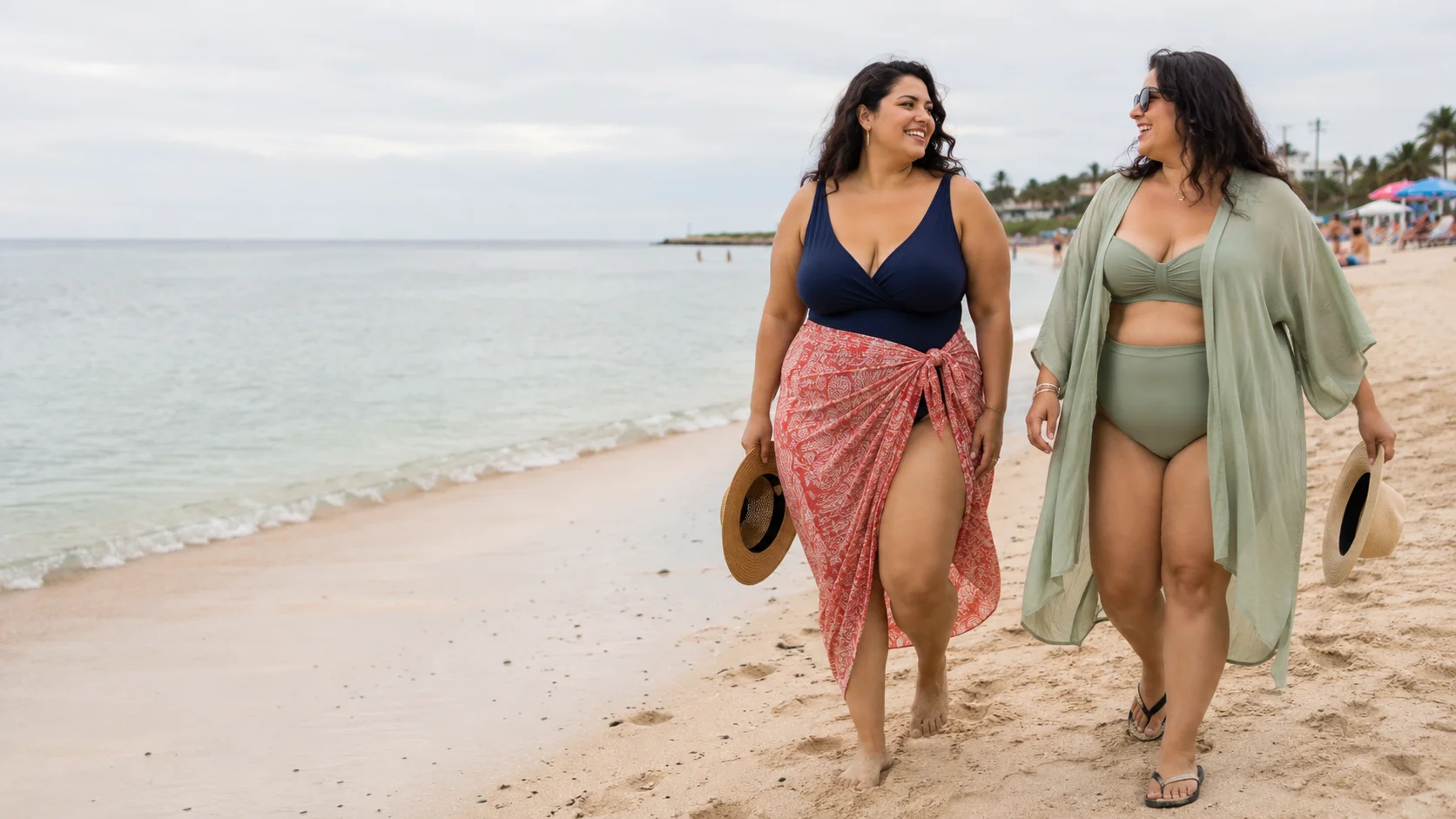
A beach outfit often fails in the first ten minutes after the water. A cover-up that looked airy online may cling to a damp swimsuit. A jumpsuit can turn a quick restroom stop into extra work. Crochet may add visual coverage without providing verified sun protection.
The most useful plus-size beachwear trends solve those transitions. A practical plus-size beach outfit should make it easier to walk back to a hotel, stop for lunch, browse a boardwalk or stay outside longer. That requires more than choosing a fashionable silhouette.
This guide uses five practical questions: Is the swimsuit wet? What kind of coverage is needed? Where is the outfit going next? How easy is the layer to use? Is the size and return risk acceptable? The goal is not more clothing. It is one layer that earns its place in the beach bag.
Quick Answer: The Most Useful Plus-Size Beachwear Trends After Swimming
The most useful plus-size beachwear trends after swimming depend on the next job. A towel handles basic drying. A towelling robe or swim poncho can add hands-free coverage while moving to a changing room. If the swimsuit stays on, practical options include adjustable sarongs, roomy button-front shirts, pull-on pants, simple beach dresses, matching sets and clearly labeled UPF layers.
Start with the next setting. A wrap may be enough for a short walk from the water. Lunch may call for secure coverage and room over damp swimwear. Longer sun exposure calls for a garment with a supported UPF label, not an assumption based on color, opacity or weave. For cold open-water swimming, dry warm clothes matter more than a light resort cover-up. A simple warm-weather formula is one swimsuit, one purposeful layer and shoes suited to the route.
Start With What Happens After the Water
Beachwear is often shown on dry skin in a still photograph. Real use includes wet fabric, sunscreen, sand, sitting, walking, changing and carrying a bag. Those details can change which layer is easiest.
Drying and dressing are separate jobs. Swim England lists a towel as an essential for drying and a towelling robe as a practical poolside cover-up. A robe may make the walk to a changing area easier, but it is not automatically an outfit for lunch. For cold open-water swimming, the priority changes again: the RNLI advises bringing warm clothes for after the swim. A light sarong or resort dress should not be treated as cold-water recovery clothing.
The base swimsuit must work first. If the bust, torso or leg openings already feel unstable, a cover-up cannot repair that fit. Readers who are still choosing the base suit can measure the swimsuit before choosing the layer. Then the beach layer can focus on its own job.
That job may be visual coverage, warmth, a transition into a public setting or supported sun coverage. These are different needs. A garment does not have to do all of them to be useful.
Use the Five-Question Beach Layer Check
Comfort Mind Body uses five questions to narrow the choice before style or products enter the decision.
1. Will the Swimsuit Be Wet or Dry?
A loose layer that works over dry swimwear may behave differently over wet fabric. It may cling, resist sliding over the hips or feel heavier. A model photo cannot prove how a fabric performs when damp.
For a quick pool-to-room walk, an open shirt or adjustable wrap creates fewer contact points. Pull-on pants need enough thigh room and a forgiving waistband. A long dress may provide more visual coverage, but extra fabric can also collect water or sand.
Keep performance claims narrow. Fiber names alone do not prove that an item dries quickly, stays opaque or feels cool. If wet behavior matters, use an exact merchant statement or documented wear evidence. Otherwise, treat it as unknown.
2. Is the Goal Coverage, Warmth or Sun Protection?
Visual coverage changes how exposed an outfit feels. Warmth helps after cool water or in wind. Sun-protective clothing is a separate job.
The American Academy of Dermatology's clothing guidance explains that loose or open weaves provide less UV protection and that dry clothing can protect more than wet clothing. A current UPF label is the clearest garment-specific signal.
Crochet, mesh and lace can still be good fashion layers. They simply should not be described as sun-protective without supporting evidence. If sun is the main concern, begin with the UPF label and the area the garment actually covers.
3. Where Does the Outfit Go Next?
A hotel hallway, beach bar, boardwalk and restaurant create different needs. A sarong may be ideal for a short walk. A button-front shirt or simple dress may transition more easily into lunch. Pants can help for a longer walk, while a co-ord may work when the same pieces need to be worn again away from the beach.
Venue rules vary. No beach layer guarantees entry everywhere. For a planned restaurant, boat or club, checking the venue dress code is more useful than relying on a general label such as resort wear.
4. Is It Easy to Put On, Remove and Walk In?
Closures and proportions matter more than a body-shape rule. A button-front shirt needs room through the bust and upper arms. Pull-on pants need a workable rise, inseam, thigh width and waistband. A wrap needs enough usable width and tie length. A kaftan needs armhole room, hip sweep and a manageable hem.
Changing and restroom use count too. A one-piece romper may look complete but requires more removal than separates. Very long hems can be awkward near wet floors. Several ties or decorative pieces add steps when the goal is a fast transition.
A dry try-on should include reaching, sitting, walking and removing the layer. Keep labels, original packaging and other return protections intact until the decision is made.
5. Is the Exact Size and Return Risk Acceptable?
A store's general plus-size label does not prove that one item has the needed dimensions. Use the chart attached to the exact garment. Look for bust, hip, garment length, inseam and upper-arm measurements when they control the fit.
Return terms matter when an online layer depends on exact bust, upper-arm, rise or length measurements. Final-sale items may be excluded. Some stores deduct return postage or use a shorter window than expected.
Before ordering, save the product page and the policy that applied that day. This creates a clearer record if the item, promotion or return wording changes later.
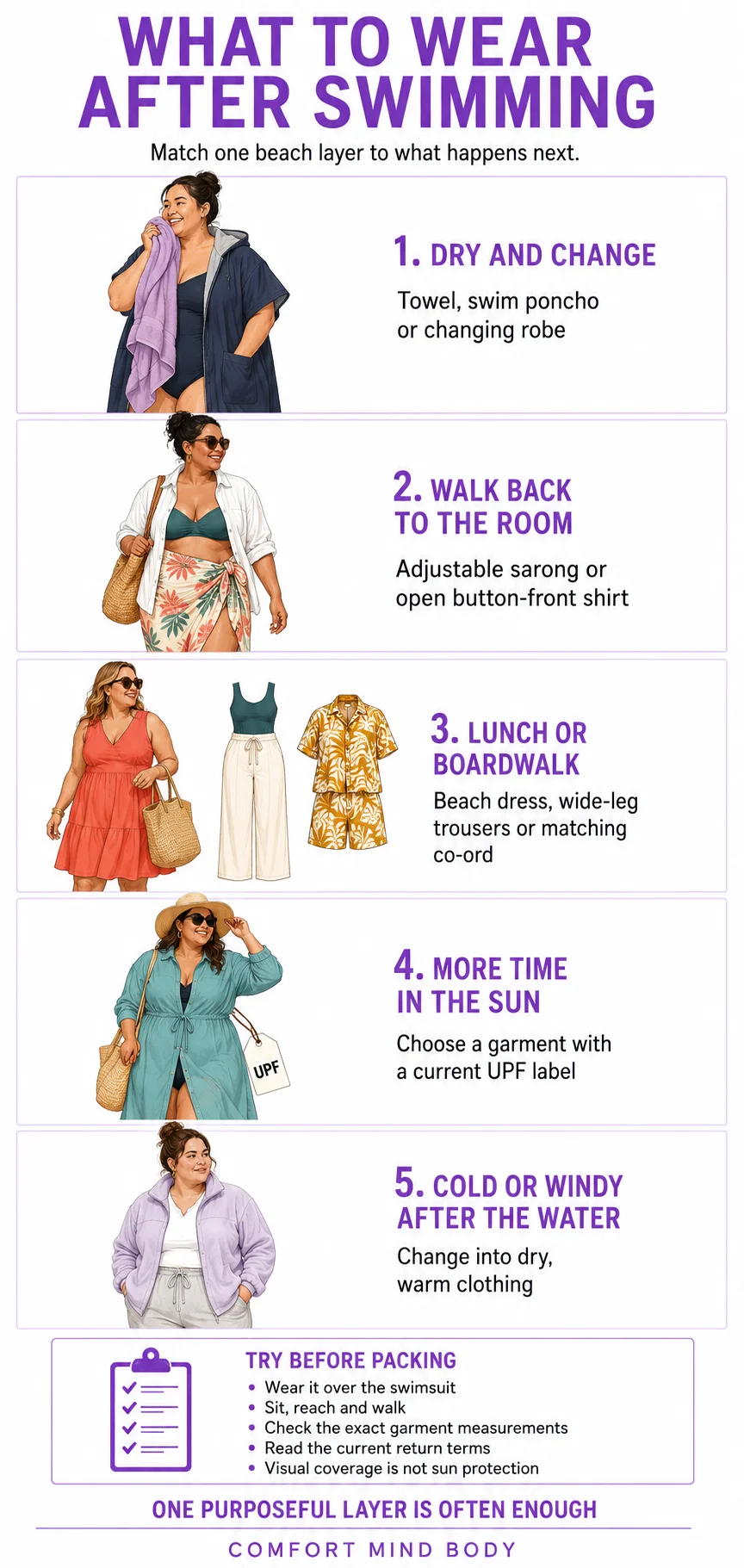
Beach Layer Decision Map
The table compares practical jobs. It does not rank bodies or promise sun protection for clothing without a current label.
Swipe left or right to view the full table on mobile.
| Layer | Best Practical Role | Damp-Skin Caution | Main Fit Point | Changing Ease | Sun Evidence Rule |
|---|---|---|---|---|---|
| Towel, swim poncho or towelling robe | Immediate drying, coverage and changing-room transition | A soaked towel or absorbent lining becomes heavy | Enough room to move the arms and change underneath | High when the opening and length are workable | No UV claim unless the exact item has a current UPF label |
| Button-front shirt | Arms, chest and beach-to-lunch transition | Buttons and fabric may cling when wet | Bust closure and upper-arm room | Often easy when worn open | No UPF claim without a current label |
| Sarong or wrap | Fast, adjustable hip and thigh coverage | A wet knot may be harder to manage | Width, length and tie range | Usually the simplest lower-body option | Visual coverage is not a UV rating |
| Pull-on pants or shorts | Walking, sitting and town transition | Narrow legs can resist damp skin | Rise, inseam, thigh room and waistband | Depends on the waistband | No UPF claim without a current label |
| Kaftan or beach dress | One-piece visual coverage for hotel or lunch | Longer fabric may become wet or cling | Armholes, hip sweep, slits and length | Usually simple if roomy and pull-on | Open weave is not equivalent to UPF |
| Co-ord | Separate sizing and non-swim rewear | Two pieces add packing steps | Each piece needs its own chart | Easier than a jumpsuit for restroom use | Judge each garment separately |
| UPF layer | Supported sun coverage | Heat comfort still needs consideration | Coverage area, closure and exact label | Depends on zip or pull-on construction | Use the current garment label |
Match the Beach Layer to Its Job
Towel, Swim Poncho or Changing Robe
A towel is for drying. A towelling robe or swim poncho combines drying with hands-free coverage and may make the walk to a changing room easier. A changing robe can add privacy, wind protection or warmth, depending on its construction. These pieces answer the immediate post-swim moment; they are not automatically outfits for lunch or a venue.
Check the exact material instead of relying on the word robe. Towelling may absorb water. Fleece may add warmth without working like a towel. A waterproof shell may block wind but still need dry clothing underneath. For a warm hotel pool, a towel and loose dress may be enough. For cold open water, dry warm layers take priority.
Button-Front Shirt or Shirt Dress
An open shirt reduces the need to pull fabric over damp skin. It can cover the arms and chest, then button for a more dressed transition. The useful measurements are bust closure, upper-arm width, shoulder room and length.
Do not assume that an oversized label guarantees room in every area. If the shirt needs to close, use garment measurements rather than the model's styling. A dry backup shirt can also be more practical than asking one damp layer to work through lunch.
Sarong or Wrap Skirt
A wrap is compact and easy to adjust. It works especially well when the main need is hip or thigh coverage for a short route. The key specification is usable fabric, not the words one size.
Check the full width, length and tie range. A small wrap may not overlap securely. A very long tie can drag or loosen. Because a wrap is easy to remove, it can be a better lower-body transition than fitted shorts when the swimsuit is still wet.
Pull-On Pants or Shorts
Pants or shorts can make sitting, walking and moving into town feel straightforward. Wide legs usually create more clearance over damp skin than tapered legs, but exact measurements still decide the outcome.
Review the rise, inseam, thigh room and waistband construction. A drawstring adds adjustment but does not fix a too-short rise. A very wide or long hem may also collect sand. The best length depends on the route, not a universal trend rule.
Kaftan or Beach Dress
A pull-on dress can provide quick visual coverage with one garment. It is useful for a hotel, casual lunch or a short resort stop when the armholes, hip sweep and hem allow easy movement.
The category is broad. Some styles are open knit and meant only as fashion layers. Others are closer to ordinary dresses. For plans fully away from the water, it may be better to choose a summer dress for plans away from the water rather than expecting a sheer cover-up to do two jobs.
Matching Set or Co-Ord
A co-ord can extend a small travel wardrobe. The shirt may work over swimwear, while the pants or shorts can pair with a dry top later. Separate sizing is especially helpful when the upper and lower body need different sizes.
The tradeoff is extra packing and more fit decisions. Each piece needs its own chart. Readers planning sightseeing or dinner can also compare summer outfits beyond the pool or beach before buying a set only for one afternoon.
Verified UPF Layer
A verified UPF layer is the strongest choice when supported garment-level sun coverage is the main job. Check the current label, sleeve length, neckline, closure and the area actually covered.
Sun coverage and heat comfort can pull in different directions. The CDC's hot-climate guidance supports loose, lightweight, light-colored clothing, shade, rest and fluids in hot conditions. That guidance does not prove that a particular garment stays cool. A sun-focused layer still needs a practical heat plan.
Start With Clothing Already Owned
A beach-specific purchase is not always necessary. An existing oversized shirt, wrap skirt, pull-on pant or loose dress may already solve the transition. Start by placing the swimsuit, possible layer and walking shoes together. Then apply the same five questions used for a new item.
During a dry try-on, note whether the layer clears the bust, upper arms, hips and straps. Sit, reach, walk and remove it without rushing. If the garment is already owned, its behavior over a damp swimsuit can be tested at home before the trip, following its care instructions. That gives more useful evidence than a model photo.
Buy only for a missing function. That might be a wider wrap, a more workable inseam or a verified UPF layer. This closet-first step keeps the article useful even when every featured product changes or sells out.
Visual Coverage Is Not Sun Protection
A layer may make an outfit feel more covered without having a tested ultraviolet protection factor. Crochet, mesh and lace illustrate the difference clearly. Their open areas are part of the look, but those gaps make unsupported sun claims especially unreliable.
Color and opacity are not enough for a product-specific promise either. Dense, dry fabric can offer more protection than a loose or wet fabric, but the safest shopping signal is still a current UPF label from the manufacturer. The label applies to the garment and coverage area described. It does not cover exposed skin.
Visual coverage is also different from internal compression. Readers comparing shaping panels, ruching and power mesh can review how visual coverage differs from tummy-control construction. A beach layer should not be credited with control features it does not contain.
Seven After-Swim Layers, Each With a Different Job
These examples begin where the separate plus-size swimsuit roundup ends. They are not seven versions of the same cover-up. Each addresses a different part of drying, changing, walking, eating or staying covered in the sun.
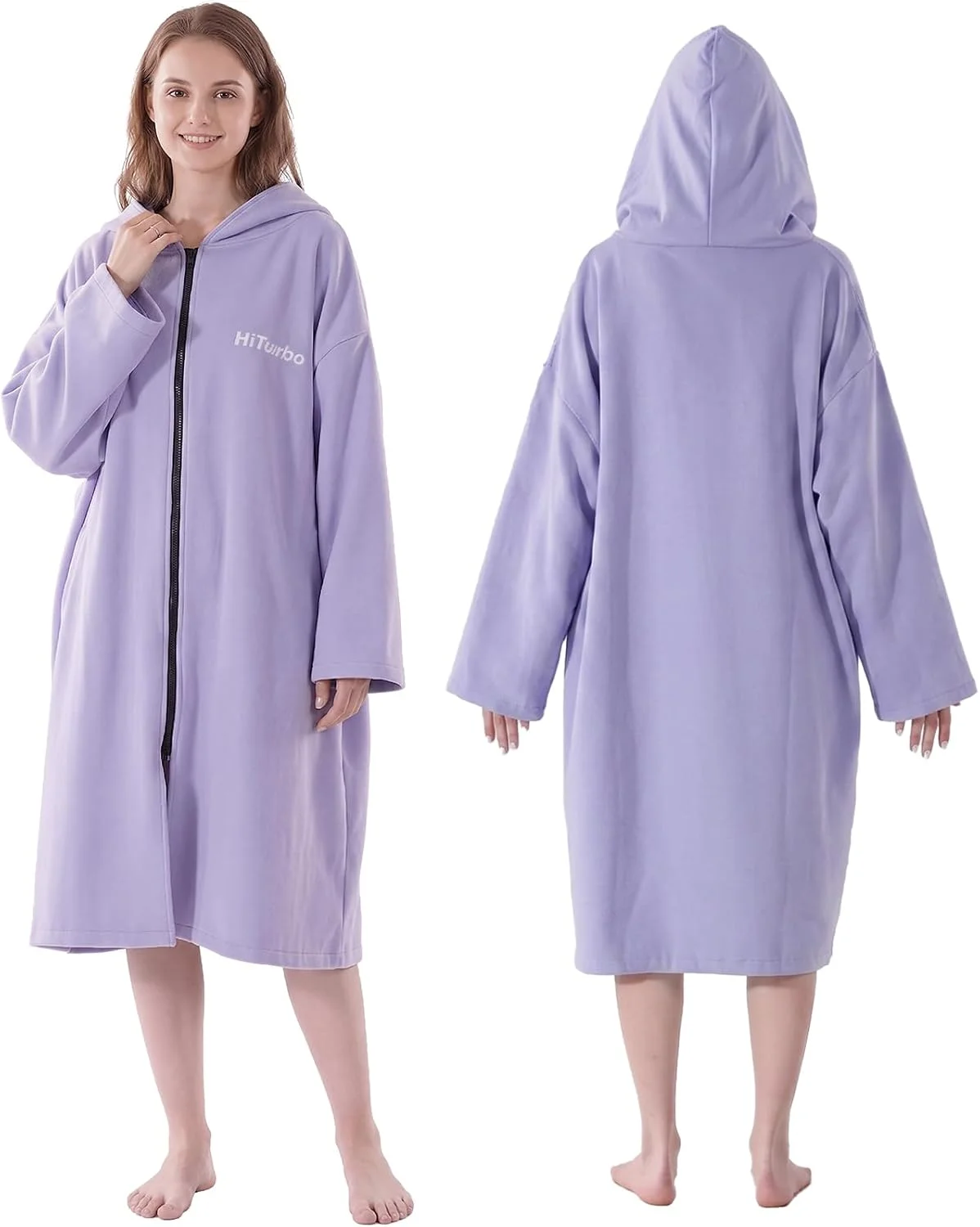
Drying And Changing
Hiturbo Microfiber Towel Surf Poncho Changing Robe
This is the only example whose first job is the immediate drying and changing moment. The Amazon listing shows a two-way zipper, long sleeves and a one-size construction measuring 43.3 inches long by 27.6 inches wide.
The seller says one size fits most. That is not a plus-size guarantee. Compare the listed width with the widest body area and leave enough room to move the arms and change underneath. Absorbency, warmth, wind protection, drying speed and comfort are merchant claims, not Comfort Mind Body test results.
View Hiturbo Changing RobeAffiliate link
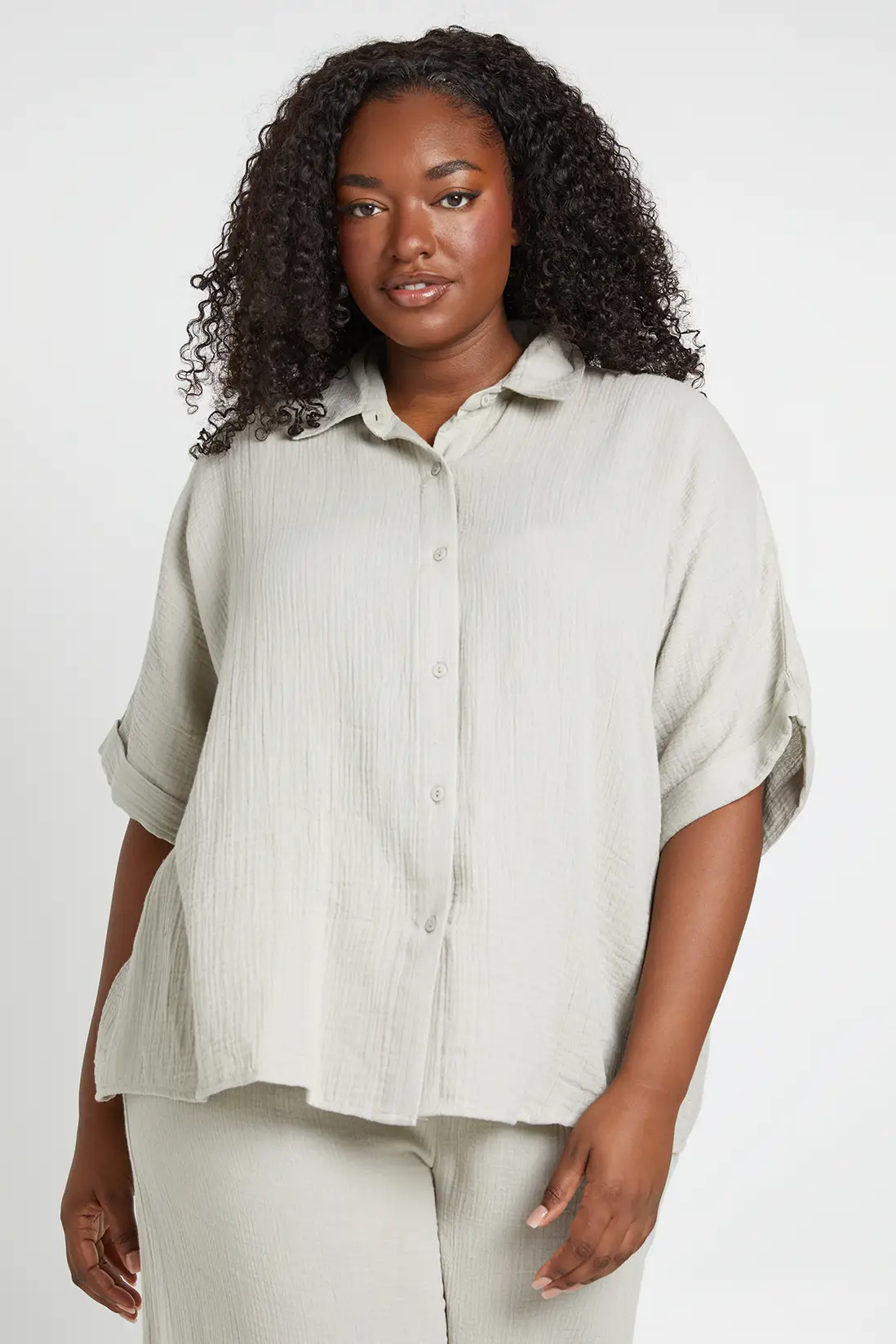
Open Upper Layer
Boohoo Plus Short Sleeve Boxy Beach Shirt
The checked page lists sizes 12-24, a button-through front and 100% cotton cheesecloth. Worn open, the shirt avoids pulling a full garment over damp skin. Buttoned, it can create a more dressed upper layer for a hotel or casual lunch.
Cotton content does not prove that the shirt dries quickly, stays light or remains opaque when wet. If it needs to close, compare the garment measurements with the bust and upper arms rather than relying on the word boxy.
View Boohoo Beach ShirtAffiliate link
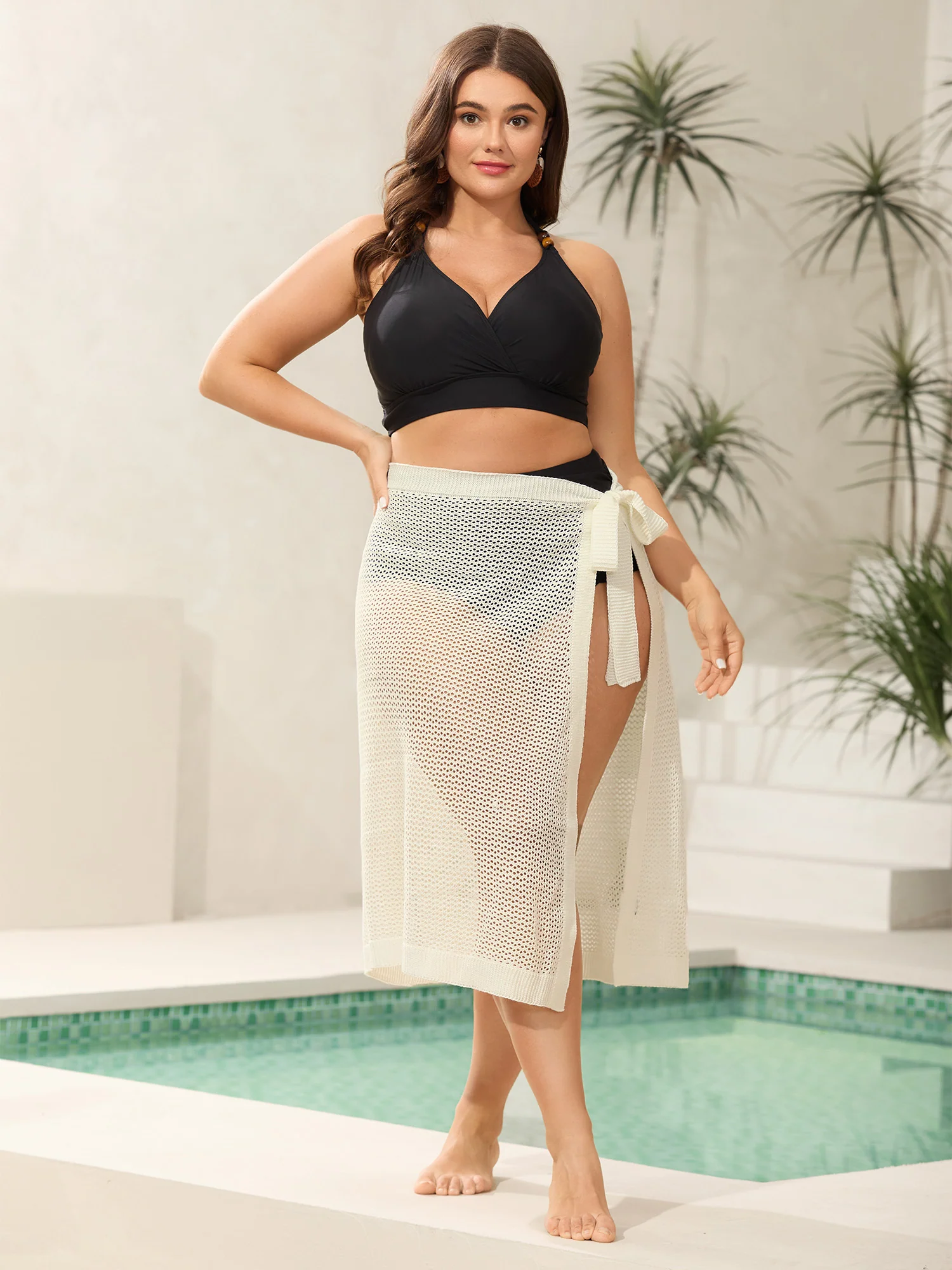
Adjustable Lower-Body Coverage
BloomChic Crochet Tie Side Wrap Sarong Cover Up
The listing spans sizes 10/M-30/6X and uses a side tie. It is the most adjustable lower-body example in this group and may be enough for a short poolside walk when the main goal is hip or thigh coverage.
The crochet construction provides visual coverage, not verified sun protection. The page does not establish quick drying, opacity when wet or how securely the tie stays in motion. Review the usable width and overlap in the selected size.
View BloomChic SarongAffiliate link
Walking And Lunch
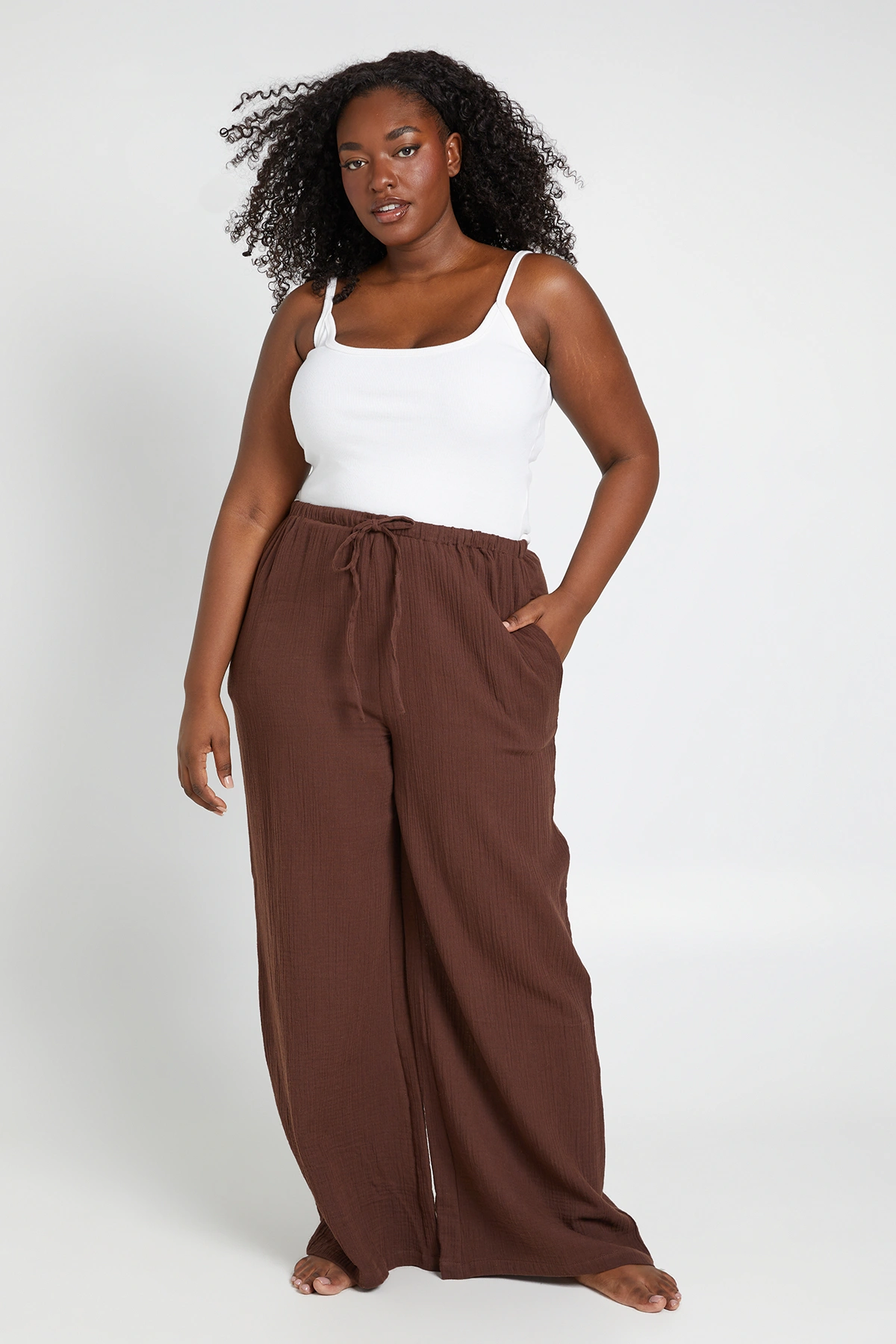
Boohoo Plus Elasticated Tie Front Wide Leg Beach Trouser
The checked page lists sizes 12-24, an elasticated tie waist, side pockets, a wide leg and 100% cotton cheesecloth. The role is practical leg coverage for sitting, walking or moving into lunch.
Wide legs may provide more clearance than tapered pants, but wet pull-on ease and thigh room were not tested. Compare the rise, inseam and waistband measurements with a pair that already fits.
View Boohoo Beach TrousersAffiliate link
One-Piece Cafe Coverage
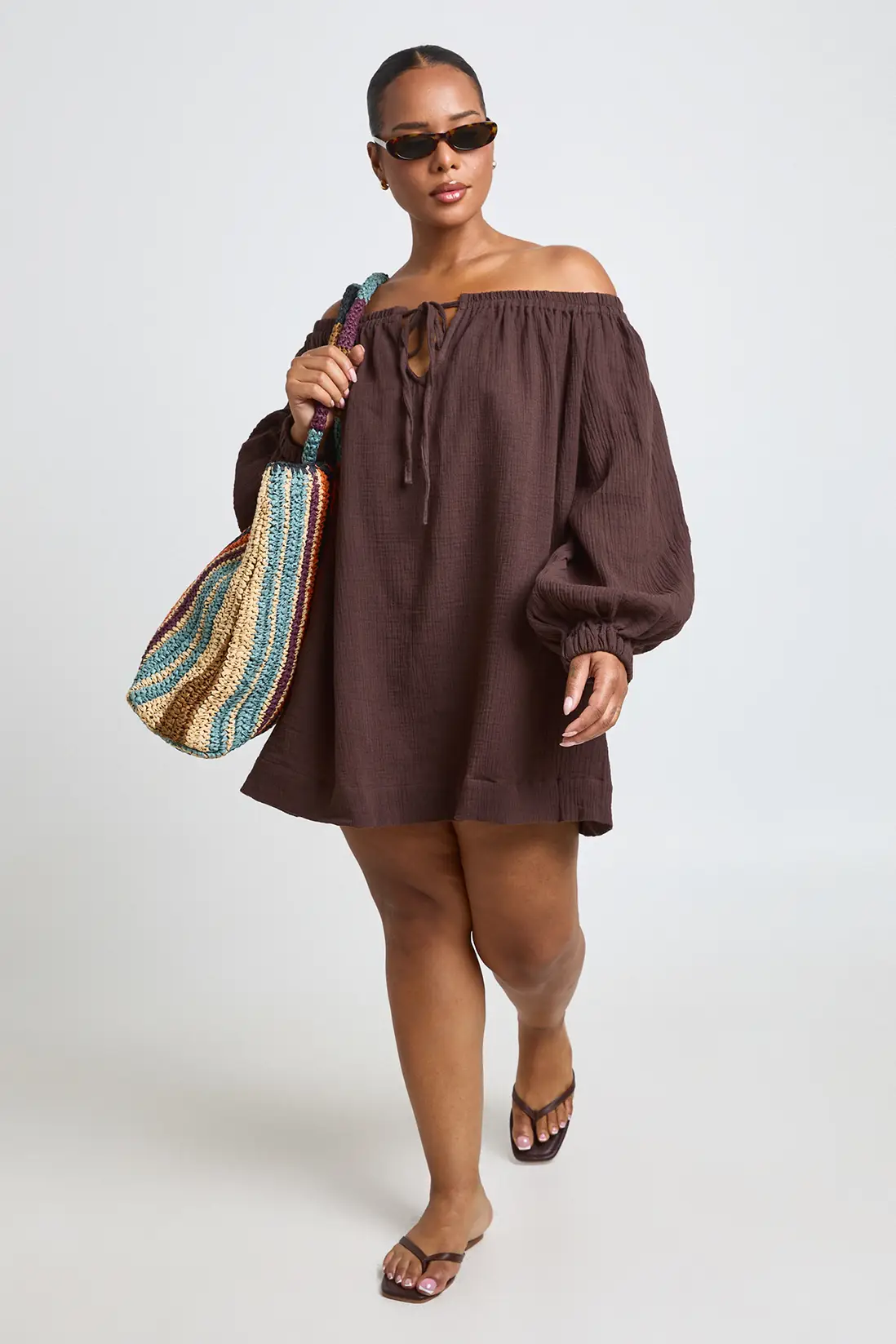
Boohoo Plus Bardot Volume Sleeve Beach Dress
The listing shows sizes 12-24, a relaxed mini shape, an elasticated Bardot neckline and 100% cotton cheesecloth. It gives one-piece visual coverage without the restroom steps of a jumpsuit.
The off-shoulder neckline and mini length will not meet every coverage need. The page does not prove absorbency, quick drying, wet opacity or UPF protection. A dry try-on should include neckline recovery, arm movement, hip sweep and seated length.
View Boohoo Beach DressAffiliate link
Rewearable Separates
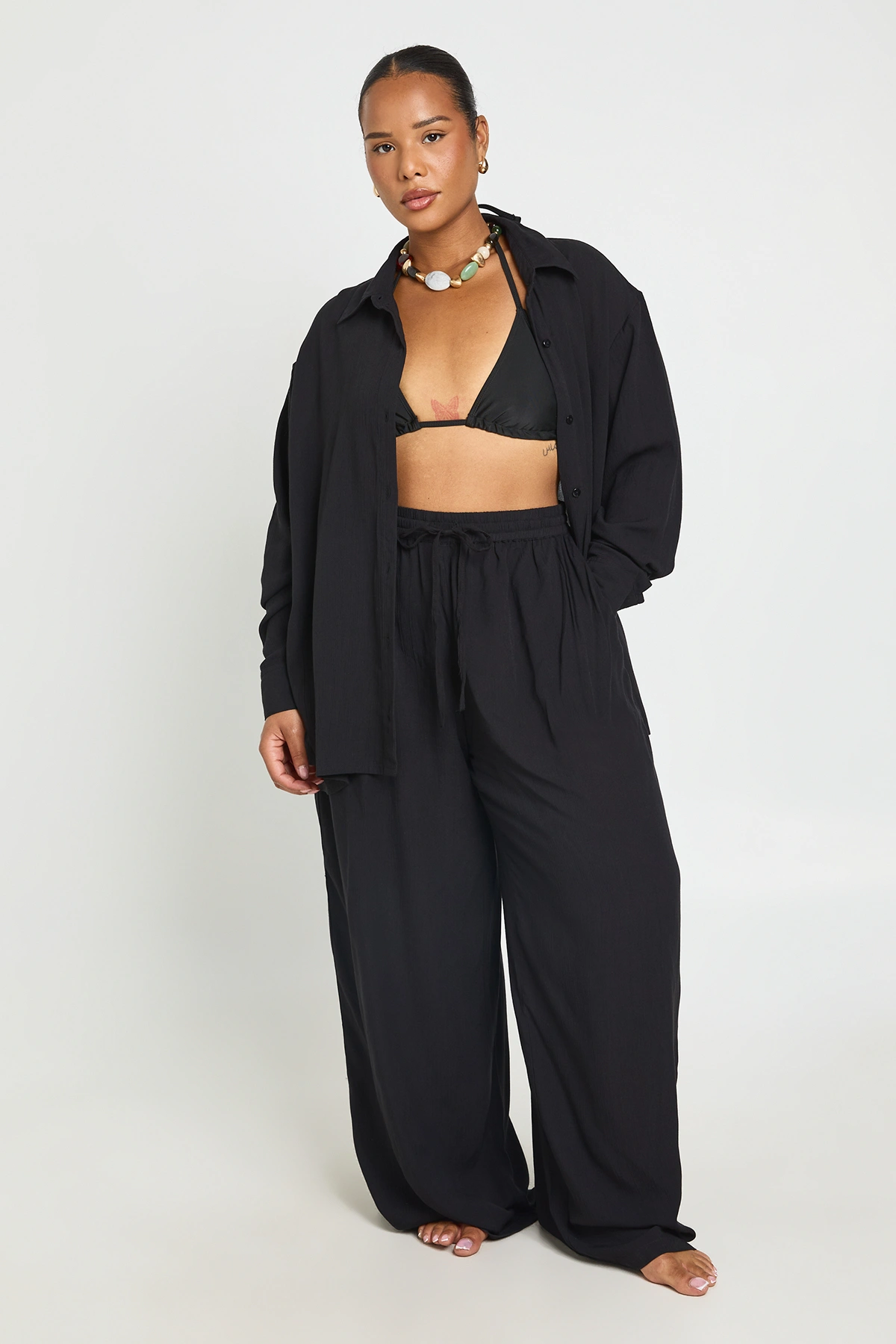
Boohoo Plus Cheesecloth Shirt And Trouser Beach Co-Ord
The checked page lists sizes 12-24 and a 100% cotton set with an oversized button-front shirt and elasticated wide-leg trousers. The shirt can work as an open swim layer, while both pieces can be considered for a dry outfit later in the trip.
That versatility comes with two fit decisions and more fabric to pack. Neither piece has a verified quick-dry, wet-opacity or UPF claim. Compare the shirt and trousers separately rather than assuming one size will suit both.
View Boohoo Beach Co-OrdAffiliate link
Merchant-Labeled UPF Coverage
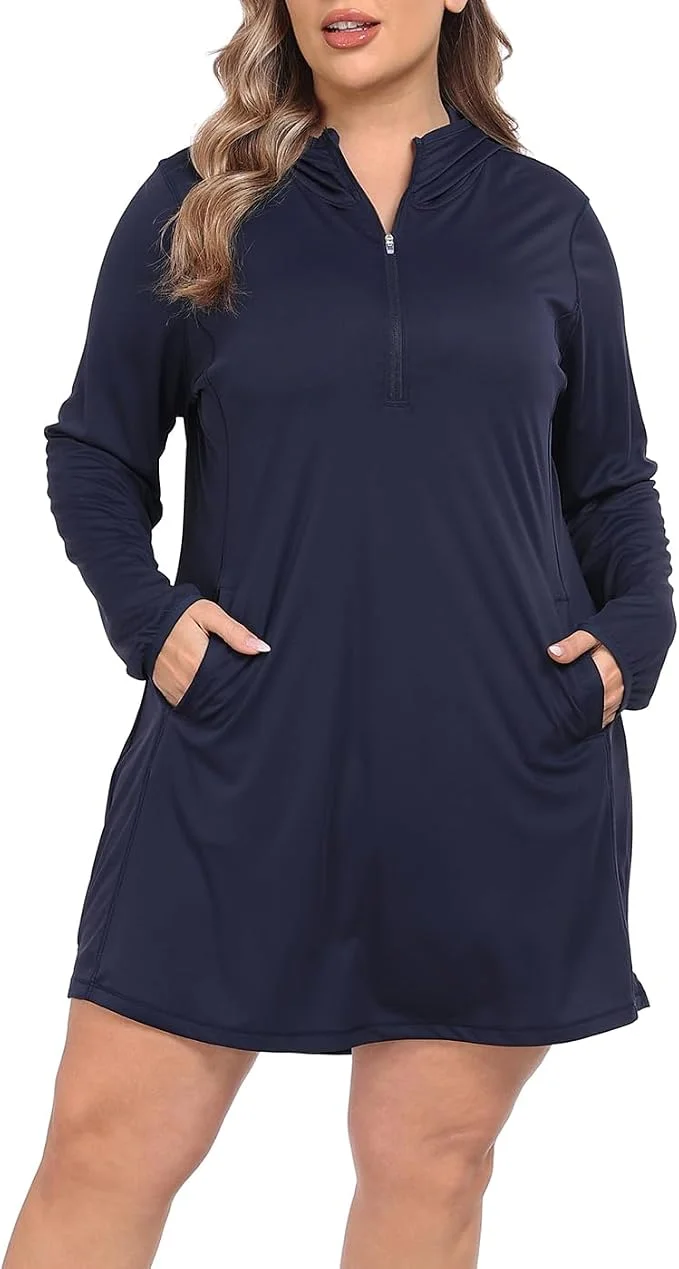
HDE Women's Plus Size UPF 50 Hooded Long Sleeve Tunic
This is the only product in the group with a merchant-supported UPF 50 claim. HDE's official product page shows a 1X-4X selector, long sleeves, a hood and a half-zip neckline.
The UPF claim applies to covered areas, not exposed skin. Amazon size and color availability can differ from HDE's own store. HDE publishes bust ranges through 3X on the visible page but does not show a 4X bust measurement there, so that number should not be guessed. Comfort Mind Body did not test UV performance, heat comfort, wet behavior or fit.
View HDE UPF TunicAffiliate link
Read Size and Return Risk Before Ordering
Product availability is temporary. A useful order plan should still work when a color, size or sale changes.
- Open the exact item, not only the store's general size chart.
- Record the measurements that control the fit. For shirts, that may be bust and upper-arm room. For pants, it may be rise, thigh width and inseam.
- Keep screenshots of the product state, size chart and return terms from the order date.
- Preserve labels, packaging and any other return protections during the dry try-on.
- Avoid final sale when fit is uncertain or the available measurements are incomplete.
Swipe left or right to view the full return table on mobile.
| Store | Return Snapshot | Main Caution |
|---|---|---|
| Boohoo | The US return page gives a 21-day send-back instruction and a $14.99 per-parcel deduction, while a later policy section on the same page says 28 days. | The official wording conflicts. Save the terms shown for the order and use the returns portal promptly. |
| BloomChic | Eligible items may be returned within 30 days of receipt. Current US fees are $5.99 for one to three Happy Returns items, with an added per-item fee above three, or $7.99 for other listed methods. | Confirm that the exact item is returnable and keep it unworn, unwashed and tagged. |
| Amazon | The Amazon return policy says most items may be returned within 30 days of delivery in original or unused condition. | Eligibility, seller terms, return methods and fees can differ. Use the exact product page and Order History. |
Store policies change. Readers comparing size depth and return risk across more retailers can compare plus-size stores before ordering resort wear.
Plus-Size Beachwear Trends for 2026 Worth Using
The most useful plus-size beachwear trends for 2026 include wide-leg cover-up pants, matching sets, oversized shirts, sarongs and crochet layers. Comfort Mind Body evaluates these ideas by the job they perform after swimming, including changing ease, damp-skin comfort, coverage and rewear potential. They are practical directions for plus-size beach outfits, not rules or proof that every garment works well when wet.
The practical shift is versatility. A shirt can cover the upper body and work with a dry outfit later. Co-ord pieces can be split across several days. A sarong can pack small and adjust quickly. Wide-leg pants can support a longer walk when the rise, inseam and thigh room work.
Crochet and open knit remain strong visual ideas, but their job should stay clear. They provide texture and style. Without a supported label, they are not UPF clothing. A current trend earns a place only when it solves the actual transition.
Helpful Resources and Safety Notes
Beachwear supports comfort and sun planning, but it does not replace a complete heat or sun strategy.
- A current UPF label is the clearest garment-specific sun-protection signal. Open-weave layers should not be treated as equivalent.
- The American Academy of Dermatology recommends clothing, shade and broad-spectrum, water-resistant SPF 30 or higher for exposed skin.
- The FDA explains that no sunscreen is waterproof. Water-resistance labels refer to 40 or 80 minutes, and reapplication should follow the product label, especially after swimming or sweating.
- The CDC's hot-climate guidance includes loose, lightweight clothing, shade, rest and fluids. This does not prove that a particular cover-up stays cool.
- The EPA UV Index scale can help plan protection. Protection is recommended from an index of 3, with extra protection at 8 or higher.
These resources provide general safety guidance, not personal medical advice. Symptoms of heat illness, skin reactions or other individual health concerns need appropriate professional care.
One Purposeful Layer Is Often Enough
The best plus-size beachwear trends do not require a complicated beach wardrobe. They begin with the moment after the water.
Dry first when needed. Then choose the next setting and decide whether the layer must provide visual coverage, warmth or supported sun coverage. Consider how it works over damp swimwear, how easily it moves and comes off, and whether the exact size can be returned.
A shirt, sarong, pair of pants, dress, co-ord or UPF layer can each be the right answer. The useful choice is the one with a clear job. One swimsuit, one purposeful layer and suitable shoes are often enough to make the transition feel easier.