
Research context: Prepared for Christmas 2026. Planning and safety sources checked October 3, 2026. The sample gatherings are illustrative plans, not reports of hosted events.
Welcome to Comfort Mind Body. A Christmas gathering can begin with something small: a familiar meal, a favorite film, or time set aside for good company.
Christmas plans can grow quickly. One person hopes for a long meal. Another prefers a game, while someone else needs a quieter visit. Meanwhile, the host may be working with a small kitchen, limited time, or a careful budget.
First, the household can decide what matters most about the gathering. Then the food, activity, and preparation can fit that decision. This guide offers six flexible starting points and two illustrative plans. Each leaves room to simplify, share the work, or change course.
For gift-giving beyond this gathering, the Comfort Mind Body Gift Guide brings together ideas for different people and occasions.
Disclosure: This article links to Comfort Mind Body gift guides that may contain affiliate links. Comfort Mind Body may earn a commission from qualifying purchases through those guides.
Quick Navigation
ToggleQuick Answer: Which Christmas Party Ideas at Home Feel Special?
A manageable Christmas party starts with the household’s time, space, budget, and guest needs. The host can then choose one main activity and a food plan that fits the preparation time.
A shared memory or small exchange can add a personal touch. Tasks should be agreed beforehand, with a quiet participation option and one simple backup.
Choose a Christmas Celebration That Fits the Household
Before comparing activities, the host can settle the length of the visit and the amount of preparation the household can manage.
A short afternoon gathering calls for different choices than a meal stretching into the evening. Available seats and serving space also matter. An appealing idea is easier to assess once those limits are clear.
Guest preferences belong in that first conversation. The organizer can ask about dietary requirements, seating, and activities people would enjoy.
Some guests may want to join a game; others may prefer conversation or a quiet place nearby. Asking gives the plan a firmer basis than guessing.
Match the Celebration to Time, Space, and Guest Needs
On small screens, swipe the table sideways to see all columns.
| Household clue | Plan adjustment | Check before agreeing |
|---|---|---|
| The visit will be short | Choose one main activity and an agreed meal or snack time. | Allow for arrivals, conversation, and a clear finishing time. |
| The room or kitchen is small | Use one activity area and a simple serving arrangement. | Keep walkways and exits clear; confirm seating and surface space. |
| The spending limit is tight | Begin with food and materials already planned or available. | Agree the total cost and any optional contributions beforehand. |
| Guests want different ways to join | Offer a seated or watching role beside the shared activity. | Ask about preferences and practical needs without putting anyone on the spot. |
| Preparation time is limited | Choose a familiar menu and divide a few specific tasks. | Confirm who can help, what they will bring, and when it is needed. |
Anna’s Note: A favorite Christmas tradition does not need to grow more elaborate each year. Keeping one familiar detail can give a gathering a sense of continuity.
Christmas Party Ideas That Work Together
The following options are starting points. One can become the main activity, while another adds a small detail to the visit. There is no need to include the whole list.
1. Decorate One Focal Area With Items Already Available
A table, shelf, or doorway can carry the festive theme without requiring a room makeover. The host can start with a familiar tablecloth, a few decorations, or a display of cards. Keeping the display in one place also leaves surfaces available for food and the activity.
Lights should suit their location and follow the manufacturer’s instructions. Decorations must leave exits clear. The NFPA winter holiday safety sheet provides the relevant checks. If adding a display would involve unfamiliar equipment or more setup than the household wants, a simple arrangement can be enough.
2. Choose a Simple Christmas Brunch or Coordinated Potluck
A familiar menu gives the organizer a clearer picture of the preparation involved. A brunch might pair a favorite breakfast dish with fruit and a ready-to-serve option. A potluck can work when guests agree on specific contributions, rather than each arriving with a dish that needs the same oven space.
Beforehand, the coordinator can confirm which food needs reheating, refrigeration, or serving utensils. Dietary arrangements should also be discussed with the guests concerned. A contribution that arrives ready to serve may be more useful than an impressive dish requiring a crowded kitchen.
Food safety belongs in the serving plan. Perishable food left at room temperature needs refrigeration within two hours. That limit falls to one hour when the surrounding temperature is above 90°F.
The FoodSafety.gov leftovers guidance explains those limits. Smaller serving portions can help the host manage the meal and store the remaining food appropriately.
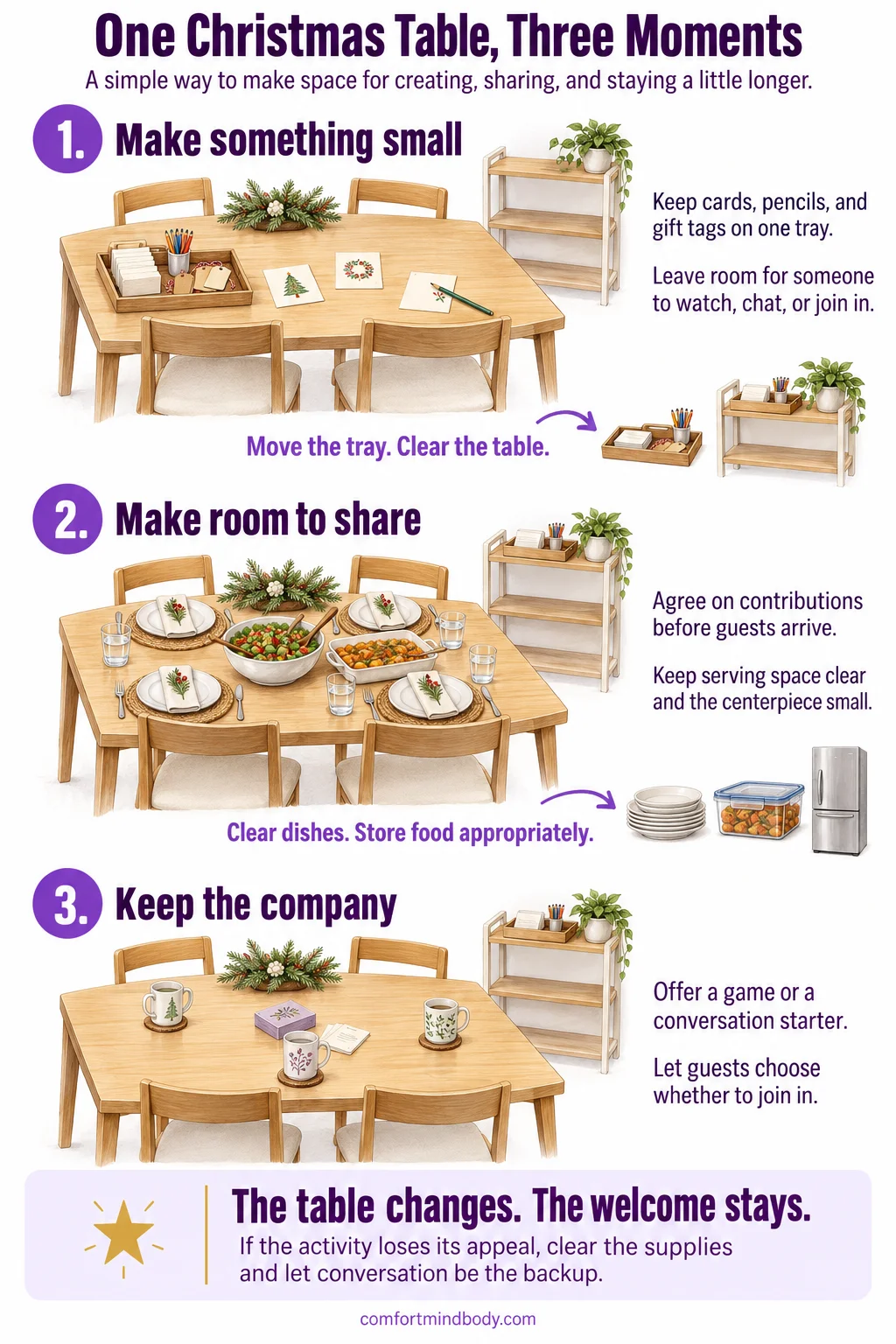
3. Arrange a Christmas Movie and Warm-Drink Evening
A familiar film can give a quieter gathering a shared focus. The host can agree on the choice and start time before the visit. Seating, mugs, and the drinks can be arranged without adding a separate activity station.
Guests who would rather talk can have an option nearby if the space allows. Hot drinks should be placed on stable surfaces away from the activity materials. If choosing a film becomes the main source of disagreement, a shared playlist and conversation can serve as the fallback.
4. Play a Seated Christmas Game
A game using spoken prompts can keep the materials simple. Guests might guess a Christmas film from a short description, offer a clue about a favorite tradition, or choose prompts for a familiar game already owned. The organizer can explain a short round first so everyone understands how to join.
A watching role should be just as welcome. Someone can read the prompts or enjoy the answers without competing. If the game loses its appeal, it can end after one round. The gathering does not need to continue an activity simply because it was planned.
5. Make Cards or Gift Tags Together
A small set of paper, pencils, and suitable tools can support a shared creative activity. Ready-cut cards or tags give guests a starting point. Each person can write a message, draw a small design, or help arrange the finished pieces.
The materials should suit the participants, with adult supervision for children using tools. A prepared card offers a simpler way to join. Keeping the supplies on one tray makes it easier to clear the table before a meal or move the activity when someone needs the space.
Gift bags and tissue paper can be kept for another occasion. For leftover wrapping, the household should check local recycling instructions; shiny or laminated paper may not be accepted. The EPA recycling guidance explains why the material and local rules matter.
6. Choose an Optional Gift Exchange or Shared-Memory Moment
An exchange works better when participation, spending, and timing are agreed before purchases begin. One straightforward option is to assign each willing participant a single recipient. Preferences can help guide the choice without turning the exchange into a competition.
The Holiday Gift Guide by recipient, budget, and interest can help narrow the direction. Once the group has agreed its spending limit and practical needs, the 77 Christmas gift ideas offer specific suggestions.
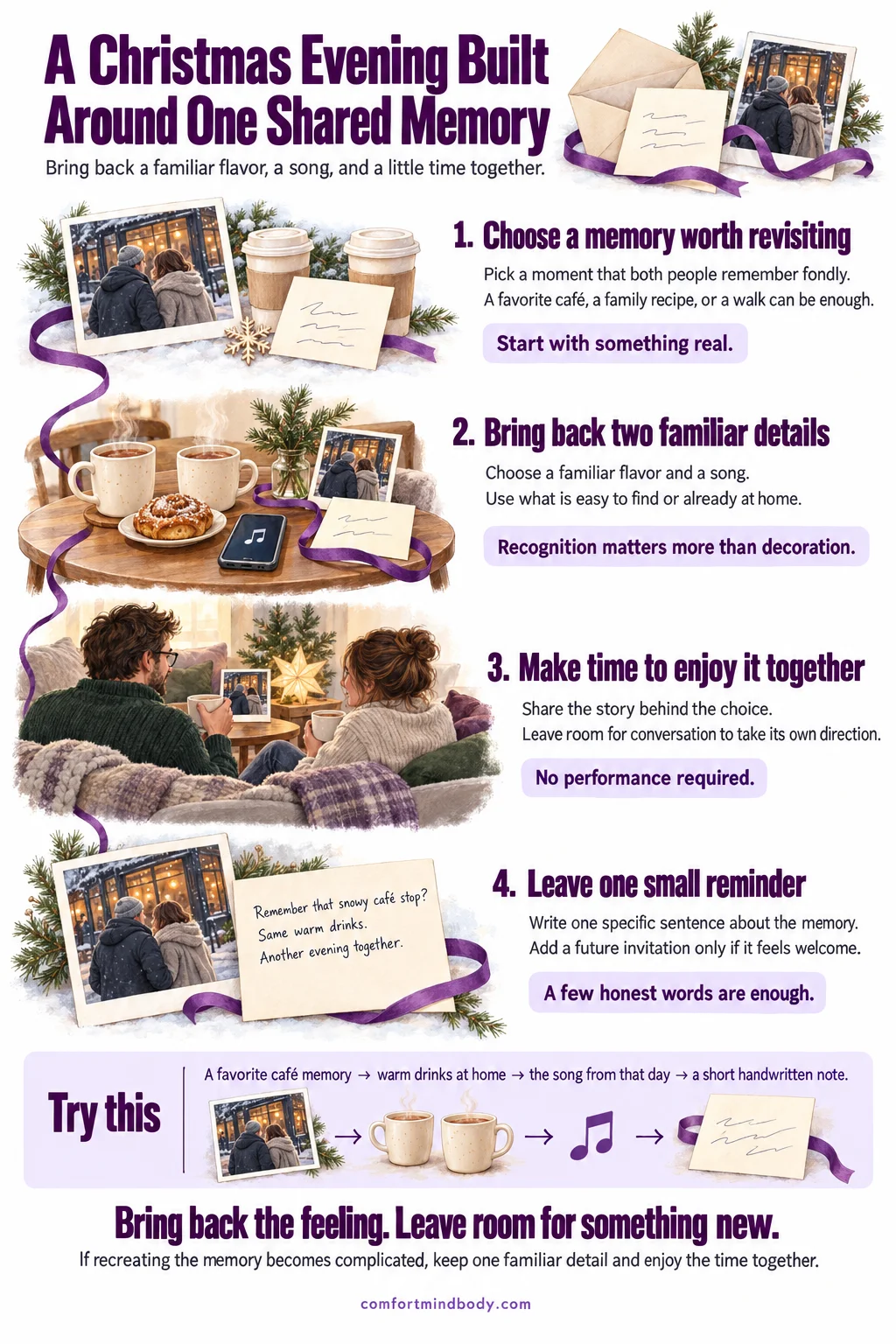
A shared-memory moment is another option. Each willing guest can name a favorite moment from the year or add a short message to a card.
A photograph can mark the visit if everyone is comfortable taking part. There is no need to add both an exchange and a memory activity when one already suits the gathering.
Two Example Christmas Plans for Different Households
These examples show how the choices can work together. Their timings are illustrative and can change with the household.
How Two Christmas Gatherings Fit Different Households
On small screens, swipe the table sideways to see all columns.
| Setting | Main choices | Preparation and roles | What can change |
|---|---|---|---|
| A two-hour visit in a small home | One simple meal or snack, followed by a seated game. | The host arranges seating; a willing guest brings an agreed ready-to-serve contribution. | Conversation can replace the game. A separate craft station and larger display are left out. |
| A half-day gathering with different ages and interests | A coordinated meal, with card-making available before it. | One person coordinates food; another prepares materials and helps clear them away. | Guests can watch or sit nearby. One shared meal time gives the visit a clear anchor. |
Example 1: A Two-Hour Visit in a Small Home
The first plan keeps the activity and the meal in the same area. Before guests arrive, the host can clear the table, arrange seats, and confirm the food contribution. Decorations stay on a shelf or another surface that will not be needed for serving.
An example sequence could be:
1. First 20 minutes: arrivals, drinks, and catching up.
2. Next 35 minutes: the agreed meal or snack.
3. Next 35 minutes: a seated game, or conversation if the group prefers.
4. Final 30 minutes: an optional shared memory, farewells, and clearing away.
Food should be stored appropriately as the meal ends. With one table handling several jobs, the transition from eating to playing is the main preparation check. If nobody wants the game, conversation can fill that part of the visit without additional setup.
Example 2: A Half-Day Gathering With Different Ages and Interests
A longer visit can allow more choice without requiring everyone to follow the same activity. One shared meal time gives the gathering an anchor. Card-making can be available beforehand, while a nearby seat offers a quieter way to remain part of the visit.
The organizer can agree on a four-hour window and divide it broadly:
1. First hour: arrivals and optional card-making.
2. Second hour: the shared meal, with preparation and serving roles agreed beforehand.
3. Third hour: conversation, finishing cards, or a quiet break.
4. Final hour: time together, an optional photograph, and gradual farewells.
The kitchen plan should be settled before guests arrive, including who handles any final preparation. The card materials can be cleared before food is served if the table is shared. If the activity needs to stop, the meal and conversation still give the visit a clear shape.
Sushi’s Note: The seating plan may be agreed. The cat’s claim to the comfiest chair is still under negotiation.
Prepare the Gathering and Share the Tasks
Once the main choices are made, a short task list can turn the plan into something practical. “Help with the party” is a broad request. “Bring the agreed dessert and its serving spoon” gives a willing guest a clearer job. Contributions should fit what that person can reasonably manage.
The organizer can check five details before the day:
1. Arrival and finishing times, including any different travel arrangements.
2. The menu, dietary arrangements, and food that needs kitchen or refrigerator space.
3. Who brings each item, who sets up, and who helps clear away.
4. The main activity, its materials, and another way to take part.
5. One fallback that uses items already available.
Cleanup belongs in that conversation too. Dividing serving, food storage, and clearing the activity area can prevent several jobs falling to the same person at once. It’s easier to communicate a change to the plan when the group already knows which details matter most.
After the gathering, a brief note about what worked can help with the next occasion.
It might record a well-timed meal, an activity people actually chose, or a contribution worth repeating.
The useful question is which choices suited that household.
Frequently Asked Questions About Christmas Celebrations at Home
How can a gathering work when guests arrive at different times?
The invitation can distinguish the shared meal from the wider visiting window. A card-making area or conversation can continue between arrivals, while the meal has an agreed time. If a late guest needs food saved, their portion should be stored appropriately rather than left on the table for the whole visit.
What if some guests prefer not to join games?
A guest can watch, help choose prompts, or sit nearby with a drink. Their presence need not depend on performing. If nobody wants the planned game, a conversation or familiar film can become the main activity without a second round of preparation.
How can a Christmas gift exchange stay optional?
The invitation should say that clearly before anyone buys a present. Participation and spending should be agreed privately where possible. A guest who skips the exchange can still share the meal and activity; bringing a gift should not become the price of joining the gathering.
What should happen if an outdoor plan changes?
The indoor alternative should use items already available, such as a film, a game, or a shared playlist. The host can tell guests about the change before they travel. If the outdoor activity needs postponing, it can move to another date rather than extend an already full gathering.
Final Thoughts
A thoughtful Christmas gathering has a clear purpose and choices that fit the people attending. A meal, a game, or a familiar film can provide that focus. The decision table and sample plans offer ways to judge the preparation involved, share responsibilities, and leave room for changes.
The finished plan should make the gathering easier to understand: what will happen, who will help, and what can be simplified. That gives the host and guests a shared starting point while leaving room for the visit to unfold.
May the gathering leave a little space for an unhurried conversation and a moment worth remembering.
Warm Christmas wishes,
Anna
Safety Notes
- Decorative lights should suit their indoor or outdoor location. Replace damaged cords, follow the manufacturer’s connection limits, and keep exits clear. Switch off decorative lights before leaving home or sleeping.
- Flameless candles are an option for the table. Burning candles need stable holders, supervision, and at least one foot of space from materials that can burn. Extinguish them when leaving the room or going to bed.
- Hot food should be held above 140°F and cold food below 40°F. Holding equipment is for food that has already reached its safe cooking temperature. A food thermometer provides the check.
- Refrigerate perishable food left at room temperature within two hours, or within one hour when the surrounding temperature is above 90°F. Discard food left without safe hot or cold holding beyond those limits. Divide leftovers into small, shallow containers.
- Crafts should suit the people taking part. An adult should supervise children’s use of scissors and other tools; a prepared card or a watching role can offer another way to join.
Helpful Resources
- NFPA winter holiday safety — A short reference for decorative lights, exits, and holiday cooking precautions.
- NFPA candle safety — Placement, supervision, and extinguishing guidance for anyone using burning candles.
- FoodSafety.gov holiday food holding — Temperature guidance for serving hot and cold foods during a gathering.
- FoodSafety.gov leftovers guidance — Refrigeration timing, storage, and reheating guidance after a shared meal.
- EPA recycling questions — Information on wrapping materials and why local recycling instructions matter.

