A fall skincare routine should help skin move from summer heat into cooler, drier weather without overwhelming the skin barrier. After months of sun, sweat, sunscreen, swimming, air conditioning, travel, and outdoor time, skin may start to feel tight, dull, uneven, flaky, congested, or more reactive than usual.
The best fall routine is not complicated. It keeps the basics steady, adds moisture where needed, supports barrier comfort, keeps sunscreen in place, and reintroduces actives like retinol, exfoliating acids, vitamin C, or brightening products slowly.
Fall is also when many readers start thinking about stronger treatments again. Microneedling, RF microneedling, spicule skincare, PDRN, exosome-inspired products, peptides, LED devices, and skin-renewal trends are everywhere right now. These can be interesting, but they should not replace a stable routine.
This is the main Comfort Mind Body fall skincare hub. It covers AM and PM steps, cleanser and moisturizer changes, sunscreen, retinol, exfoliation, body care, lips, hands, fall mistakes, treatment-season trends, and a printable fall skincare planner. For the main skincare library, start here: Skin Care.
Quick Navigation
ToggleQuick Answer: What Should A Fall Skincare Routine Include?
A fall skincare routine should include a gentle cleanser, moisturizer, sunscreen, and barrier support. Many routines also benefit from a hydrating serum or essence, a richer night moisturizer, careful exfoliation, lip care, hand cream, and body moisturizer after showering.
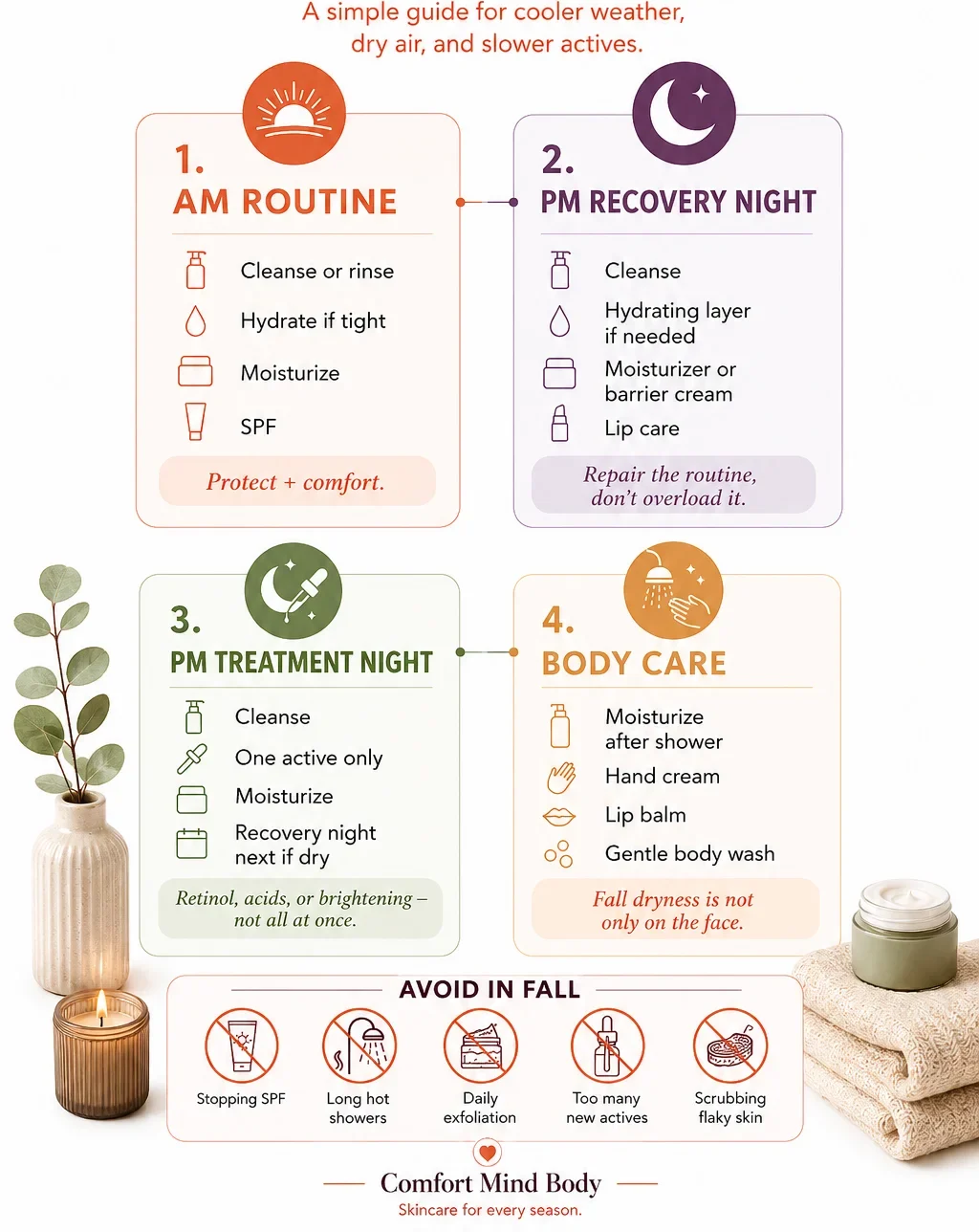
In the morning, the routine should protect and comfort the skin: cleanse or rinse, hydrate if needed, moisturize, and apply sunscreen. In the evening, the routine should cleanse, treat, or recover: remove sunscreen and daily buildup, use actives only on planned nights, and finish with moisturizer or barrier cream.
Fall is not the best time to restart every active, trend, or treatment at once. If skin feels dry, tight, itchy, burning, flaky, or reactive after summer, the first step is usually more moisture and fewer strong products.
Anna’s Note: Fall skincare works best when it feels like a transition, not a total reset. Start with comfort first, then bring treatments back slowly when skin feels calm.
What Changes From Summer To Fall?
Summer skincare is usually built around sweat, sunscreen, oil, swimming, heat, and lightweight layers. Fall skincare shifts toward moisture, barrier support, indoor heat, cooler wind, dry lips, dry hands, and slower active use.
Skin can also carry summer stress into fall. Sun exposure may make uneven-looking tone or dark spots more noticeable. Sweat, sunscreen, and heat can leave some skin feeling congested. Swimming, air conditioning, travel, and frequent cleansing can leave other skin feeling dry, rough, or easily irritated.
That is why fall skincare should not only mean “use a thicker cream.” The better question is what the skin needs now: more moisture, less irritation, better sunscreen consistency, slower actives, or body care for dry arms, legs, hands, and lips.
If the weather is still hot, the summer hub may help first: Summer Skincare Routine: AM And PM Steps For Sunscreen, Sweat, Breakouts And Hydration. For a narrower seasonal switch guide, use: How To Change Skincare For The Fall Season.
Fall AM And PM Routine At A Glance
Before adjusting individual products, it helps to see the full routine simply. Most fall routines do not need many steps. They need the right balance between protection, moisture, treatment, and recovery.
This table keeps the routine simple before adding optional treatments, trend products, or stronger active ingredients.
Swipe left or right to view the full table on mobile.
| Routine | Steps | Main Goal |
|---|---|---|
| Fall AM | Cleanse or rinse, hydrate if needed, moisturize, sunscreen. | Comfort, moisture, and daily protection. |
| Fall PM Recovery Night | Cleanse, hydrate if needed, moisturizer or barrier cream. | Reduce dryness and support the barrier. |
| Fall PM Treatment Night | Cleanse, one active, moisturizer or barrier cream. | Use retinol, acids, or brightening products carefully. |
| Optional Treatment Planning | Professional guidance, recovery time, sunscreen, and active pauses if needed. | Avoid stacking strong products with procedure-style treatments. |
| Body Care | Gentle body wash, moisturizer after showering, lip and hand care. | Prevent dry body skin, cracked hands, and dry lips. |
Fall Skincare Routine: Keep, Switch, Avoid
The easiest way to build a fall routine is to separate products and habits into three groups. Keep what protects the skin. Switch what no longer fits cooler weather. Avoid habits that make dryness, irritation, or uneven-looking tone worse.
Swipe left or right to view the full table on mobile.
| Routine Area | Keep | Switch If Needed | Avoid |
|---|---|---|---|
| Cleanser | A gentle cleanser that removes sunscreen and daily buildup. | A creamier, milky, balm, or less stripping cleanser if skin feels tight. | Squeaky-clean skin, harsh scrubs, or over-cleansing. |
| Moisturizer | Daily moisturizer, even if skin is oily. | A richer cream or barrier moisturizer when skin feels dry or tight. | Skipping moisturizer or treating flaking with exfoliation first. |
| Sunscreen | Broad-spectrum sunscreen in the morning. | A more moisturizing sunscreen if skin feels dry. | Stopping SPF because summer is over. |
| Retinol | A retinol routine that skin already tolerates. | Restart slowly with recovery nights between treatment nights. | Using retinol on irritated, peeling, or over-exfoliated skin. |
| Exfoliation | Gentle exfoliation only if skin tolerates it. | Use less often if skin feels dry, rough, or sensitive. | Daily acids, rough scrubs, or exfoliating cracked skin. |
| Treatment Trends | Professional guidance, patch testing, sunscreen, and realistic expectations. | Try only when the barrier feels calm and the basic routine is stable. | Stacking spicules, acids, retinol, vitamin C, and procedure recovery. |
| Body Care | Body cleansing and moisturizer after showering. | Add richer body lotion, hand cream, and lip care as air gets dry. | Hot showers, skipping body moisturizer, or harsh scrubbing. |
The Comfort Mind Body Fall Framework: Recover, Rebuild, Reintroduce
A useful fall skincare routine has three jobs: recover from summer stress, rebuild moisture and barrier comfort, and reintroduce active ingredients slowly. This keeps the routine practical instead of turning fall skincare into a full product reset.
- Recover: calm skin that feels tight, dull, congested, sun-stressed, or reactive after summer.
- Rebuild: add moisture, barrier support, lip care, hand care, and body moisturizer as the air gets cooler and drier.
- Reintroduce: bring back retinol, exfoliating acids, vitamin C, brightening products, devices, or treatment-style trends slowly, with recovery nights in between.
This framework matters most because fall is when many readers want stronger results, but stronger does not always mean better for the barrier. If skin feels irritated, the routine should recover and rebuild before it treats.
This also helps prevent the biggest fall mistake: treating every dry patch, dark spot, or rough area with stronger exfoliation when the skin may simply need more comfort first.
Fall AM Skincare Routine
A fall morning routine should protect the skin without making it feel heavy. The routine can stay simple, especially if skin is already dry, sensitive, oily-dehydrated, or adjusting after summer.
Most fall AM routines need four basics: gentle cleanse or rinse, hydration if needed, moisturizer, and sunscreen. Vitamin C or another antioxidant can fit between hydration and moisturizer if skin tolerates it, but it is optional.
Step 1: Gentle Cleanse Or Rinse
Some skin needs a gentle morning cleanse. Other skin may only need a water rinse if it feels balanced and not oily. The routine should leave skin comfortable, not tight, shiny, or squeaky-clean.
If skin feels dry immediately after washing, the cleanser may be too strong, the water may be too hot, or the routine may need more moisture afterward. Fall is a good time to stop treating tightness as a sign of being “extra clean.”
Step 2: Hydrating Layer If Skin Feels Tight
A hydrating toner, essence, or serum can help when skin feels tight under moisturizer. This step is optional, but it may be useful once the air gets drier or indoor heating starts running.
Hydration and moisture are not the same thing. Hydrating layers can help skin feel more comfortable, while moisturizers help soften skin and support the barrier. This guide explains the difference: Difference Between Hydrating And Moisturizing.
Step 3: Vitamin C Or Antioxidant Serum If Tolerated
Vitamin C can stay in a fall morning routine if skin tolerates it. It may support a brighter-looking routine after summer, especially when sunscreen is used consistently.
This step should not be forced. If vitamin C stings, pills under sunscreen, or makes the routine feel too strong, use it less often or pause it while the barrier feels stressed. Sunscreen remains the more important morning step.
Step 4: Moisturizer
Fall is often when lightweight summer moisturizers start feeling less supportive. A creamier moisturizer may help if skin feels tight, flaky, itchy, or uncomfortable by midday.
Oily skin may still prefer a gel cream or light lotion, but it should not skip moisturizer completely. Dry and sensitive skin may need a richer texture, especially around the cheeks, mouth, and dry patches.
Step 5: Sunscreen
Sunscreen still matters in fall. UV exposure does not disappear when the weather cools, and daily sunscreen can help protect skin from visible sun damage and uneven-looking tone.
A broad-spectrum sunscreen with SPF 30 or higher is a practical daily choice. Sunscreen is especially important when using retinol, exfoliating acids, vitamin C, brightening products, microneedling, peels, or other treatment-style steps.
Comfort Mind Body Take: The best fall morning routine is not the longest one. It is the one that keeps skin comfortable, protected, and ready for the rest of the day.
Fall PM Skincare Routine
A fall evening routine should remove the day, then either treat or recover. Most skin does not need retinol, acids, brightening products, spicules, and recovery creams every night.
Rotating treatment nights with recovery nights can help reduce dryness and irritation. This is where fall skincare becomes easier: not every night needs to be active. Some nights are for progress, and some nights are for comfort.
Step 1: Cleanse Sunscreen, Makeup, And Daily Buildup
Even in fall, sunscreen, makeup, pollution, oil, and daily buildup can sit on the skin by the end of the day. A cleanser should remove buildup without leaving skin tight or squeaky.
If wearing heavier sunscreen or makeup, double cleansing can be useful. If skin feels dry afterward, use a gentler first cleanse, avoid hot water, or reduce how aggressively the skin is washed.
Step 2: Hydrate If Needed
A light hydrating layer can help after cleansing if skin feels tight or dry. This should feel calming, not sticky, harsh, or irritating.
If the routine already includes a rich moisturizer and skin feels comfortable, this step may not be necessary. Fall skincare should solve a problem, not add steps for no reason.
Step 3: Treatment Night Or Recovery Night
A treatment night may include retinol, retinal, exfoliating acids, azelaic acid, acne treatment, vitamin C, or a brightening product. A recovery night keeps the routine simple: cleanse, hydrate if needed, moisturize, and stop there.
This rhythm is helpful in fall because dry air and indoor heat can make skin less tolerant than it was in summer. If skin feels irritated, recovery nights should outnumber treatment nights.
One active per night is usually enough when rebuilding a fall routine. Retinol nights and exfoliation nights should usually stay separate, especially if skin is dry, sensitive, acne-treated, or post-summer stressed.
Avoid combining strong actives with spicule products, harsh scrubs, fresh peels, microneedling recovery, or procedure aftercare unless a qualified provider gives specific guidance. For ingredient combinations to be careful with, read: Skincare Products You Shouldn’t Mix.
Step 4: Moisturizer Or Barrier Cream
A moisturizer or barrier cream helps the routine feel more comfortable, especially after cleansing or on retinol nights. Look for supportive ingredients such as glycerin, ceramides, squalane, panthenol, hyaluronic acid, ectoin, or fatty acids.
If skin feels irritated, peeling, or rough, recovery nights should come before stronger treatments. More barrier support is here: How To Protect Your Skin Barrier.
Step 5: Lip Care And Hand Cream
Fall dryness often shows up first on the lips and hands. Lip balm, hand cream, and moisturizer after washing can help prevent small dryness from becoming cracking or discomfort.
If lips or hands are already cracked, stinging, bleeding, or not improving, the skin may need more than a simple seasonal routine.
Sushi Note: Recovery nights are not lazy nights. They are the quiet part of the routine that helps the stronger steps stay tolerable.
How To Repair Summer Stress Without Overdoing It
After summer, skin may look dull, uneven, bumpy, congested, or dry. Sun exposure may make dark spots or uneven-looking tone more visible, while sweat, sunscreen, swimming, air conditioning, travel, and frequent cleansing can leave the skin feeling stressed.
It can be tempting to use acids, scrubs, retinol, vitamin C, brightening serums, and dark-spot products all at once. That usually makes fall skin harder to manage, not easier. A stressed barrier often needs calm before correction.
A better fall approach is to simplify first. Use a gentle cleanser, moisturizer, sunscreen, and recovery nights. Once skin feels stable, add one active at a time and watch how the skin responds for at least several uses before adding another.
Uneven-looking tone and post-breakout marks usually need consistency, not panic treatment. Sunscreen, moisturizer, and slow brightening support are safer than chasing fast results with too many strong products.
Comfort Mind Body Take: If skin looks dull after summer, the answer is not always stronger exfoliation. Sometimes the better first step is a calmer barrier, a better moisturizer, and steady sunscreen.
How To Change Moisturizer For Fall
A moisturizer that felt perfect in July may not feel like enough in October. Lower humidity, cooler wind, indoor heating, and warmer showers can all make skin lose comfort faster.
Dry skin may need a richer cream. Sensitive skin may need fewer actives and more barrier support. Oily skin may still prefer a gel cream or light lotion, but it can still become dehydrated underneath oil.
A good fall moisturizer does not have to feel greasy. Look for a texture that keeps skin comfortable for longer without pilling under sunscreen or feeling too heavy. Ingredients often used in barrier-supporting formulas include glycerin, ceramides, squalane, panthenol, hyaluronic acid, ectoin, cholesterol, and fatty acids.
Moisturizer also affects how well skin tolerates actives. Retinol, exfoliating acids, vitamin C, acne treatments, and brightening products are usually easier to manage when the rest of the routine supports barrier comfort.
If skin feels tight, flaky, or itchy, do not exfoliate first. Start with a gentler cleanser, a better moisturizer, and recovery nights. Exfoliation can wait until the skin feels calm.
How To Change Cleanser For Fall
Fall is a good time to check whether the cleanser is too drying. A foaming, active, or “deep clean” cleanser that felt useful in summer may feel tight or uncomfortable in cooler weather.
A creamy, milky, balm, oil, or gentle gel cleanser may fit better if skin feels dry after washing. The goal is clean skin, not stripped skin. If the face feels squeaky, tight, shiny, or uncomfortable after cleansing, the cleanser may be too strong.
Acne-prone skin may still need a treatment cleanser sometimes, but it may not need one at every cleanse. If fall skin becomes dry or reactive, alternate with a gentler cleanser or use treatment cleansers less often if the routine allows.
Cleansing still matters in fall because sunscreen, makeup, pollution, sweat, and oil can build up by the end of the day. The switch is not from cleansing to no cleansing. The switch is from harsh cleansing to more comfortable cleansing.
Sunscreen In Fall: Why SPF Still Matters
One of the biggest fall skincare mistakes is stopping sunscreen. Cooler weather can make sun exposure feel less obvious, but UV rays still reach the skin. Cloudy days, driving, outdoor walks, sports, and errands still count.
Fall sunscreen is especially important when using retinol, exfoliating acids, vitamin C, azelaic acid, brightening products, peels, microneedling, or other treatment-style steps. It also matters for readers trying to manage post-summer uneven-looking tone or dark spots.
The American Academy of Dermatology recommends using sunscreen along with shade, protective clothing, and other sun-smart habits. Fall is not a sunscreen break. It is a chance to make the habit steady before winter.
If skin feels drier in fall, the sunscreen may need to change too. A more moisturizing sunscreen can be easier to wear than a very matte summer formula, especially when indoor heat and cooler wind start affecting the skin.
Retinol, Acids And Brightening Products In Fall
Fall can be a good time to reintroduce retinol, retinal, exfoliating acids, azelaic acid, vitamin C, or dark-spot products. The key is tolerance. If skin is dry, stinging, peeling, burning, or reactive, the routine needs recovery first.
A simple active schedule may work better than daily treatment. For example, one retinol night, one recovery night, one exfoliation night, and several recovery nights can be easier on the barrier than stacking multiple actives.
Retinol nights and exfoliation nights should usually stay separate when restarting a fall routine. Strong vitamin C, benzoyl peroxide, acne treatments, brightening serums, scrubs, and spicule products should also be added carefully so the skin is not pushed from “treatment” into irritation.
If irritation appears, pause actives and return to cleanser, moisturizer, sunscreen, and barrier support. Once skin feels calm again, restart with less frequency instead of adding more products to fix the irritation.
If dark spots, melasma, acne marks, painful acne, scarring, or uneven-looking tone are a major concern, professional guidance can be useful. Strong brightening routines can irritate skin when used too aggressively, especially during seasonal dryness.
Fall Treatment Season: Microneedling, Spicules, PDRN And Stronger Actives
Fall is often when readers become more interested in stronger treatments again. After summer, texture, dullness, post-breakout marks, uneven-looking tone, and sun-stressed skin may feel more noticeable. Cooler weather can also make it easier to plan a routine around recovery nights, sunscreen, and less outdoor heat.
That does not mean every fall routine needs a procedure, device, or viral treatment product. Microneedling, RF microneedling, spicule skincare, PDRN, exosome-inspired products, stronger retinoids, and resurfacing products should come after the basic routine is stable.
The safest fall mindset is simple: repair first, treat second. If the skin barrier is already dry, stinging, flaky, itchy, or reactive, stronger treatments may make the routine harder to tolerate.
Why Fall Is Often Considered Treatment Season
Fall is a natural time to reassess the skin. Summer can leave behind dullness, clogged pores, uneven-looking tone, rough texture, and dryness from sunscreen removal, swimming, air conditioning, and frequent cleansing.
Many readers also become curious about retinol, exfoliating acids, brightening serums, microneedling, peels, LED devices, and professional treatments once the weather cools. The problem is not curiosity. The problem is adding too much before the skin is ready.
A fall treatment plan should still begin with the basics: cleanser, moisturizer, sunscreen, and recovery nights. These steps help the skin tolerate stronger products more comfortably.
Microneedling Is Not A Normal Skincare Step
Microneedling is a procedure, not a daily skincare step. It is often discussed for texture, acne scars, collagen support, and smoother-looking skin, but it also needs proper technique, hygiene, skin assessment, and aftercare.
Professional guidance matters because microneedling can irritate the skin and may carry risks such as infection, scarring, pigmentation changes, or prolonged sensitivity when performed incorrectly or used on the wrong skin condition.
Readers considering microneedling should ask a qualified provider what to stop before treatment, what to avoid afterward, and when to restart retinol, exfoliating acids, vitamin C, acne treatments, or brightening products. Post-treatment skin usually needs gentle cleansing, moisturizer, sunscreen, and careful aftercare instead of a crowded routine.
RF Microneedling Needs Extra Caution
RF microneedling is more advanced than regular skincare because it combines needles with radiofrequency energy. It is often marketed for firmness, texture, and procedure-style results, but it should not be treated like a casual glow-up step.
Provider experience, device settings, skin type, risk explanation, and aftercare all matter. If a clinic promises dramatic results with no risk, that is a reason to slow down and ask better questions.
A conservative approach is especially important for melanin-rich skin, reactive skin, rosacea-prone skin, acne-flaring skin, eczema-prone skin, or anyone prone to post-inflammatory hyperpigmentation. A qualified professional can help decide whether the treatment fits the skin and what precautions are needed.
Spicule Skincare: Trendy, But Not For Every Fall Barrier
Spicule skincare is popular in K-beauty and microneedling-inspired routines because some products create a prickly or tingling sensation on the skin. That sensation can make the product feel powerful, but powerful is not always better for a fall barrier.
Spicule products may be too intense for skin that is dry, peeling, stinging, acne-flaring, freshly exfoliated, sunburned, or recovering from a procedure. They also should not be stacked casually with retinol, exfoliating acids, strong vitamin C, scrubs, or post-procedure skincare.
If a reader wants to try spicule skincare, it should be treated like an optional experiment, not a basic fall step. Patch testing, low frequency, and recovery nights matter.
PDRN, Exosomes And Regenerative Skincare Trends
PDRN, exosome-inspired skincare, peptides, and regenerative beauty claims are some of the most talked-about skincare trends right now. These products are often marketed around recovery, glow, firmness, and skin renewal.
These trends can be interesting, especially for readers who already have a stable routine. Still, they are not replacements for sunscreen, moisturizer, retinoids, gentle exfoliation, or professional guidance when a skin concern needs more support.
Product quality, ingredient form, claims, and skin tolerance vary. A fall routine should not depend on one buzzy ingredient. The routine should still be built around daily protection, moisture, barrier support, and slow active use.
LED And At-Home Devices
LED masks and at-home skincare devices are also part of the treatment-season conversation. Some readers prefer devices because they feel less messy than adding more serums, but devices still need realistic expectations and careful use.
At-home devices should not be used as a reason to ignore sunscreen, moisturizer, or a damaged barrier. Avoid using devices on irritated, sunburned, freshly exfoliated, broken, infected-looking, or procedure-recovering skin unless a qualified professional gives clear guidance.
The Safer Fall Rule: Repair First, Treat Second
The most useful fall treatment rule is simple: repair first, treat second. If the skin burns, stings, flakes, cracks, or reacts to nearly everything, the routine needs recovery before stronger treatments.
Trends Starting To Get Popular
Other 2026 trends also fit fall when used carefully. Ectoin is being discussed as a barrier-support ingredient for hydration and environmental stress, while peptides are part of the shift toward calmer, microbiome-friendly, skin-resilience routines. These fit fall better than aggressive daily exfoliation because the season often makes skin more reactive.
Gentle chemical exfoliants may still help some readers with post-summer congestion or rough texture, but frequency matters. A mild exfoliant once weekly may be more useful than using acids every night, especially if the routine already includes retinol or brightening products.
Blue and red LED devices are also trending, especially for acne-focused or treatment-curious routines. They are optional, not essential. Readers with melasma, hyperpigmentation concerns, photosensitivity, deeper acne, irritated skin, or darker skin tones should be cautious and ask a dermatologist before relying on at-home light devices.
Swipe left or right to view the full table on mobile.
| Trend Or Treatment | Why It Is Popular In Fall | Comfort Mind Body Take | Be Careful If |
|---|---|---|---|
| Retinol or retinal | Many readers restart texture, acne, and slow-aging routines after summer. | Useful when introduced slowly with recovery nights. | Skin is peeling, burning, irritated, or already over-exfoliated. |
| Gentle exfoliation | Post-summer dullness and rough texture can feel more noticeable. | Use less often than summer skin may tempt you to. | Skin feels dry, tight, itchy, cracked, or reactive. |
| Professional microneedling | Readers may look for texture, acne scar, and collagen-support treatments. | Treat as a professional procedure, not a casual skincare step. | There is active acne, rosacea flare, eczema, infection, broken skin, or poor aftercare. |
| RF microneedling | Popular for firming, texture, and procedure-style results. | Research the provider carefully and ask about risks. | Claims sound exaggerated or the provider cannot explain risks, settings, and aftercare. |
| Spicule skincare | Microneedling-inspired products are trending in K-beauty and glow routines. | Optional and not ideal for a stressed fall barrier. | Using retinol, acids, strong vitamin C, or recovering from a procedure. |
| PDRN and exosome-inspired skincare | Regenerative skincare and K-beauty recovery products are trending. | Interesting, but still optional. Proven basics come first. | Expecting it to replace sunscreen, retinoids, moisturizer, or professional care. |
| Ectoin and peptides | Barrier repair, hydration support, skin resilience, and streamlined routines are trending. | These fit fall best when they support comfort instead of adding more steps. | A formula contains fragrance, strong acids, or other ingredients that already irritate the skin. |
| Blue and red LED devices | Acne-focused and treatment-curious routines are driving device interest. | Optional, not essential. Keep expectations realistic and follow device directions carefully. | Skin is irritated, sunburned, freshly exfoliated, melasma-prone, photosensitive, or procedure-recovering. |
Fall Skincare By Skin Type
Fall skincare should be adjusted by skin type, not by season alone. Dry skin, oily skin, sensitive skin, acne-prone skin, melanin-rich skin, and treatment-curious skin may need different fall changes.
Use the table below as a starting point, then adjust based on how skin actually feels. If a summer product still works well, it does not need to be replaced just because the season changed.
This routine can work for all genders. Readers who shave may need extra barrier support around the beard area, jawline, and neck in fall, especially if shaving, retinol, exfoliation, and dry air overlap. A gentle cleanser, moisturizer, and sunscreen usually matter more than adding extra steps.
Swipe left or right to view the full table on mobile.
| Skin Type Or Concern | Fall Concern | Best Focus | Avoid |
|---|---|---|---|
| Dry skin | Tightness, flaking, rough patches. | Creamier cleanser, richer moisturizer, recovery nights. | Hot showers, harsh cleansers, daily acids. |
| Oily skin | Oiliness with hidden dehydration. | Light moisture, gentle cleanser, steady SPF. | Skipping moisturizer or over-cleansing. |
| Combination skin | Dry cheeks with oilier T-zone. | Use light moisture overall and richer support only where needed. | Treating the whole face as oily or the whole face as dry. |
| Sensitive skin | Stinging, redness, dryness, reactivity. | Fewer products, barrier support, slow changes. | Several new actives or fragranced products at once. |
| Acne-prone skin | Breakouts plus dryness from treatments. | Balanced moisture and careful active scheduling. | Adding acne products every night when skin is dry. |
| Mature skin | Dryness, dullness, and texture changes. | Moisture, sunscreen, gentle actives, and recovery nights. | Aggressive exfoliation to chase fast smoothness. |
| Melanin-rich skin | Post-summer uneven-looking tone or marks. | Sunscreen, gentle brightening, irritation prevention. | Aggressive acids that trigger more irritation. |
| Eczema-prone skin | Dryness, itching, flare-prone areas. | Gentle cleanser, rich moisturizer, professional guidance when needed. | Fragrance-heavy products, hot showers, rough scrubs. |
| Treatment-curious skin | Wants retinol, microneedling, spicules, PDRN, or brightening support. | Stabilize the barrier first and add one active or trend at a time. | Stacking procedures, acids, retinol, spicules, and recovery products. |
Body Care For Fall
Body care becomes more important in fall because cooler air, indoor heat, hot showers, and heavier fabrics can make body skin feel dry or itchy. The arms, legs, elbows, knees, hands, and feet often need more attention than they did in summer.
A gentle body wash and moisturizer after showering can make a big difference. Avoid using rough scrubs on dry, itchy, cracked, or irritated skin. If body skin feels flaky, moisture usually comes before exfoliation.
Body skin can also react to strong actives, harsh scrubs, fragrance-heavy formulas, and aggressive exfoliation. The same fall rule applies: comfort first, treatment second.
Hands and lips may also need daily care. Hand cream after washing and lip balm before bed can help prevent dryness from turning into cracking or discomfort.
Sunscreen still matters on exposed body skin, especially on the neck, chest, hands, and any areas not covered by clothing. Fall sun may feel weaker, but outdoor walks, driving, sports, and errands still expose skin to UV.
For a full body routine, read: Body Care Routine: How To Care For Skin From Neck To Toe.
Fall Shower, Home And Lifestyle Habits That Affect Skin
Fall skincare is not only about products. Shower temperature, indoor heat, humidity, clothing, laundry habits, and friction can all affect how skin feels.
Shorter warm showers are usually better than long hot showers. Moisturizer works best when applied soon after washing, while skin is still slightly damp. This matters for both face and body skin.
A humidifier may help if indoor air is very dry, but it should be cleaned properly to avoid buildup. It should support the routine, not replace moisturizer.
Soft fabrics, gentle laundry choices, and avoiding friction around irritated areas can also help when skin feels itchy or sensitive. If scarves, hats, masks, or sweaters rub the same areas every day, the routine may need extra barrier support there.
If breakouts appear around the jawline, forehead, neck, or cheeks in fall, check what touches the skin often. Hats, scarves, pillowcases, collars, and heavier fabrics can trap sweat, oil, sunscreen, hair products, or friction.
Fall Skincare Product Types To Consider
This fall skincare hub should not become a product roundup, but a few product types can help readers understand what to look for. The best fall products solve a clear seasonal problem: dryness, tightness, sunscreen consistency, body dryness, lip discomfort, or active tolerance.
Trend products belong at the end of this list, not the beginning. A routine should feel stable before adding spicules, PDRN, exosome-inspired products, stronger retinoids, devices, or procedure-style aftercare.
Since there will be separate fall product support posts, this section should stay simple and educational. Use it to understand product categories first, then compare specific products in the fall product guide.
Swipe left or right to view the full table on mobile.
| Fall Need | Product Type | Why It Helps | Best For |
|---|---|---|---|
| Tight skin after cleansing | Creamy or gentle cleanser | Cleanses without leaving skin stripped. | Dry, sensitive, or fall-reactive skin. |
| Dehydrated-looking skin | Hydrating serum, toner, or essence | Adds a light comfort layer under moisturizer. | Skin that feels tight but dislikes heavy layers. |
| Barrier comfort | Richer moisturizer or barrier cream | Supports dry, rough, or irritated-feeling skin. | Night routine, recovery nights, dry patches. |
| Uneven-looking tone | Vitamin C, azelaic acid, or brightening serum | May support a more even-looking routine when tolerated. | Skin already using sunscreen consistently. |
| Retinol tolerance | Gentle retinol, retinal, or recovery cream | Helps organize treatment nights and recovery nights. | Skin that is calm enough for actives. |
| Dry body skin | Body moisturizer or gentle body wash | Helps body skin feel softer after showering. | Arms, legs, hands, feet, elbows, knees. |
| Dry lips and hands | Lip balm, ointment, or hand cream | Supports small dry areas before they crack. | Frequent hand washing, wind, indoor heat. |
| Treatment curiosity | Spicule, PDRN, exosome-inspired, LED, or procedure-support products | May fit only after the basic routine is stable. | Readers who already tolerate cleanser, moisturizer, sunscreen, and actives well. |
For a dedicated fall shopping guide, use the fall product guide here: The Ultimate Fall Skincare Products Guide.
2026 Fall Skincare Trends Worth Knowing
The strongest fall skincare trends are moving toward barrier-first routines, skin longevity, fewer products, and gentler active use. That fits fall well because the season often exposes dryness and irritation that summer routines can hide.
Useful trend ingredients and ideas include peptides, ectoin, ceramides, glycerin, squalane, panthenol, microbiome-support formulas, body care as skincare, lip care upgrades, and simplified routines. These support the bigger fall goal: a routine that skin can tolerate consistently.
Trendier categories such as PDRN, exosomes, spicules, microneedling-inspired skincare, LED devices, and regenerative skincare may be interesting, but they are optional. They should come after the basic routine is stable, not before cleanser, moisturizer, sunscreen, and barrier support are working well.
The best trend test is simple: does it make the routine calmer, more consistent, or easier to tolerate? If a trend adds confusion, stinging, peeling, or too many steps, it can wait.
Common Fall Skincare Mistakes
Most fall skincare mistakes come from treating dryness like texture, stopping sunscreen too early, or restarting too many active ingredients at once. A calmer routine usually works better than a stronger one.
- Stopping sunscreen because summer is over.
- Using the same strong summer cleanser when skin feels tight.
- Skipping moisturizer because skin is oily.
- Restarting retinol too quickly.
- Restarting retinol and exfoliation at the same time.
- Using exfoliating acids too often.
- Treating post-summer dark spots with too many brightening products.
- Using spicule skincare during the same week as retinol or acids.
- Booking procedure-style treatments while skin is irritated.
- Forgetting post-procedure sunscreen.
- Using at-home microneedling aggressively.
- Taking long hot showers.
- Forgetting body moisturizer.
- Ignoring dry lips and hands.
- Using rough scrubs on flaky skin.
- Adding too many new products at once.
- Treating irritation like “purging.”
- Using a humidifier without cleaning it properly.
Free Fall Skincare Planner
Reset Your Routine In 14 Days
Download the 14-Day Fall Skincare Transition Planner to calm summer-stressed skin, rebuild moisture slowly, track recovery nights, and reintroduce actives without overwhelming the barrier.
- Week 1 calm-and-rebuild tracker
- Week 2 active reintroduction planner
- Dryness triggers, pause signs, and routine builder
Educational only. Not medical advice. Ask a qualified professional for persistent dryness, cracking, bleeding, severe irritation, painful acne, eczema, rosacea, or unusual reactions.
FAQs
What should a fall skincare routine include?
Should I change my skincare routine in fall?
Why does my skin get dry in fall?
Should I use a heavier moisturizer in fall?
Do I still need sunscreen in fall?
Can I use retinol in fall?
Should I exfoliate in fall?
How do I repair my skin barrier after summer?
Can oily skin still get dehydrated in fall?
Is fall a good time for microneedling or stronger skin treatments?
Can I use spicule skincare with retinol?
What should I do for fall body care?
What is the difference between a fall and winter skincare routine?
When should I see a dermatologist for fall skin problems?
Final Thoughts
A fall skincare routine is a transition routine. It does not need to be dramatic, expensive, or crowded with new products. It needs to help skin recover from summer and prepare for cooler, drier weather.
The best fall routine keeps sunscreen, adds moisture, supports the barrier, and reintroduces actives slowly. If skin feels dry, tight, itchy, stinging, or reactive, simplify before adding more.
Stronger treatments can wait until skin feels calm. Microneedling, spicules, PDRN, exosome-inspired products, LED devices, and more advanced active routines should support the skin, not overwhelm it.
Comfortable skin is the goal. Fall skincare works best when the routine is steady enough to repeat, gentle enough to tolerate, and flexible enough to adjust as the weather changes.
Safety Notes
This article is educational only and is not medical advice. Stop using a product if burning, swelling, hives, blistering, rash, or worsening irritation appears.
Ask a dermatologist or qualified professional for persistent dryness, cracking, bleeding, painful acne, eczema, rosacea, melasma, infected-looking skin, or reactions to many products.
Use sunscreen year-round, especially when using retinol, exfoliating acids, vitamin C, brightening products, peels, microneedling, or other treatment-style steps. Avoid tanning beds. If using a humidifier, clean it properly according to the manufacturer’s directions.
Microneedling, RF microneedling, laser treatments, peels, and other procedure-style treatments should be discussed with a qualified professional. Avoid aggressive at-home microneedling on irritated, infected, acne-flaring, rosacea-prone, eczema-prone, broken, sunburned, or highly reactive skin. Follow provider instructions for stopping and restarting retinol, exfoliating acids, vitamin C, and other active products.
Helpful Resources
- American Academy of Dermatology: Dermatologists’ Tips To Relieve Dry Skin
- American Academy of Dermatology: Shade, Clothing, And Sunscreen
- Allure: Dermatologist Fall Skin Tips
- InStyle: Skincare Swaps To Make For Fall
- Health: Dermatologist Tips For Cold-Weather Skin
- Real Simple: Humidifier Benefits For Dry Skin
- Vogue: RF Microneedling Safety And FDA Warning
- Allure: Biggest Skincare Trends Of 2026
- Allure: What Is PDRN In Skincare?
- Vogue: 2026 Skincare Trends
- Who What Wear: 2026 Skincare Trends
- Dermstore: Summer-To-Fall Skincare Transition Tips
- Glimpse: Google Trends Product Research