Last updated: November 2026. Updated based on research, our family’s picks and dermatology guidance.
Affiliate disclosure: This post contains affiliate links. If you buy through them, Comfort Mind Body may earn a small commission at no extra cost to you. As an Amazon Associate I earn from qualifying purchases. Read my affiliate disclosure.
How this guide was made: the advice is based on American Academy of Dermatology guidance. Products marked “In our home” are ones my husband, my dad or I use. Products marked “Worth comparing” are popular picks we haven’t tried; for those I rely on the brands’ own descriptions.
Please note: this is general information, not medical advice. Prescription retinoids like tretinoin need a doctor.
Anti-aging skin care for men doesn’t need a shelf full of serums. Welcome to Comfort Mind Body, where I share what really sits on our bathroom shelf. In our family, anti-aging looks very different from man to man: my dad uses exactly one moisturizer, and my husband has a prescription retinoid, a night cream and an eye balm. Both are examples in this guide.
Here’s how men’s skin ages, the four steps that actually make a difference, the best anti-aging products for men by step, and what to change in your 30s, 40s, 50s and beyond.
Quick Navigation
ToggleQuick Answer: What Is the Best Anti-Aging Skin Care for Men?
The best anti-aging skin care for men is simple: a broad-spectrum SPF 30+ sunscreen every morning, a retinoid at night, and a moisturizer. Add a vitamin C serum in the morning if you want one more step. Sunscreen prevents new damage, and a retinoid is the best-studied ingredient for fine lines. Moisturizer can make fine lines look softer within days; retinoids and other treatments usually need several weeks, sometimes up to three months, before you see a difference.
How Men’s Skin Ages (and Why It’s Different)
- Thicker skin, deeper lines: men’s skin has more collagen, so lines often show up later, but they tend to be deeper.
- Less sun protection: men use sunscreen less often than women, so sun damage (lines, spots, rough texture) adds up faster. The American Academy of Dermatology notes that men are also more likely to die of melanoma.
- The upper face shows it first: a beard hides the lower face, while the forehead, the eyes and the neck show age first.
- Habits show: smoking, poor sleep, dehydration and constant shaving irritation all show on the skin.
The 4 Anti-Aging Steps That Actually Work
- Sunscreen every morning. It’s the most important anti-aging product, and it lowers skin cancer risk. Use broad-spectrum SPF 30 or higher; my husband uses a sunscreen stick. My guide to sunscreen for men has picks by skin type.
- A retinoid at night. Retinoids are the best-studied ingredient for fine lines and rough texture. Prescription tretinoin is the strongest; my husband uses it, prescribed by his dermatologist. Over-the-counter retinol is gentler. Start 2 to 3 nights a week, since dryness and flaking at first are common.
- Vitamin C in the morning (optional). An antioxidant serum under sunscreen can help with dullness and sun spots.
- A moisturizer. The AAD says moisturizer traps water in the skin, which can soften how fine lines look within a few days. It also calms retinoid dryness.
What’s Optional (and What’s Hype)
Peptides, eye creams and firming serums can help skin look smoother, but they don’t replace the four steps. Skip anything that stings or burns, don’t start several new products at once, and patch test first. The AAD also warns that most anti-aging products take at least six weeks to work, and that results fade if you stop.
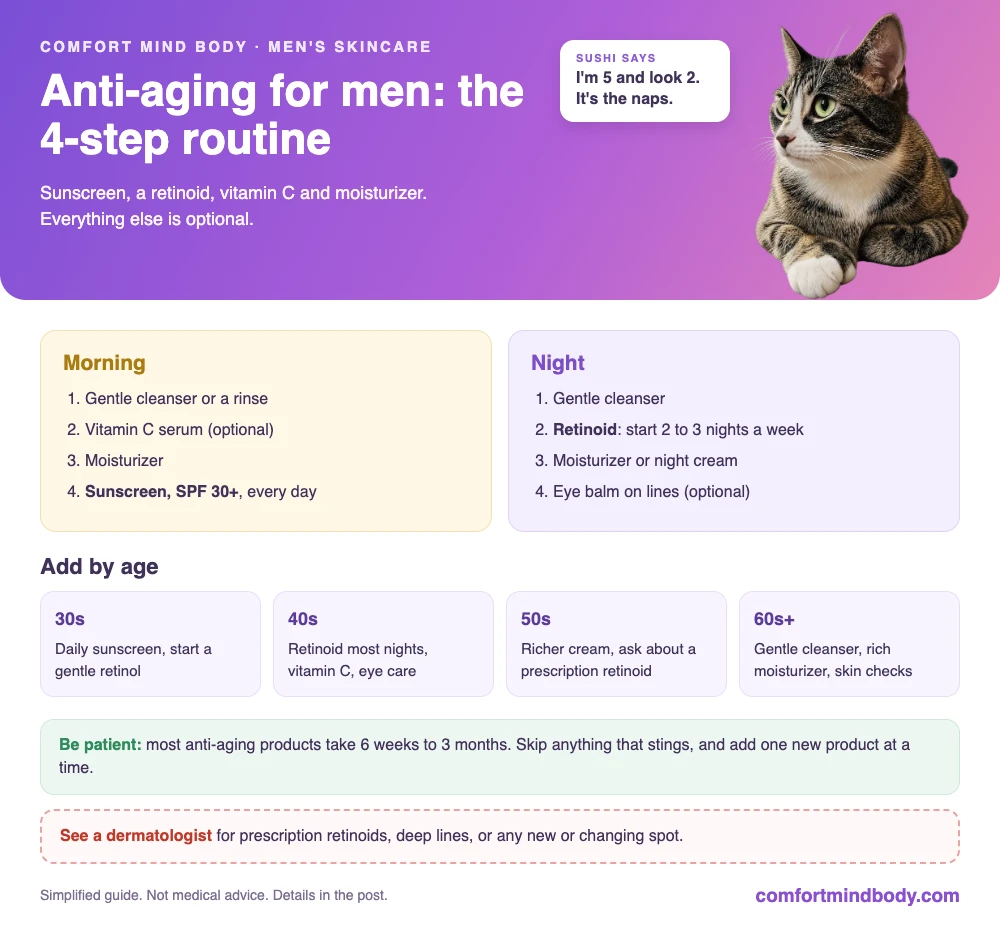
Read the infographic text
Sushi says: I’m 5 and look 2. It’s the naps.
Morning: A gentle cleanser or a rinse, a vitamin C serum (optional), a moisturizer, and sunscreen SPF 30+ every day.
Night: A gentle cleanser, a retinoid (start 2 to 3 nights a week), a moisturizer or night cream, and an eye balm on lines (optional).
Add by age: 30s: daily sunscreen and a gentle retinol. 40s: a retinoid as your skin tolerates it, vitamin C and eye care. 50s: a richer cream, and ask about a prescription retinoid. 60s and up: a gentle cleanser, a rich moisturizer and skin checks.
Be patient: Most anti-aging products take 6 weeks to 3 months. Skip anything that stings, and add one new product at a time.
See a dermatologist for prescription retinoids, deep lines, or any new or changing spot.
Best Anti-Aging Skin Care Products for Men
Here’s what our family actually uses, by step, plus a few worth comparing. Every product here is optional except sunscreen, so start with what fills the gap in your routine.
Retinoid
My husband uses prescription tretinoin from his dermatologist, the strongest option. Without a prescription, a retinol is the place to start: begin with a low strength (0.2% to 0.5%) a few nights a week, and move up only if your skin stays comfortable.
In our home
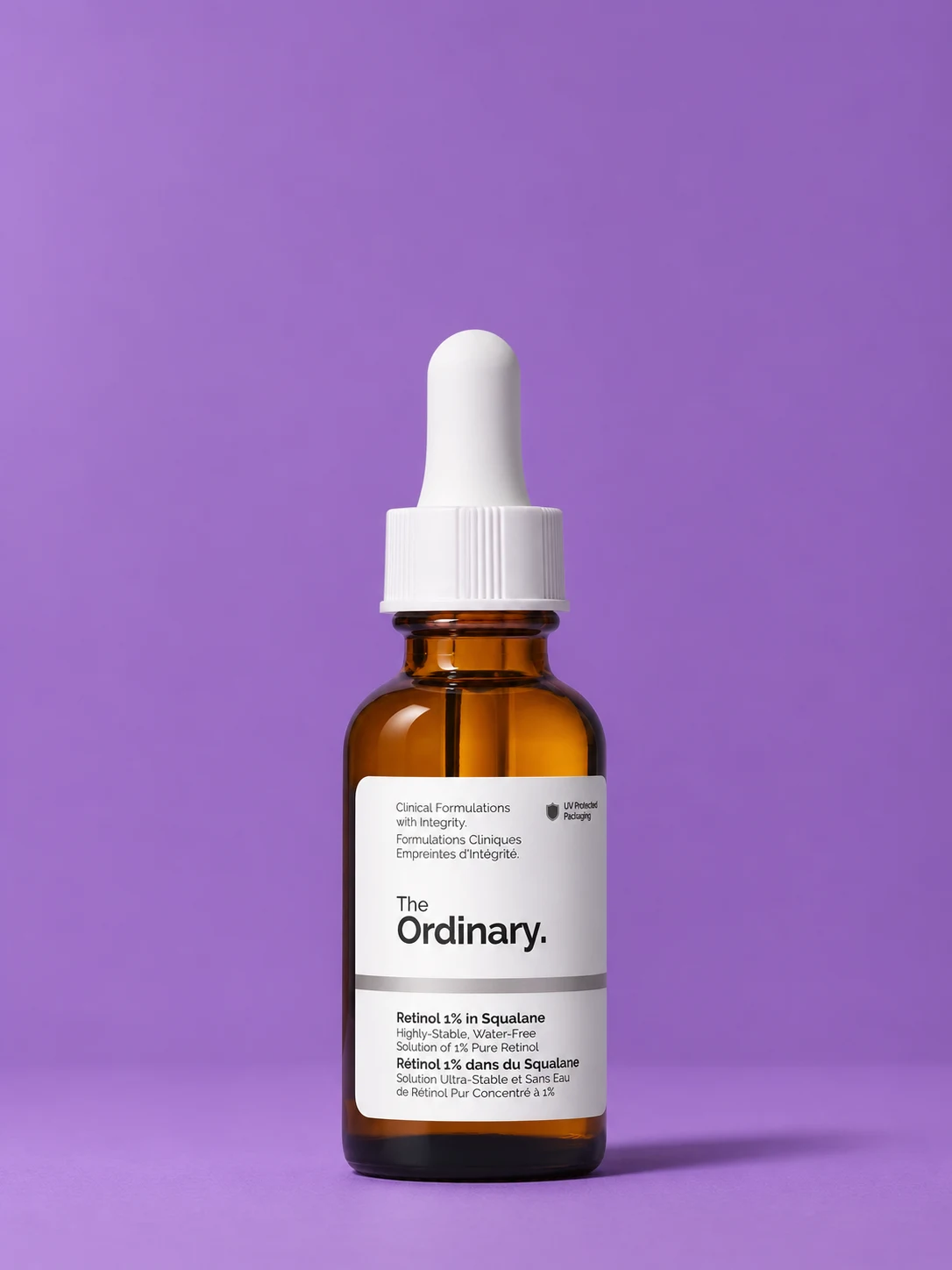
The Ordinary Retinol 1% in Squalane
Best fit: men who already use a retinol without irritation and want a stronger step. New to retinoids? Start with The Ordinary’s 0.2% or 0.5% version instead.
Why we use it: it’s the retinol I have at home. I don’t use it on my face: I mix a few drops into my body lotion. In squalane, it’s a simple, affordable retinol.
Watch: 1% is too strong for a first retinol on the face. The Ordinary also makes 0.2% and 0.5%; start low, 2 to 3 nights a week, and expect some dryness at first.
Check on AmazonVitamin C Serum
Worth comparing
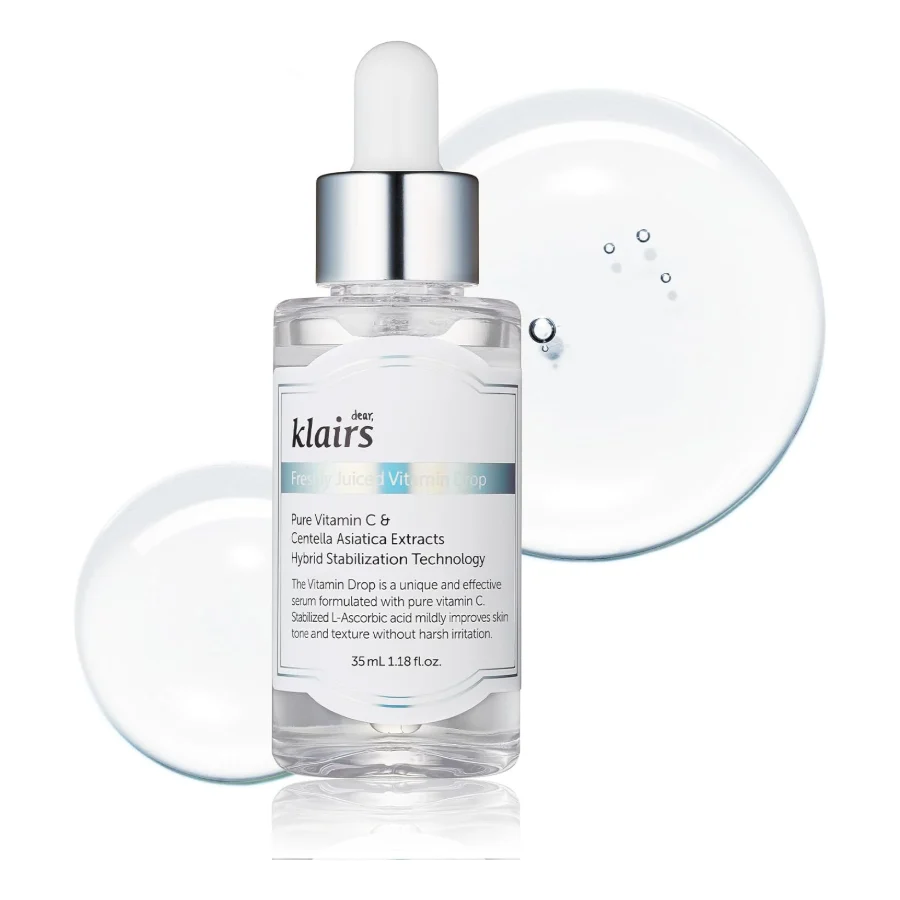
Dear Klairs Freshly Juiced Vitamin Drop
Best fit: a first vitamin C serum for sensitive or easily irritated skin.
Why compare: a gentle 5% pure vitamin C serum for dullness and uneven tone, worn in the morning under sunscreen.
Watch: vitamin C can oxidize once opened; keep the cap closed and use it up within a few months.
Check on StyleKorean Also on AmazonMoisturizers and Night Creams
A moisturizer is the step every man can keep. My dad uses just one, and my husband switches between a night cream and an after-shave cream.
In our home
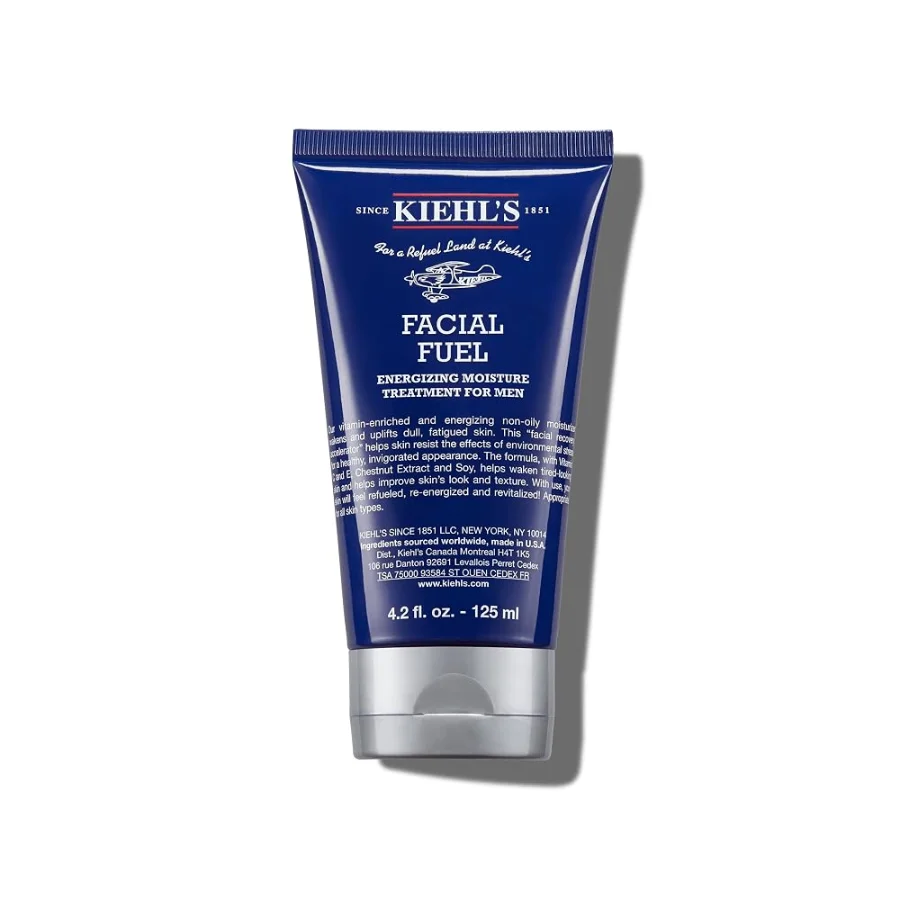
Kiehl’s Facial Fuel Energizing Moisturizer
Best fit: men who will only ever use one product.
Why we use it: it’s my dad’s one and only skincare product. It’s a light, non-greasy moisturizer, and the one step he’s happy to keep.
Watch: it has no SPF, so on sunny days it still needs a sunscreen on top.
Check on Amazon
In our home
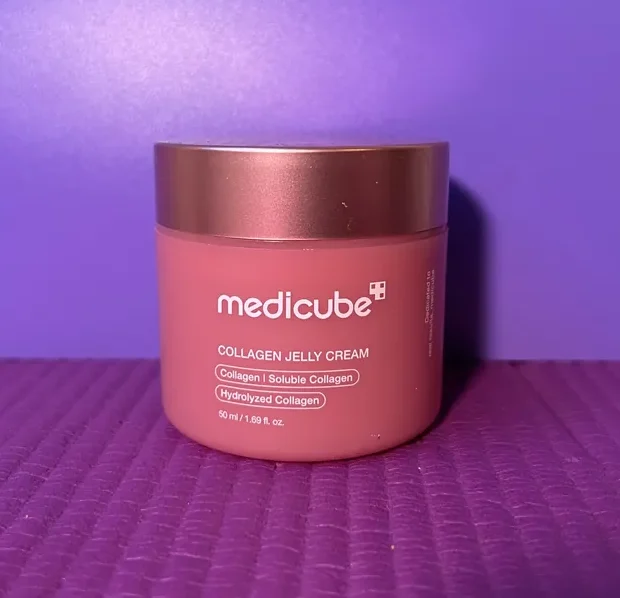
medicube Collagen Jelly Cream
Best fit: a night cream for combination to dry skin with fine lines.
Why we use it: it’s my husband’s night cream. The jelly texture feels light, even on combination skin.
Watch: it softens how fine lines look; it won’t replace sunscreen or a retinoid.
Check on Amazon
In our home
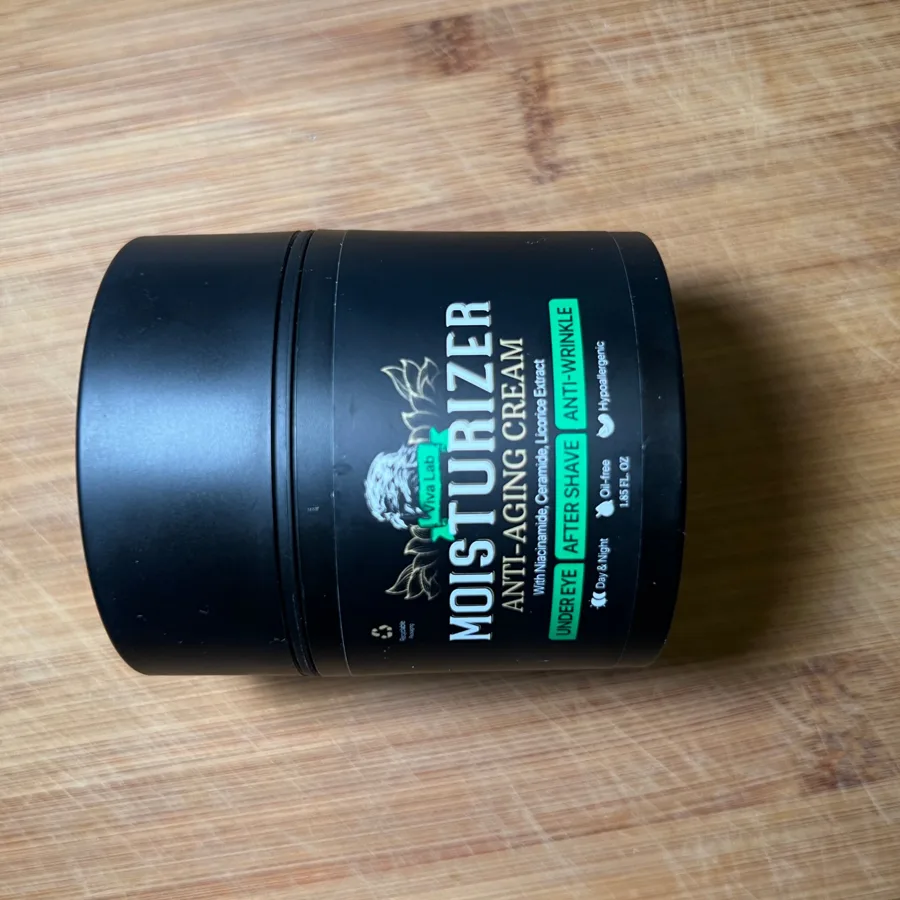
Viva Lab Anti-Aging Moisturizer for Men
Best fit: right after shaving, when skin feels tight.
Why we use it: it’s my husband’s after-shave cream. Its label says oil-free and hypoallergenic.
Watch: it isn’t a sunscreen; add SPF in the morning.
Check on AmazonFor Lines Around the Eyes
In our home
Dr.Melaxin Calcium Volume Multi Balm
Best fit: a quick swipe on crow’s feet, smile lines and dry spots.
Why we use it: my husband uses it for the lines around his eyes. It’s a stick balm, so there’s nothing to measure or spill.
Watch: use a thin layer and keep it out of your eyes. It softens how lines look; it doesn’t remove them.
Check on AmazonWorth Comparing: Firming Creams and Serums
Worth comparing
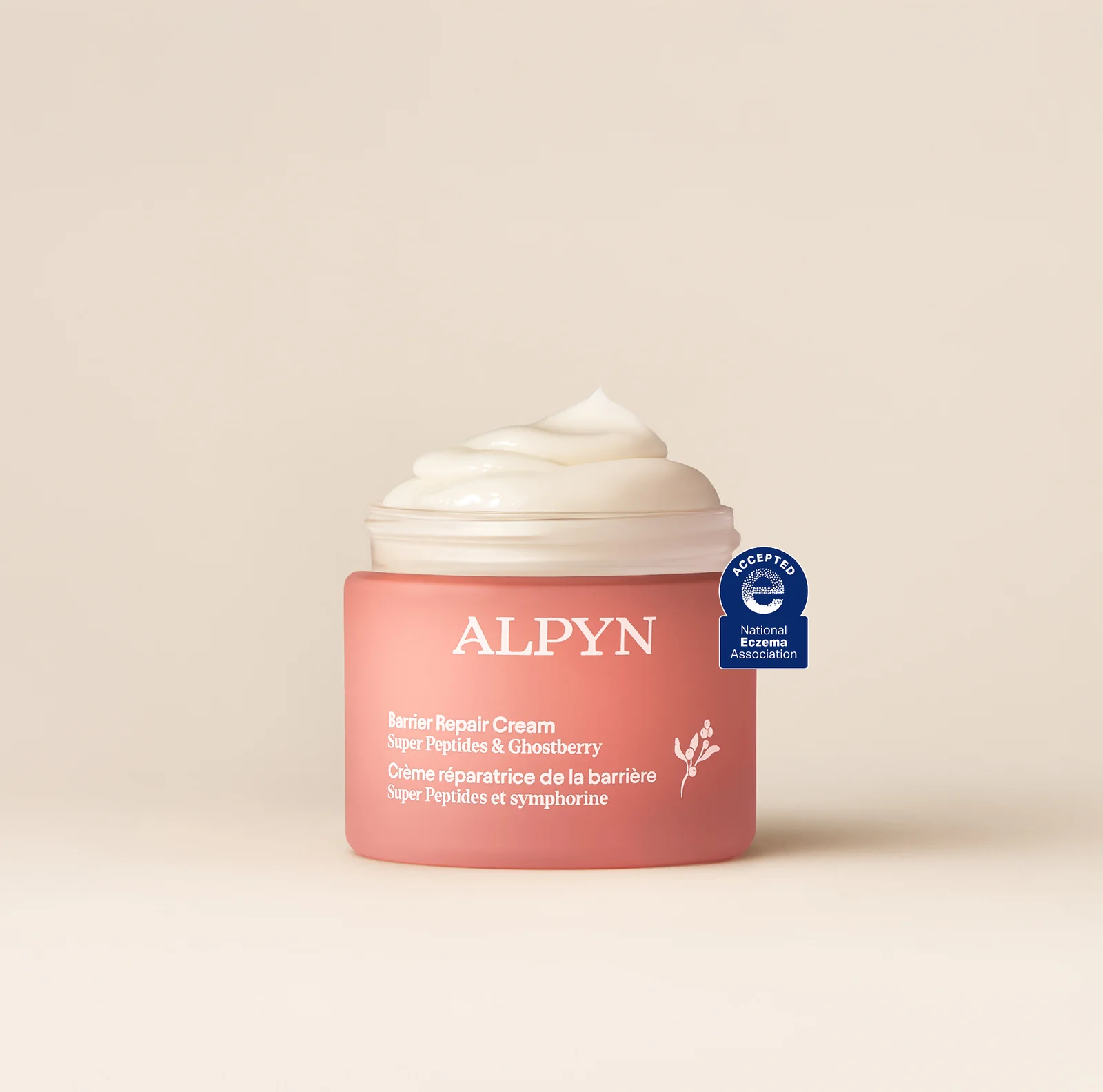
Alpyn Beauty Peptide Barrier Repair Cream
Best fit: dry, mature skin that wants a richer cream.
Why compare: a peptide cream from a clean-beauty brand, made for dry skin and fine lines.
Watch: peptides help skin look smoother, but they don’t replace a retinoid or sunscreen.
Check price at Alpyn Beauty
Worth comparing
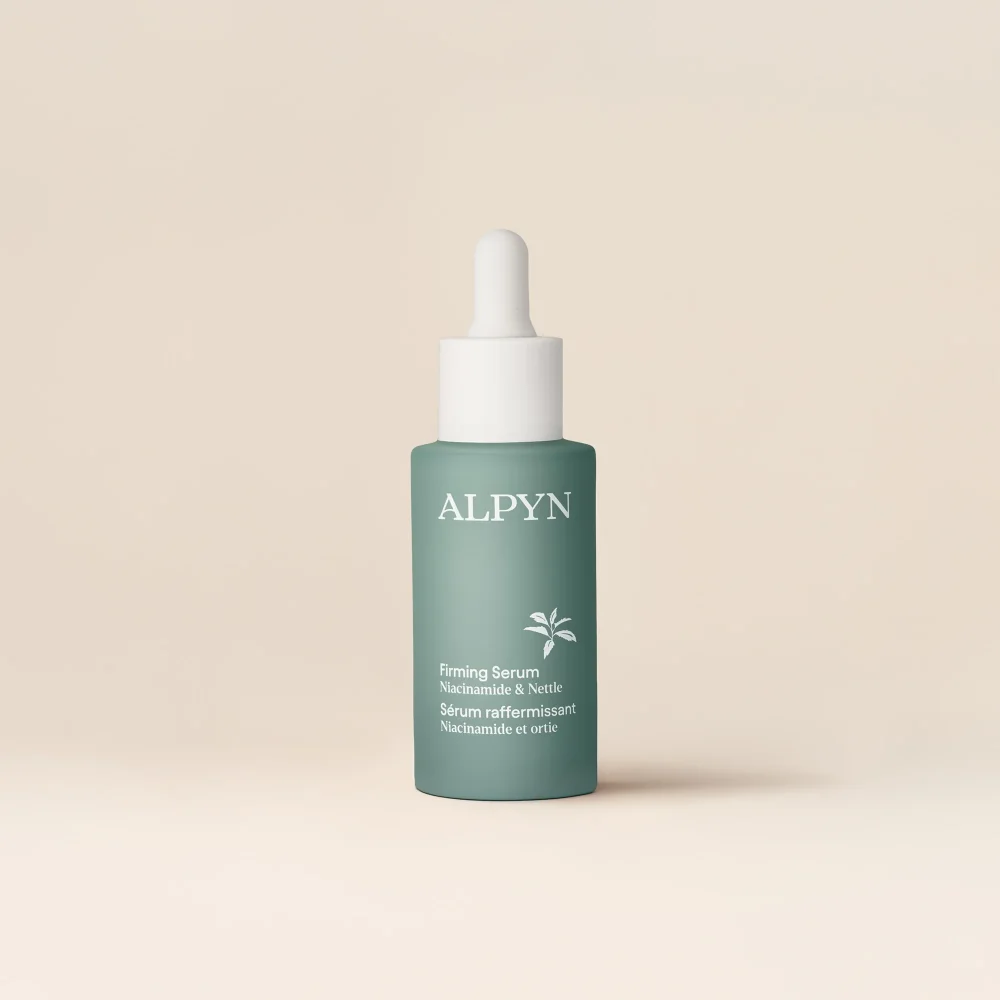
Alpyn Beauty Hydrating Firming Serum
Best fit: men who want one lightweight serum step.
Why compare: Alpyn describes it as a silky hydrating serum with wild nettle, niacinamide and rambutan.
Watch: a serum is a bonus, not a basic. Add it only once sunscreen, a retinoid and moisturizer are a habit.
Check price at Alpyn BeautyFor more creams by budget and skin type, see my best cream for wrinkles guide and my best skin care for men product guide.

Anti-Aging Skin Care for Men by Age
Your routine doesn’t need to change much with age. The basics stay the same. Go by your skin, not your birthday: how it feels, what it tolerates and what you want to change. A man in his 60s with sensitive skin may need a gentler routine than someone in his 30s, so use this table as a starting point.
| Age | What changes | What to use | Watch for |
|---|---|---|---|
| 30s | Prevention: sun damage starts to show as fine lines and spots | Daily SPF 30+, a gentle retinol 2 to 3 nights a week, a light moisturizer | Overdoing actives; add one product at a time |
| 40s | Lines around the eyes and forehead get deeper | A retinoid a few nights a week (more often only if your skin stays comfortable), vitamin C in the morning, an eye balm | Dryness from retinoids; use a richer night cream |
| 50s | Drier skin, sagging and sun spots | A richer moisturizer; if a retinol isn’t enough, ask a dermatologist whether a prescription retinoid fits your skin | New or changing spots; ask a dermatologist how often you need a skin exam |
| 60s and up | Thinner, drier skin | Gentle cleansing, a rich moisturizer and daily sunscreen | New or changing spots; harsh scrubs and strong acids |
Forehead Lines, Crow’s Feet and Under-Eye Bags: What Helps
- Forehead lines: a retinoid and sunscreen soften fine lines; deep lines from frowning or raising your eyebrows usually need in-office treatment. More in my guide to forehead wrinkles.
- Crow’s feet: an eye balm or cream keeps the area moisturized, and sunglasses stop the squinting that deepens them.
- Under-eye lines and bags: creams help fine lines; puffiness and bags depend more on sleep, salt and genetics. See my guide to lines under the eyes.
The honest part: creams can soften fine lines and improve texture, but they can’t erase deep wrinkles.
When to See a Dermatologist
If creams aren’t giving you the results you want, a board-certified dermatologist can prescribe a stronger retinoid or talk you through in-office options like Botox, lasers and fillers. Check your skin regularly for new or changing spots, and see one for any spot that grows, bleeds, itches or changes. Ask a dermatologist how often professional skin exams make sense for your risk factors and history.
Frequently Asked Questions
At what age should men start anti-aging skin care?
Do men need different anti-aging products than women?
Is retinol or tretinoin better for men?
Can anti-aging creams get rid of deep wrinkles?
Is vitamin C worth it for men?
Does skin under a beard age too?
What is the single most important anti-aging product for men?
How long until I see results?
Final Thoughts
Anti-aging skin care for men comes down to four steps: sunscreen, a retinoid, vitamin C if you like, and a moisturizer. Start with sunscreen, add one product at a time, and give it a few months. For the rest of your routine, see my skincare routine for men or start with the skin care for men guide.
Sunscreen by day, retinoid by night, and let the gray hair be the only thing that shows your wisdom.
Safety Notes
Safety Notes
- This guide is general education, not medical advice.
- Retinoids make skin more sensitive to the sun, so wear sunscreen every day when you use them. Don’t use them if you’re pregnant or trying to conceive without asking a doctor.
- Don’t layer a retinoid with acids, scrubs or benzoyl peroxide on the same night unless your dermatologist says so.
- Patch test new products on your inner forearm, and stop anything that burns, stings or causes a rash.
- Lasers and devices sold online can be counterfeit and dangerous; get in-office treatments from a board-certified dermatologist.