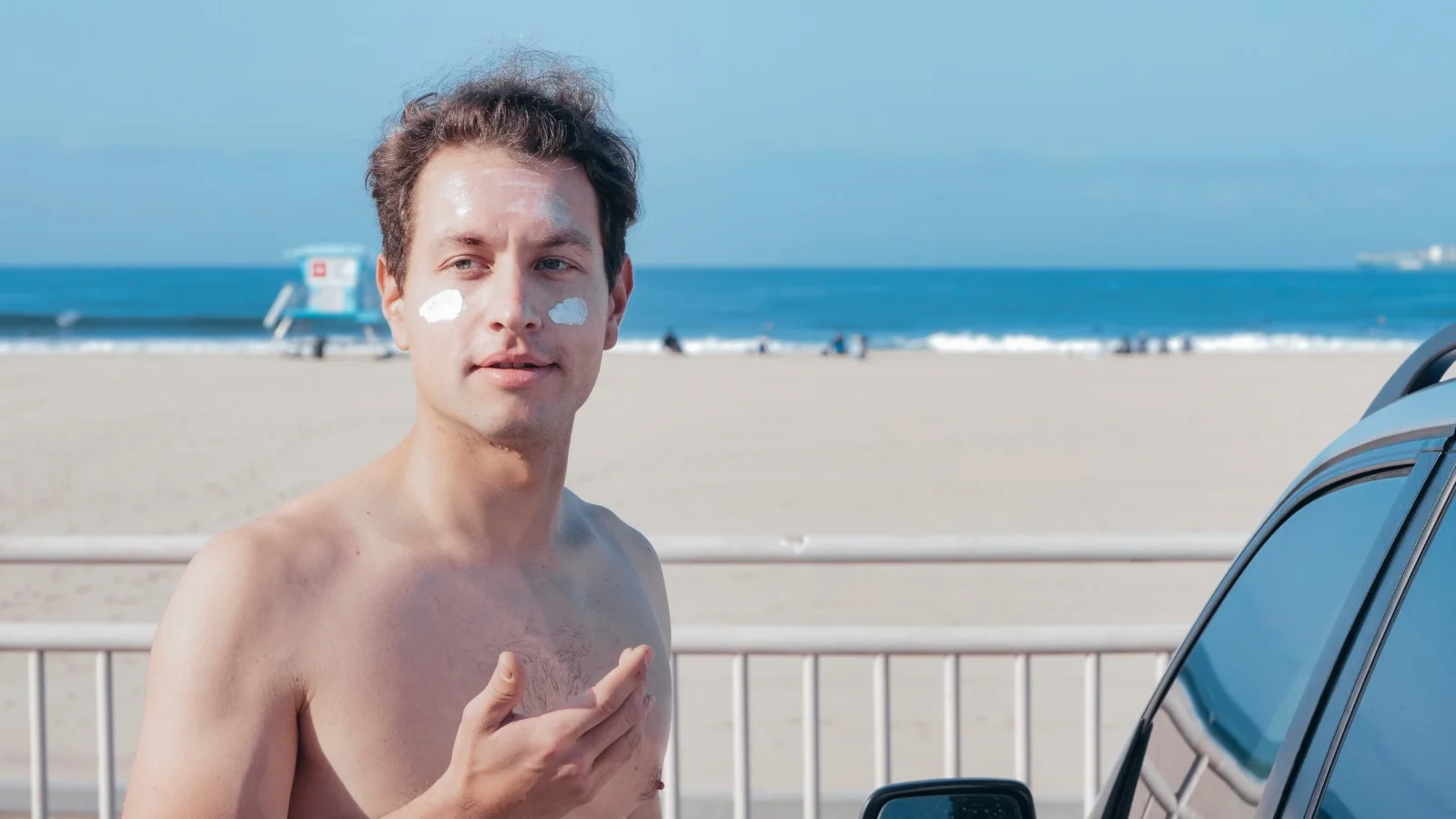
Man at the beach with sunscreen on his cheeks and nose, rubbing it in

Sunscreen for Men: The Best Face Sunscreens and SPF Moisturizers, and How to Use Them

Last updated: November 2026. Updated based on research, our family’s picks and dermatology guidance.

Affiliate disclosure: This post contains affiliate links. If you buy through them, Comfort Mind Body may earn a small commission at no extra cost to you. As an Amazon Associate I earn from qualifying purchases. Read my affiliate disclosure.

How this guide was made: the advice is based on guidance from the American Academy of Dermatology and the Skin Cancer Foundation. Products marked “In our home” are the sunscreens my husband, my brother and I use. Products marked “Worth comparing” are popular picks we haven’t tried; for those I rely on the brands’ own descriptions and dermatologist guidance on what to look for.

Please note: this is general information, not medical advice. A new or changing spot on your skin needs a dermatologist.

Most men skip sunscreen until the first bad burn, or the first dermatologist visit. Welcome to Comfort Mind Body, where I share what really sits on our bathroom shelf. In our family, my husband and I each use a sunscreen stick and my brother uses a light fluid, and all three are examples in this guide.

Here’s why sunscreen matters more for men than most realize, the best sunscreen for men by skin type, what to use on a bald head or around a beard, and how to put it on so it actually works. For the bigger picture on SPF, filters and textures, see my sunscreen match guide.

The best sunscreen for men is a broad-spectrum SPF 30 or higher that you’ll actually wear every day. Oily skin does best with an oil-free gel or fluid, dry skin with an SPF moisturizer, and dark skin with a clear or tinted formula that leaves no white cast. Put it on 15 minutes before you go out, use at least a teaspoon for your face plus enough to cover your neck and ears, and reapply every two hours when you’re outside.

Do Men Really Need Sunscreen?

Yes. The American Academy of Dermatology says men are more likely than women to die of melanoma at any age, and by age 65 men are twice as likely to get it. Part of the reason is habit: women apply sunscreen more often, and many of their everyday products already have SPF.

Sunscreen also slows the things men notice in the mirror first: wrinkles, sun spots and rough, leathery skin. It’s step one of any anti-aging skin care for men routine. Every skin tone needs it, including darker skin, where the sun can also darken spots, razor bumps and scars.

Sunscreen vs SPF Moisturizer: Which Should Men Use?

For an ordinary day, an SPF moisturizer counts as sunscreen, as long as it’s broad spectrum and SPF 30 or higher. Many men’s face lotions with SPF are only SPF 15 or 20, which is below what dermatologists recommend. For a day outside, sports or the beach, use a water-resistant sunscreen and reapply it.

A water-resistant label (40 or 80 minutes) tells you how long the sunscreen keeps working while you swim or sweat. It doesn’t stretch the two-hour rule: reapply when that time is up, right after towel-drying, and at least every two hours outdoors.

Your dayWhat to useWater resistant?When to reapply
Everyday: office, commute, errandsAn SPF 30+ moisturizer or a daily face sunscreenNot neededBefore you go out; again if you end up outside for hours
Outdoors: sports, yard work, a long walkA broad-spectrum SPF 30+ sunscreen40 or 80 minutesEvery 2 hours and after sweating
Beach or poolA water-resistant SPF 30 to 50 sunscreen80 minutesEvery 2 hours and right after swimming or toweling off

What to Look for on the Label

  • Broad spectrum: protects against both UVA and UVB rays
  • SPF 30 or higher
  • Water resistant (40 or 80 minutes) if you’ll sweat or swim
  • Oil-free or non-comedogenic if you break out
  • Fragrance-free if your skin is sensitive

Best Sunscreen for Men by Skin Type

The right sunscreen is mostly about texture: the one that feels like nothing is the one you’ll wear. Here’s what we use at home, then the picks worth comparing for each skin type.

What We Use at Home: Two Sticks and a Fluid

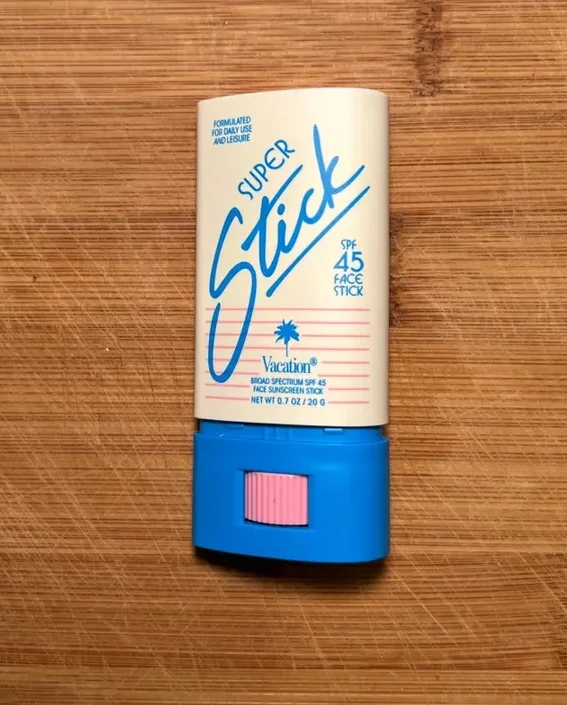
My husband’s face sunscreen is the Vacation Super Stick, mine is the Abib Airy Sunstick, and my brother uses La Roche-Posay’s Anthelios UV Defense fluid. A stick is the easiest way to get a man to wear sunscreen at all, and it’s great for reapplying on the go. Just use several swipes over each area, because a single pass doesn’t put on enough.

A Vacation Super Stick SPF 45 face sunscreen stick on a wooden board

In our home

Vacation Super Stick SPF 45

Best fit: a quick daily face sunscreen, especially for men who won’t use a lotion.

Why we use it: it’s my husband’s everyday face sunscreen. Vacation says it goes on clear on all skin tones and is water-resistant for up to 80 minutes. On the label: SPF 45, broad spectrum, water-resistant (80 minutes).

Watch: it has Vacation’s signature scent, so skip it if fragrance bothers your skin. Use several swipes over each area to get enough on.

Check on Amazon
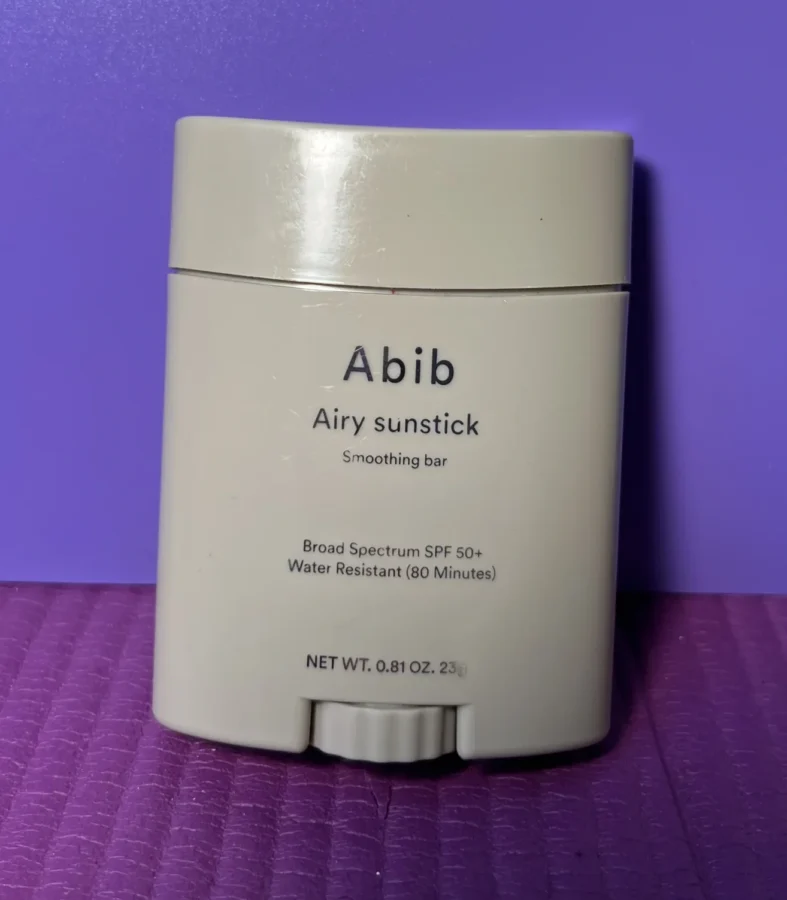
Abib Airy Sunstick sunscreen stick on a purple background

In our home

Abib Airy Sunstick SPF 50+

Best fit: oily and combination skin, and reapplying over the day.

Why we use it: it’s the sunscreen stick I use. It has a semi-matte finish, so it doesn’t make skin look shiny. On the label: SPF 50+ and PA++++ (Korean labeling).

Watch: it’s a Korean sunscreen, made to Korean rather than US FDA sunscreen standards. Swipe several times over each area to get enough on.

Check on Amazon
La Roche-Posay Anthelios UV Defense Sunscreen SPF 50 bottle

In our home

La Roche-Posay Anthelios UV Defense Sunscreen SPF 50

Best fit: men who skip sunscreen because it feels heavy, including oily skin.

Why we use it: it’s my brother’s sunscreen, part of his La Roche-Posay routine for oily, acne-prone skin. It’s broad-spectrum SPF 50, non-comedogenic and fragrance-free, with the newer filter bemotrizinol, in a milky fluid with an invisible finish. On the label: SPF 50, broad spectrum.

Watch: it’s a hydrating formula, so very oily skin may still want to blot at midday. Reapply every two hours outdoors.

Check on Amazon
Best Sunscreen for Oily or Acne-Prone Skin

Look for oil-free, non-comedogenic gels and fluids with a matte or invisible finish. If you also deal with shine and breakouts, my oily skin care routine for men covers the rest of the routine.

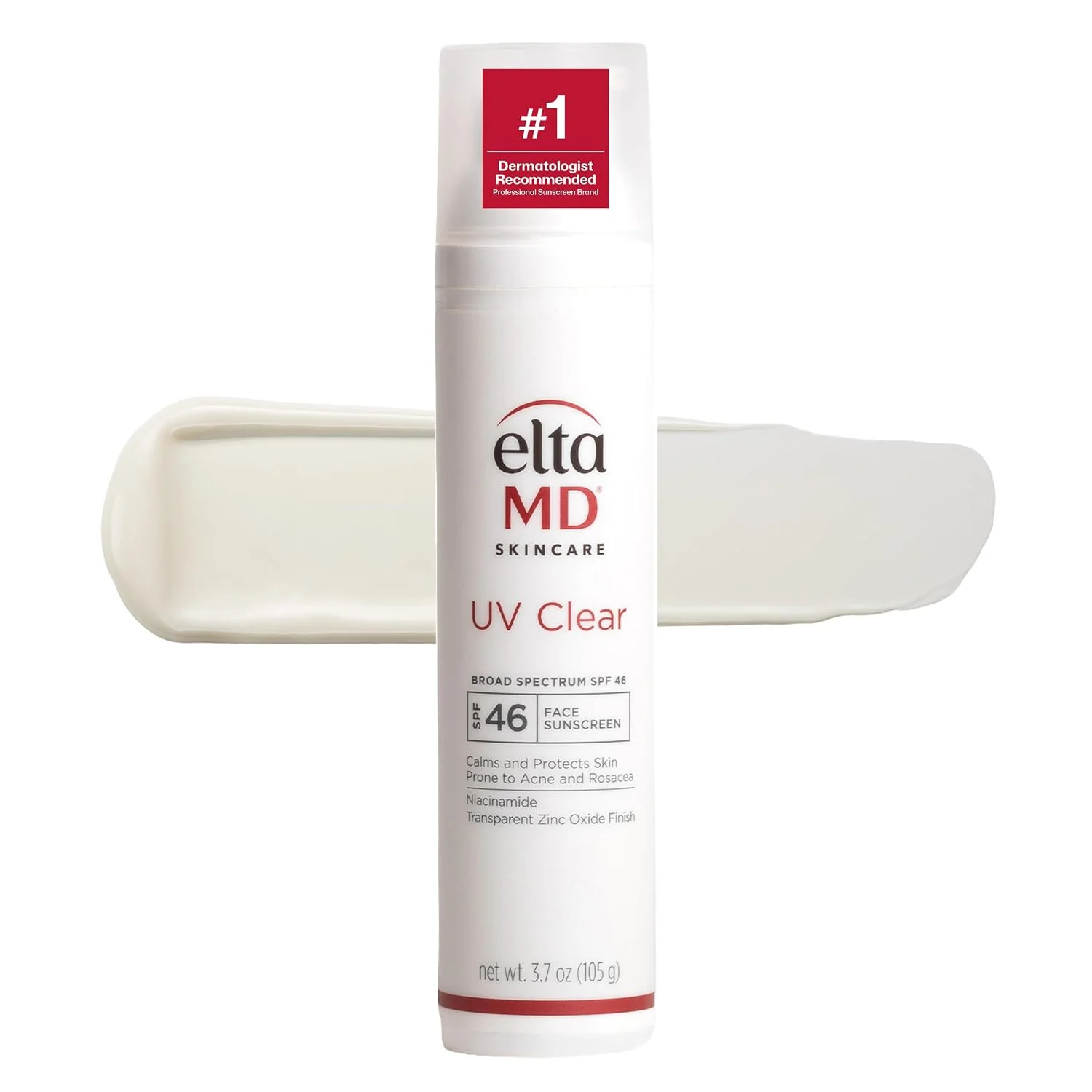
EltaMD UV Clear Broad-Spectrum SPF 46 bottle

Worth comparing

EltaMD UV Clear SPF 46

Best fit: oily or acne-prone skin, and skin that gets red easily.

Why compare: a light, oil-free face sunscreen with zinc oxide and niacinamide that dermatologists often recommend. It also comes in a tinted version. On the label: SPF 46, broad spectrum, not water-resistant.

Watch: it isn’t water-resistant, so use a different sunscreen for sports or swimming.

Check on Amazon
Best SPF Moisturizer for Dry or Normal Skin

If your skin feels tight, an SPF moisturizer does two jobs in one step. Choose broad-spectrum SPF 30 or higher.

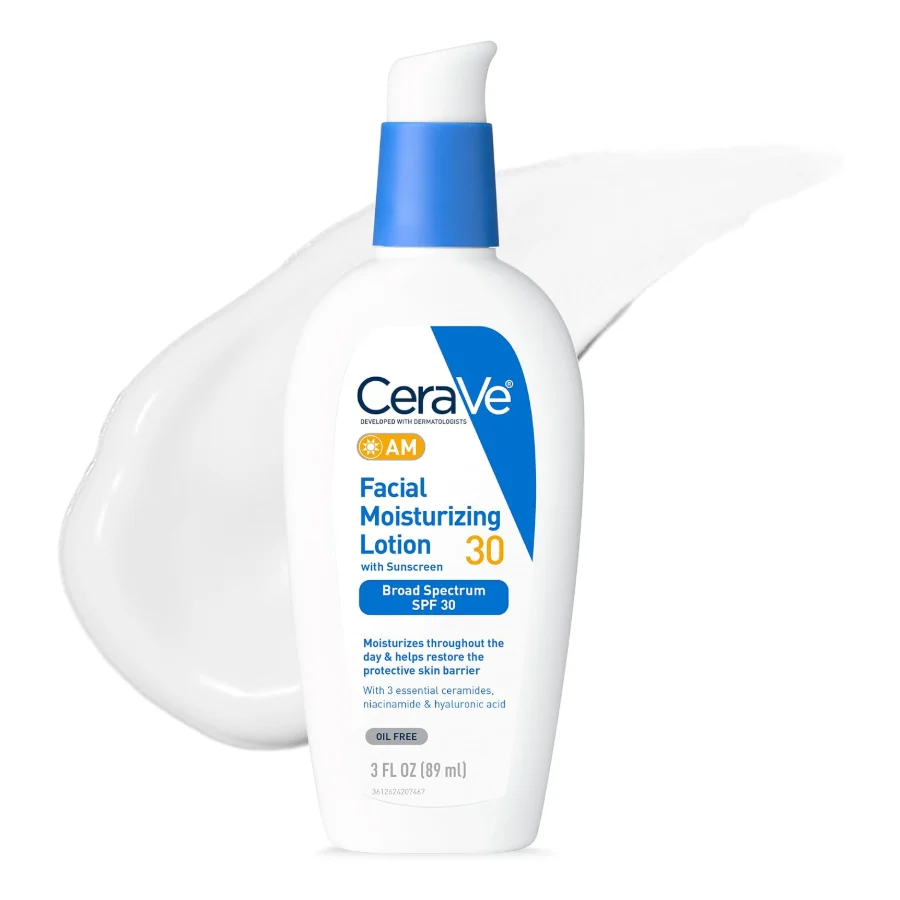
CeraVe AM Facial Moisturizing Lotion with SPF 30 pump bottle

Worth comparing

CeraVe AM Facial Moisturizing Lotion SPF 30

Best fit: normal to dry skin, as a moisturizer and sunscreen in one step.

Why compare: broad-spectrum SPF 30 with ceramides and niacinamide, so it replaces your morning moisturizer. On the label: SPF 30, broad spectrum, not water-resistant.

Watch: it can feel heavy on very oily skin, and it isn’t made for a day at the beach.

Check on Amazon
Best Sunscreen for Black Men and Dark Skin (No White Cast)

The biggest complaint about sunscreen on dark skin is the white or gray cast. Clear chemical sunscreens blend in on every skin tone, and tinted mineral sunscreens with iron oxides blend better than plain zinc. Cleveland Clinic notes that tinted options are less likely to leave a cast. Dark skin still burns, and the sun can deepen dark spots, so daily sunscreen matters here too.

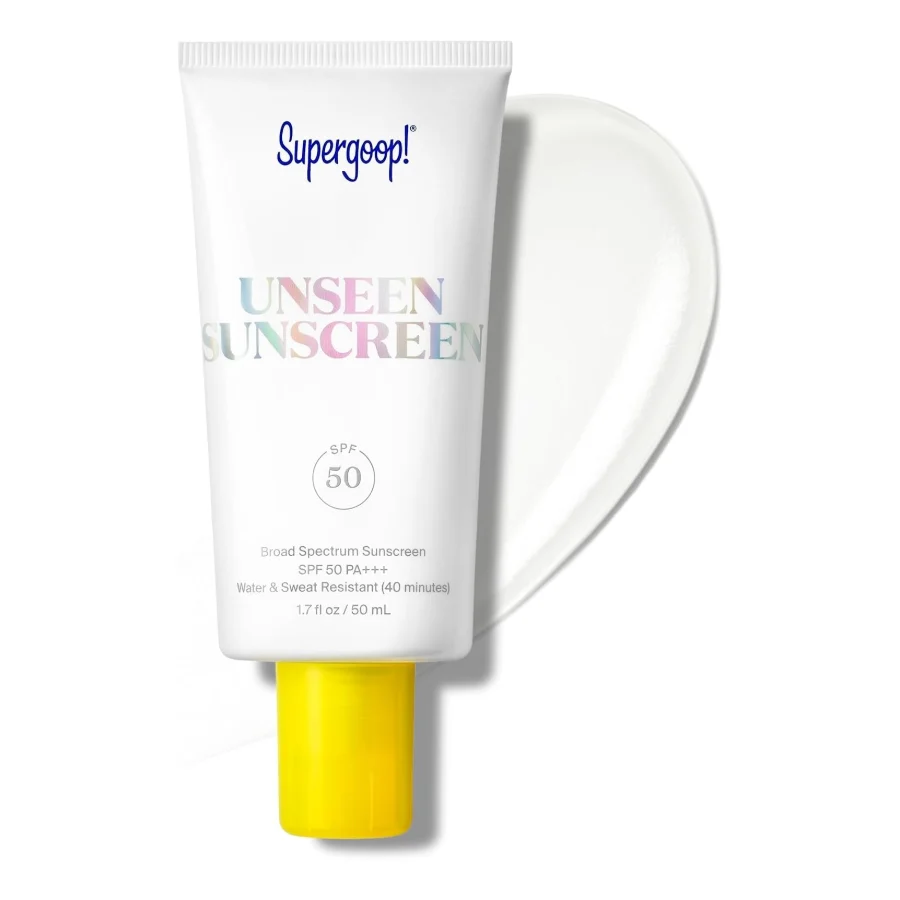
Supergoop! Unseen Sunscreen clear face sunscreen tube

Worth comparing

Supergoop! Unseen Sunscreen SPF 50

Best fit: dark skin and anyone who hates a white cast; it also slides on easily around a beard.

Why compare: a clear, invisible gel that leaves no white residue on any skin tone. On the label: SPF 50, broad spectrum, not water-resistant.

Watch: the silicone feel isn’t for everyone, and it can pill if you layer too many products under it.

Check on Amazon
Best Mineral Sunscreen for Sensitive Skin

Mineral sunscreens use zinc oxide and titanium dioxide and are usually the gentlest option for sensitive or easily irritated skin. A tinted formula helps hide the cast.

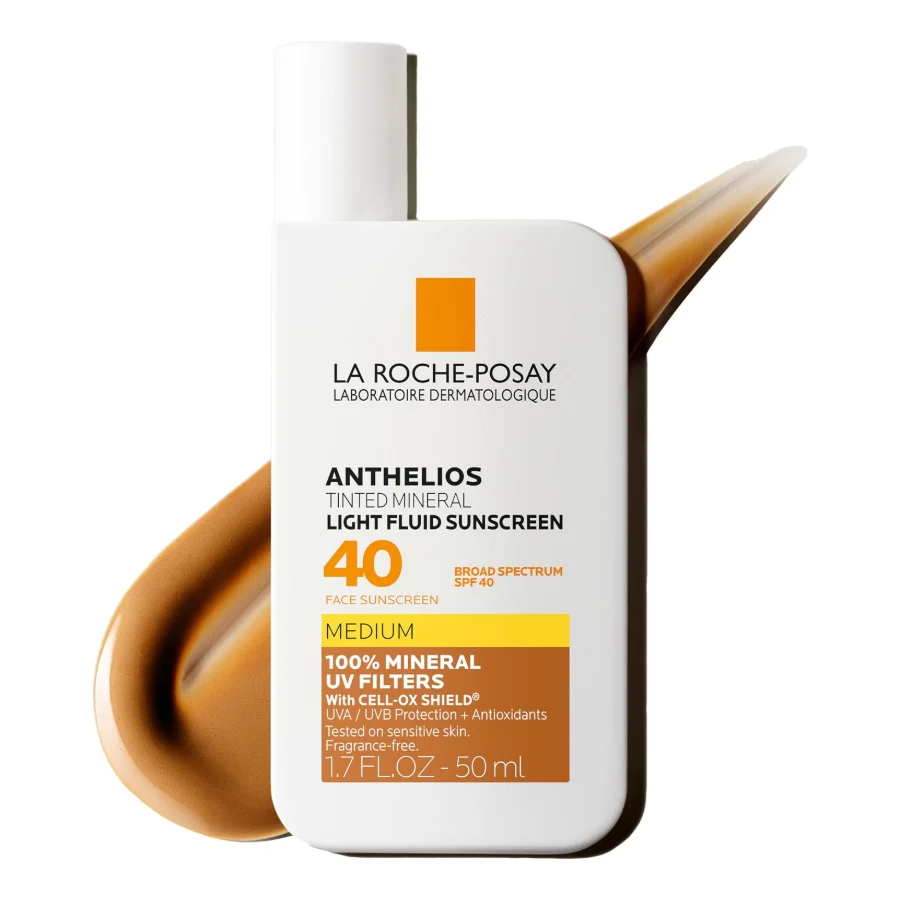
La Roche-Posay Anthelios tinted mineral light fluid face sunscreen bottle with a tinted swatch

Worth comparing

La Roche-Posay Anthelios Tinted Mineral Light Fluid SPF 40

Best fit: sensitive skin that reacts to chemical filters.

Why compare: 100% mineral filters (zinc oxide and titanium dioxide), with iron oxides that tint the fluid and cut the white cast. On the label: SPF 40, broad spectrum, water-resistant (40 minutes).

Watch: the tint may not match very dark or very fair skin; test it on your jawline first.

Check on Amazon
Tinted Sunscreen for Men

Tinted sunscreen isn’t makeup. A light tint evens out redness and razor bumps, cuts the white cast, and its iron oxides help protect against the visible light that darkens spots. The La Roche-Posay pick above is tinted, and EltaMD UV Clear also comes in a tinted version.

A Korean Sunscreen Pick

Korean sunscreens are famous for light, watery textures. They’re made to Korean rather than US standards, so read the label. My Korean skin care for men guide has more picks.

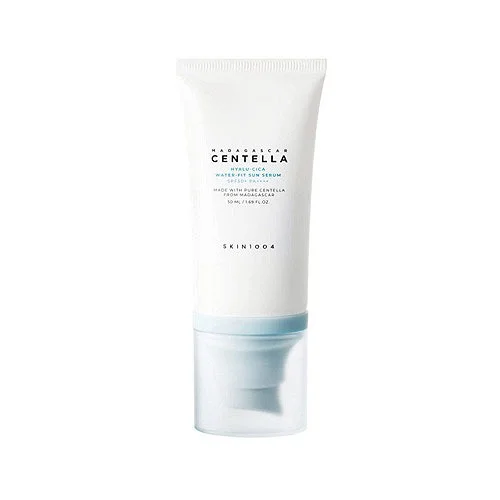
SKIN1004 Hyalu-Cica Water-Fit Sun Serum tube on a white background

Worth comparing

SKIN1004 Hyalu-Cica Water-Fit Sun Serum SPF 50+

Best fit: men who want a very light, watery Korean sunscreen.

Why compare: one of the most popular Korean sunscreens; it feels like a serum and sits well under a beard. On the label: SPF 50+ and PA++++ (Korean labeling).

Watch: it’s a Korean sunscreen, made to Korean rather than US FDA sunscreen standards.

Check on StyleKorean
Sunscreen for a Bald Head or Thinning Scalp

The scalp faces the sun directly, and the Skin Cancer Foundation warns that bald spots and thinning hair are vulnerable to sun damage, precancers and skin cancers.

  • Bald or shaved head: use your face sunscreen or a stick on the whole scalp, with the same amount and reapplying as your face.
  • Thinning hair or a part line: a scalp mist or a stick is easier than lotion.
  • Long days outside: a hat labeled UPF 50+ is the most reliable protection.
  • Skin checks: ask your dermatologist to check your scalp during skin exams.
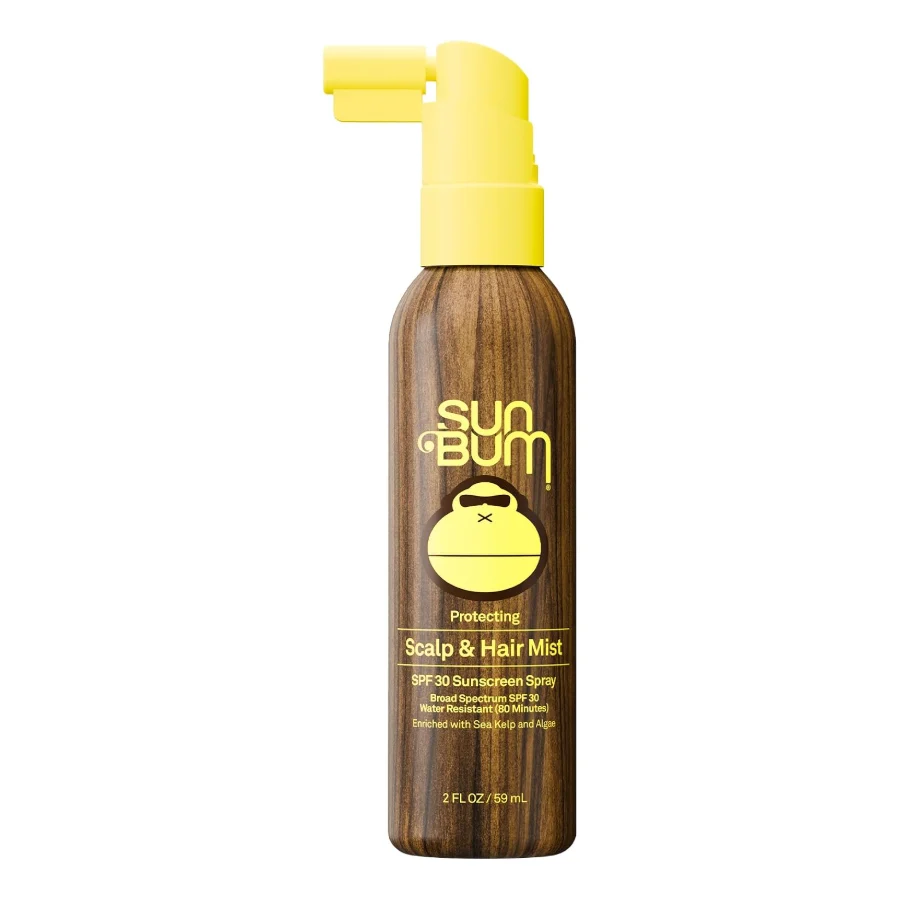
Sun Bum SPF 30 Scalp and Hair Mist spray bottle

Worth comparing

Sun Bum Scalp and Hair Mist SPF 30

Best fit: thinning hair, a part line or a bald spot you can’t easily rub lotion into.

Why compare: a fine mist with a narrow nozzle for the scalp, broad spectrum and water-resistant. On the label: SPF 30, broad spectrum, water-resistant (80 minutes).

Watch: it’s scented, and a mist is easy to under-apply; cover the area evenly and add a hat for long days outside.

Check on Amazon
Sunscreen With a Beard or After Shaving

  • A beard blocks some sun, but not all. Put sunscreen on your cheeks, neck and every area you shave.
  • Pick a fluid, gel or stick that doesn’t clump in facial hair.
  • After shaving, let your skin settle and moisturize if it feels tight. If sunscreen stings on fresh-shaved skin, a mineral formula is usually gentler.

If the skin under your beard flakes or itches, see my guide to beard dandruff, and for bumps along the neck, my guide on how to get rid of razor bumps.

How to Apply Sunscreen (So It Actually Works)

Most people use less sunscreen than the label is tested with, so they get less protection than the SPF number promises. The American Academy of Dermatology recommends:

  1. Use enough: at least a teaspoon for your face, about the length of your index and middle fingers, then more for your neck and ears. For your whole body, about a shot glass.
  2. Put it on early: about 15 minutes before you go outside.
  3. Don’t miss the edges: ears, neck, the back of the neck, scalp and the tops of your feet.
  4. Reapply: every two hours outdoors, and right after swimming, sweating or towel-drying.
  5. Protect your lips: use a lip balm with SPF 30 or higher.
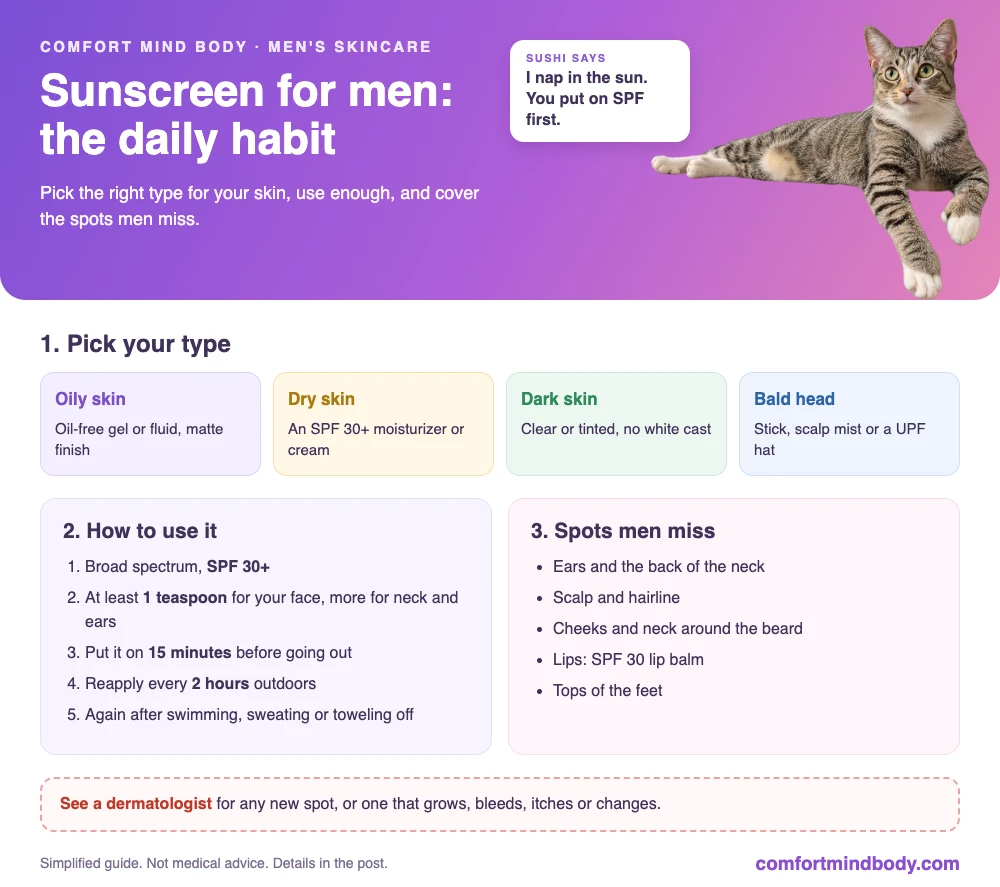
Sunscreen for men infographic: which sunscreen type for oily, dry and dark skin and a bald head, how much to use and when, and the spots men miss, with Sushi the cat
Save it: the daily sunscreen habit for men
Read the infographic text

Sushi says: I nap in the sun. You put on SPF first.

Pick your type: Oily skin: an oil-free gel or fluid with a matte finish. Dry skin: an SPF 30+ moisturizer or cream. Dark skin: a clear or tinted sunscreen with no white cast. Bald head: a stick, a scalp mist or a UPF hat.

How to use it: Choose broad spectrum, SPF 30 or higher. Use at least 1 teaspoon for your face, plus more for your neck and ears. Put it on 15 minutes before going out. Reapply every 2 hours outdoors, and again after swimming, sweating or toweling off.

Spots men miss: Ears and the back of the neck, the scalp and hairline, the cheeks and neck around the beard, lips (use an SPF 30 lip balm) and the tops of the feet.

See a dermatologist for any new spot, or one that grows, bleeds, itches or changes.
Frequently Asked Questions

Do men need sunscreen every day, even in winter?
Yes, on any day you’re outside. UV rays reach your skin through clouds and in winter, and snow reflects them. A daily SPF 30+ moisturizer or sunscreen is the easiest habit.
Is the SPF 15 in my moisturizer enough?
Not by the American Academy of Dermatology’s standard. It recommends broad-spectrum SPF 30 or higher, so check the label on your moisturizer.
Is mineral or chemical sunscreen better for men?
Both protect well. Mineral sunscreens (zinc oxide, titanium dioxide) are usually gentler on sensitive skin but can leave a white cast; chemical sunscreens blend in more easily. Pick the one you’ll wear every day.
What is the best sunscreen for Black men?
One that blends in without a white cast: a clear chemical sunscreen or a tinted mineral one. Darker skin still burns and can develop skin cancer, and sun also darkens spots and scars.
Do I need sunscreen on a bald head?
Yes. A bald or thinning scalp faces the sun directly. Use an SPF 30+ sunscreen, a stick or a scalp mist, or wear a hat with UPF 50+.
Will sunscreen make my face greasy?
Not if you pick the right texture. Oil-free gels, fluids and sticks with a matte finish are made for oily skin.
Can I put sunscreen on right after shaving?
Yes, but let your skin settle first and moisturize if it feels tight. If sunscreen stings after a shave, a mineral formula is usually gentler.
How often should I reapply sunscreen?
Every 2 hours when you’re outside, and right after swimming or sweating. On an office day, morning sunscreen is usually enough unless you go out for long.

Final Thoughts

The best sunscreen for men is the one you’ll actually wear, so choose a texture you like and keep it where you’ll see it every morning. For the rest of your routine, start with my skin care for men guide or the skincare routine for men.

Swipe it on, step outside, and leave the burning to the barbecue.

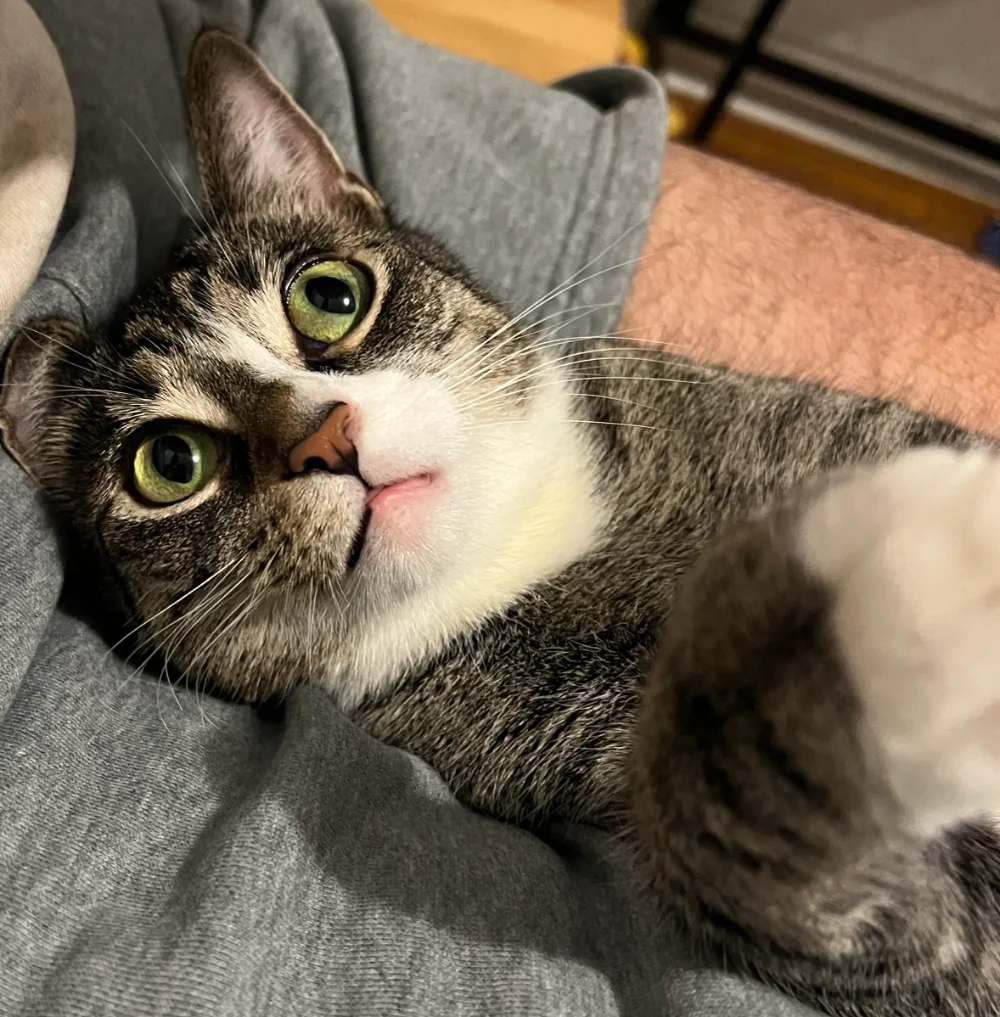
Sushi the tabby cat curled up on a lap and looking up with big green eyes
Sushi, supervising from Dad’s lap
P.S. from Sushi: Mom and Dad each have their own sunscreen stick. I have Dad’s lap and a shady spot by the window. Zero sunburns so far.

Safety Notes

Safety Notes

  • This guide is general education, not medical advice.
  • Stop using a sunscreen that burns, stings or gives you a rash, and try a fragrance-free or mineral formula instead.
  • Don’t spray sunscreen straight onto your face; spray it into your hands and rub it in.
  • Sunscreen is one part of sun protection: add shade, a hat and sunglasses on long days outside.
  • See a dermatologist for any new spot, or one that grows, bleeds, itches or changes.
Helpful Resources

Scroll to Top