Choosing a moisturizer can feel more difficult than it should. One cream feels too heavy. Another gel feels nice for an hour but leaves skin tight later. A product marketed for dry skin may pill under sunscreen. A lightweight lotion may not feel protective enough after retinol, benzoyl peroxide, cold weather, or a long flight.
The right moisturizer is not always the richest one. It is the one that fits your skin type, your current skin condition, your routine, and the season.
Dry skin may need more emollient and barrier support. Oily skin may prefer a lighter gel-cream. Combination skin may need a balanced formula or different amounts on different areas. Sensitive skin often needs a simpler, fragrance-free formula. Acne-prone skin still needs moisture, especially when treatments make the face feel dry or irritated.
This Comfort Mind Body guide explains how to choose the best moisturizer for dry, oily, combination, sensitive, dehydrated-looking, and barrier-stressed skin. You will also learn how to read texture, ingredients, labels, and warning signs before buying another cream.
If your skin feels tight but oily, start with the Hydrating vs Moisturizing guide. If it burns, peels, stings, or feels tight and shiny, read the Skin Barrier Repair guide before adding more products.
Quick Navigation
ToggleQuick Answer: How Do You Choose the Best Moisturizer?
Choose a moisturizer based on how your skin feels now, not only by the label on the jar.
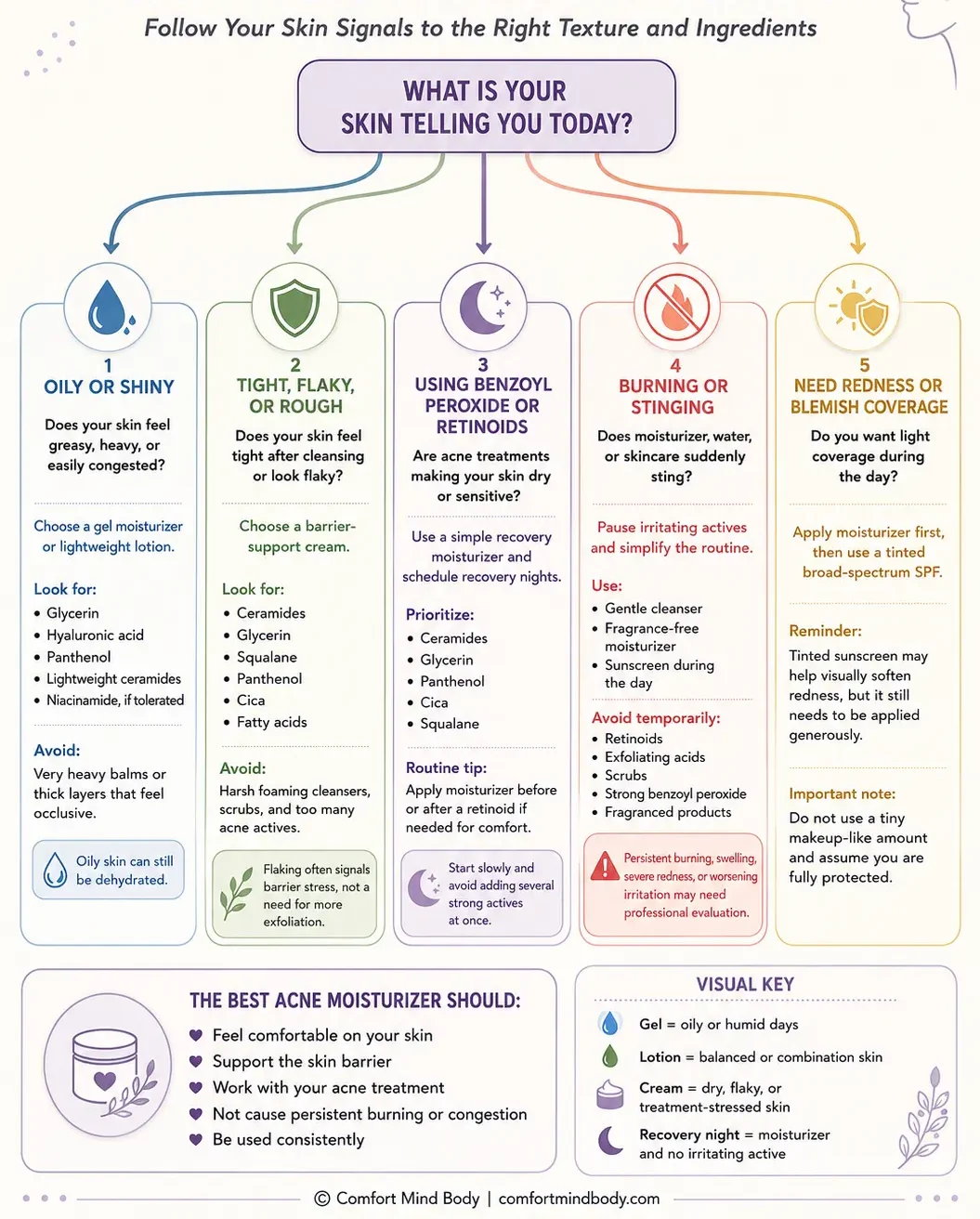
If your skin feels rough, flaky, or itchy, choose a cream with humectants, emollients, and barrier-support ingredients. If it feels oily but uncomfortable, choose a lighter gel, lotion, or gel-cream that provides hydration without a heavy finish.
If your cheeks are dry but your T-zone gets shiny, choose a balanced formula or apply a richer moisturizer only where skin feels dry.
Sensitive skin usually benefits from a short, simple ingredient list and a fragrance-free formula. Acne-prone skin may prefer a comfortable non-comedogenic moisturizer, especially when benzoyl peroxide, salicylic acid, adapalene, or retinoids are part of the routine.
The simplest starting point is this:
- Dry or flaky skin: cream or balm texture with glycerin, ceramides, squalane, fatty acids, or petrolatum.
- Oily skin: gel, lotion, or gel-cream with glycerin, niacinamide, lightweight emollients, or hyaluronic acid.
- Combination skin: balanced lotion or gel-cream. Use a small extra layer only on dry cheeks or around the mouth.
- Sensitive skin: fragrance-free moisturizer with gentle barrier support.
- Dehydrated-looking skin: hydrating layer first, then moisturizer.
- Retinol or acne-treatment dryness: simple barrier cream and fewer active nights.
Comfort Mind Body reminder: A moisturizer does not need to solve every concern at once. It needs one clear job and a texture your skin can tolerate consistently.
Skin Type Is Only One Part of the Choice
Skin type matters. However, it is not permanent in the same way every day.
Your baseline may be oily, dry, combination, or sensitive. Yet your skin can also become dehydrated-looking after travel, hot weather, indoor air conditioning, harsh cleansing, or too many active ingredients. An oily face can still feel tight. Dry cheeks can exist beside an oily T-zone. Sensitive skin can become more reactive after a new exfoliant or retinoid.
This is why a moisturizer should be chosen by two things:
- Your usual skin type
- Your current skin signals
For example, an oily person may use a lightweight gel moisturizer most days. During winter, after starting adapalene, or when the skin barrier feels stressed, that same person may need a more protective cream at night.
A dry-skinned person may usually prefer a richer cream. In humid weather, though, a lighter lotion may feel more comfortable in the morning under sunscreen.
The goal is not to find one product that works all year identically. The goal is to understand when your skin needs a lighter texture, more barrier support, or fewer active ingredients.
Gel vs Lotion vs Cream vs Ointment: Which Texture Fits Your Skin?
Texture is one of the quickest ways to narrow down a moisturizer.
A formula can contain ceramides, glycerin, hyaluronic acid, or niacinamide and still feel wrong for your skin if the texture does not fit. A rich cream may feel comforting on dry cheeks but too heavy on an oily forehead. A lightweight gel may feel fresh in summer but not protective enough during cold weather or retinol dryness.
Think of texture as the delivery system. It affects how the product spreads, layers under sunscreen, feels during the day, and supports moisture retention.
Swipe left or right to view the full table on mobile.
| Texture | Usually Feels Like | May Fit Best | Watch For |
|---|---|---|---|
| Gel | Light, fresh, fast-absorbing, and often water-based. | Oily, combination, warm-weather, or layered morning routines. | May feel too light when skin is flaky, tight, or irritated. |
| Lotion | Light-to-midweight and easy to spread. | Normal, combination, body care, or readers who dislike heavy creams. | May not feel protective enough during winter or after strong actives. |
| Cream | More cushion, softness, and moisture support. | Dry, sensitive, retinoid-treated, or barrier-stressed skin. | A rich formula can feel shiny or pill if too much is layered under sunscreen. |
| Ointment or balm | Thick, protective, and more occlusive. | Cracked areas, chafing, very dry patches, lips, hands, or nighttime spot use. | Can feel too heavy for some full-face, acne-prone, or humid-weather routines. |
A simple rule can help.
Use a gel or lotion when your skin is oily, warm, comfortable, or easily weighed down. Use a cream when it feels dry, rough, flaky, sensitive, or stressed by active ingredients. Use an ointment or balm only where skin needs extra protection, such as around the nose, lips, hands, or dry patches.
You can also use more than one texture.
For example, combination skin may prefer a gel-cream across the face, then a small amount of cream on dry cheeks or around the mouth. Someone using retinol may prefer a light moisturizer in the morning and a richer cream at night.
AAD fact: Applying moisturizer after cleansing while skin is still slightly damp can help trap water in the skin. The amount matters too. A thin, comfortable layer is usually easier to repeat than a heavy layer that makes you avoid using moisturizer at all.
How much should you use? Apply a thin, even layer across the face and neck. Add a little more only where skin stays dry. A universal pea-size rule is not reliable because texture, climate, and skin needs vary.
Ingredients That Matter When Choosing a Moisturizer
A good moisturizer does not need a long ingredient list.
It needs the right balance for your skin. Some ingredients help bind water. Some soften rough skin. Some reduce water loss. Others support the skin barrier when the routine feels dry, irritated, or overworked.
The front label may say “barrier repair,” “deep hydration,” “clean,” or “glow.” The ingredient list gives a clearer picture.
Swipe left or right to view the full table on mobile.
| Ingredient Group | What It Does | Examples | Often Helpful For |
|---|---|---|---|
| Humectants | Help bind water in the outer layer of skin and reduce a tight, dull feeling. | Glycerin, hyaluronic acid, panthenol, beta-glucan, aloe, polyglutamic acid. | Dehydrated-looking, oily but tight, normal, or combination skin. |
| Emollients | Soften rough-feeling skin and help smooth the outer surface. | Squalane, fatty acids, dimethicone, shea butter, plant oils, esters. | Dry, rough, flaky, or texture-prone skin. |
| Occlusives | Create a protective layer that helps slow water loss. | Petrolatum, mineral oil, dimethicone, lanolin, waxes. | Very dry patches, lips, hands, cold weather, and nighttime recovery. |
| Barrier-support ingredients | Support comfort when dryness, weather, or active ingredients make skin feel less resilient. | Ceramides, cholesterol, fatty acids, niacinamide, colloidal oatmeal, ectoin. | Sensitive, dry, retinoid-treated, or barrier-stressed skin. |
| Comfort-focused ingredients | May help a routine feel calmer and less drying, depending on the full formula. | Centella, panthenol, allantoin, beta-glucan, bisabolol. | Reactive, redness-prone, or post-active routines. |
Most moisturizers combine several ingredient groups. That is useful.
For example, glycerin may help skin feel less tight. Ceramides and fatty acids may make the formula feel more protective. Squalane may add softness. A gel-cream can include all three without feeling like a heavy night cream.
Do not choose a moisturizer because it has one popular ingredient on the front label. Look at the whole formula, texture, fragrance level, your skin goals, and how many other active products you already use.
A formula with hyaluronic acid may still feel too light for flaky skin. A cream with ceramides may still feel too rich for an oily T-zone. There is no perfect ingredient for every person.
Body moisturizers can follow the same ingredient logic, but body skin may tolerate richer lotions, petrolatum-based balms, or urea products better than the face.
How to Choose a Moisturizer for Dry Skin
Dry skin usually needs more than a quick layer of hydration.
It may feel rough, tight, flaky, itchy, or uncomfortable after cleansing. Makeup may catch on dry areas. Fine lines can look more visible when the surface of the skin lacks moisture. Cold weather, wind, indoor heating, hot showers, strong cleansers, and active ingredients can make these signs more noticeable.
A lightweight serum can be useful. However, dry skin often also needs a moisturizer with enough emollient and occlusive support to help water stay in the skin.
Choose a cream first when your skin is dry. A lotion may be enough during warm weather, but a cream usually gives more cushion when skin feels rough or flaky. An ointment or balm can be useful for small, very dry areas, such as around the nose, lips, hands, or cracked patches.
Look for a formula that includes a mix of:
- Glycerin, hyaluronic acid, or panthenol for water-binding support.
- Ceramides, cholesterol, and fatty acids for barrier support.
- Squalane, dimethicone, or plant oils for softness.
- Petrolatum or another occlusive ingredient when skin is very dry, chafed, or exposed to cold weather.
- Colloidal oatmeal, cica, or allantoin when dryness comes with sensitivity.
Dry Skin That Also Gets Clogged Pores
Dry skin can still get breakouts. Do not assume you need to skip moisturizer because a formula feels rich. The better question is whether it feels comfortable, causes repeated congestion for you, and overlaps with too many active ingredients already in your routine.
A non-comedogenic moisturizer for dry skin may be worth comparing if your face feels dry, but you also get clogged pores, acne, or treatment-related flakes. Start with a cream that has a balanced texture instead of using a very heavy balm across the whole face.
For acne-specific guidance, read the Best Moisturizer for Acne-Prone Skin guide.
When a Cream Still Does Not Feel Like Enough
If skin still feels tight shortly after applying moisturizer, the formula may be too light, the cleanser may be too stripping, or your routine may include too many drying actives.
Try applying moisturizer to slightly damp skin. You can also use a hydrating layer underneath, then follow with a cream that contains barrier-support ingredients.
How to Choose a Moisturizer for Oily Skin
Shine, visible pores, and midday oil do not always mean your skin has enough water or barrier support. Skin can look oily while also feeling tight after cleansing, uncomfortable around the mouth, flaky under makeup, or irritated by acne treatments.
The goal is not to remove every trace of oil. The goal is to choose a moisturizer that feels comfortable enough to use consistently.
For oily skin, start with a lightweight gel, lotion, or gel-cream. These textures often feel easier under sunscreen and makeup. They can provide hydration and barrier support without the heavy finish some richer creams leave behind.
Look for ingredients such as:
- Glycerin for simple water-binding support.
- Hyaluronic acid for lightweight hydration.
- Niacinamide for oil-balance and barrier-support routines.
- Panthenol, beta-glucan, or cica when skin feels sensitive.
- Ceramides in a gel-cream or lightweight lotion when the skin barrier feels stressed.
- Squalane or other light emollients if skin needs softness without a thick cream texture.
Does Oily Skin Need Moisturizer?
Yes, especially when your routine includes salicylic acid, benzoyl peroxide, adapalene, retinol, exfoliating acids, or a cleanser that leaves your face feeling tight.
Skipping moisturizer may leave the skin feeling less comfortable. It can also make it harder to tolerate acne treatments. A lighter formula is often a better answer than no moisturizer at all.
Choose one simple moisturizer first. Do not try to correct shine by layering a hydrating toner, gel, serum, cream, facial oil, and mattifying primer all at once. Too many layers can pill, feel greasy, or make it impossible to tell what your skin actually likes.
Oily but Tight or Flaky Skin
Oily skin can also look dehydrated. You may notice shine on the forehead and nose but tightness around the cheeks, mouth, or eyes. Makeup may separate. Skin may feel uncomfortable after cleansing but look oily again by midday.
In that situation, use a light hydrating layer if your skin tolerates it. Then follow with a gel-cream or lotion moisturizer. The goal is to add water support and a comfortable protective layer without using a heavy balm across the whole face.
Oily and Sensitive Skin
If oily skin also burns, stings, flushes, or reacts quickly to new products, simplify the routine.
A non-comedogenic label can be a useful clue for oily or breakout-prone skin. It is not a guarantee that no product will ever cause breakouts. Formula texture, the rest of the routine, and your own skin response still matter.
How to Choose a Moisturizer for Combination Skin
Combination skin can be the hardest skin type to shop for because it does not behave the same way everywhere.
Your forehead, nose, and chin may get shiny by midday. At the same time, your cheeks, mouth area, or jawline may feel dry, tight, or flaky. This does not mean you need to buy a shelf full of products. It means the moisturizer needs to support different areas without making either one feel worse.
A balanced lotion or gel-cream is often the best starting point. Look for a formula with humectants, light emollients, and some barrier support. Glycerin, panthenol, niacinamide, hyaluronic acid, ceramides, and lightweight squalane can all fit combination routines, depending on the full formula.
Dry Cheeks and an Oily T-Zone
If your cheeks are dry and your T-zone is oily, start with one balanced moisturizer across the face. Then wait a few minutes.
If your cheeks still feel tight, add a small second layer only there. You do not need to coat the oily areas with the same amount. This is often easier than using two completely different face creams every day.
Use one moisturizer when:
- Your skin feels mostly comfortable after applying it.
- Your T-zone is mildly shiny but not congested.
- Your cheeks do not feel tight or flaky.
- You prefer a simpler routine.
Consider zone moisturizing when:
- Your cheeks or mouth area stay dry after a balanced moisturizer.
- Your forehead and nose become greasy with richer creams.
- Retinol, acne products, or cold weather create dry patches.
- Makeup catches on certain areas but slides off others.
Combination Skin Changes With the Season
Combination skin can need different textures during the year.
A gel-cream may feel right in humid weather. In winter, after travel, or when using retinol, the same skin may need a cream at night. You do not have to replace every product. Sometimes the best adjustment is using a lighter moisturizer in the morning and a more protective one only on dry areas at night.
Avoid treating every shiny area with drying toners, clay masks, or extra exfoliation. Oily skin zones can still become dehydrated-looking or irritated.
How to Choose a Moisturizer for Sensitive Skin
Sensitive skin needs fewer assumptions. A moisturizer that works well for dry skin may still sting sensitive skin. A natural formula may still contain fragrant botanical extracts. A product labeled “hypoallergenic” may still cause a reaction for a specific person.
The safest first step is usually a simple, fragrance-free moisturizer with a texture that matches your dryness level.
Choose a gel-cream or lotion if your skin is sensitive but oily or combination. Choose a cream if it feels dry, flaky, or uncomfortable after cleansing. Look for supportive ingredients such as glycerin, ceramides, panthenol, colloidal oatmeal, beta-glucan, allantoin, centella, or squalane.
Fragrance-Free vs Unscented
For sensitive skin, fragrance-free is usually the clearer label to look for.
“Unscented” can still mean a product contains masking fragrance to cover the smell of other ingredients. “Natural” also does not automatically mean gentle. Essential oils, plant extracts, and fragrance ingredients can still irritate some people.
FDA fact: “Hypoallergenic” does not have a formal FDA definition. It is not a promise that a product cannot cause a reaction. Read the ingredient list, follow the directions, and pay attention to how your own skin responds.
What Sensitive Skin May Want to Avoid
You do not need to avoid every active or every preservative forever. However, when skin is already reactive, it can help to avoid adding unnecessary triggers.
Be cautious with:
- Strong fragrance or essential oils.
- Several new products at once.
- Moisturizers that also contain strong exfoliating acids or retinoids.
- Heavy use of peel pads, scrubs, or drying spot treatments.
- Products that cause repeated burning, itching, redness, or a rash.
A short ingredient list can make a formula easier to understand. Still, short does not automatically mean better. The full formula, your skin history, and the amount you use all matter.
Patch Test Before Full-Face Use
If your skin reacts easily, test a new moisturizer before using it across the face.
Apply the normal amount to a quarter-sized spot on the underside of your arm or inside of your elbow twice daily for seven to ten days. If the product is rinse-off, follow its directions.
Stop if itching, swelling, burning, or a rash appears. A home test can help identify some reactions, but it cannot rule out every delayed or face-specific reaction.
If a moisturizer causes severe burning, swelling, hives, blistering, facial swelling, trouble breathing, or a spreading rash, stop using it and seek medical care promptly.
Sensitive and Acne-Prone Skin: What “Non-Comedogenic” Really Means
Sensitive, acne-prone skin often needs a moisturizer that feels light without becoming too drying.
This can be difficult because many people try to solve breakouts by removing every moisturizing step. Then the skin becomes tight, flaky, irritated, or harder to tolerate around acne treatments.
That does not mean the answer is no moisturizer. It usually means choosing a simpler moisturizer with a texture and ingredient profile that suits the routine.
A non-comedogenic moisturizer for sensitive skin can be a useful category to compare. However, the label is not a guarantee that the formula will never cause breakouts.
“Non-comedogenic” means the product is designed not to clog pores easily. Your skin can still react to a formula because of texture, fragrance, ingredient overlap, the amount applied, or another product in the routine.
Choose a lighter gel, lotion, or gel-cream when your skin is oily, acne-prone, or easily congested. Look for hydration and barrier support first. Glycerin, panthenol, ceramides, lightweight emollients, and niacinamide may fit well when your skin tolerates the full formula.
Be more careful with a moisturizer that also includes strong acids, retinol, peel-style ingredients, or several acne actives. A product can look helpful because it targets pores, dark spots, and texture at once. Yet it may be too much when you already use benzoyl peroxide, salicylic acid, adapalene, or another treatment.
A Simple Sensitive-Acne Routine
Keep the first version of the routine short:
- Gentle cleanser.
- One acne treatment, if needed.
- Lightweight moisturizer.
- Broad-spectrum sunscreen in the morning.
Do not introduce a new cleanser, acid toner, spot treatment, retinol, moisturizer, and sunscreen in the same week. If irritation appears, you will not know what caused it.
If oily skin becomes irritated, simplify to gentle cleansing, moisturizer, and sunscreen until it feels calm again.
For active ingredient timing, read Skincare Products You Shouldn’t Mix.
Choosing a Moisturizer Around Retinol, Benzoyl Peroxide, and Acids
Your moisturizer choice matters more when your routine includes strong active ingredients.
Retinol, retinal, adapalene, benzoyl peroxide, salicylic acid, exfoliating acids, peel pads, and strong vitamin C can all make skin feel dry or sensitive. That does not mean you need the heaviest cream available. It means the moisturizer should support the routine instead of adding more irritation.
The American Academy of Dermatology notes that common acne treatments can dry and irritate skin, and daily moisturizer may help people tolerate them more comfortably.
Swipe left or right to view the full table on mobile.
| Routine Active | What the Moisturizer Should Do | Useful Formula Features | Watch For |
|---|---|---|---|
| Retinol or retinal | Support comfort, reduce a dry feeling, and make slow use easier to sustain. | Ceramides, glycerin, panthenol, squalane, fatty acids, fragrance-free formula. | Avoid adding acids or peel-style products on the same night if skin is sensitive. |
| Benzoyl peroxide | Counter dryness without making the routine crowded. | Simple gel-cream, lotion, or cream based on your dryness level. | Can be drying and bleach fabrics. Do not stack several acne treatments without a clear plan. |
| Salicylic acid or AHA/BHA acids | Keep the skin from feeling stripped after exfoliation. | Glycerin, ceramides, panthenol, or a calming cream texture. | Daily exfoliation can become too much, especially with retinoids. |
| Adapalene or prescription retinoids | Support the treatment plan without adding unnecessary actives. | Gentle, fragrance-free, barrier-support moisturizer. | Follow your prescriber’s instructions before changing the routine. |
Retinol Before or After Moisturizer?
If your skin tolerates retinol well, a simple routine can be: Cleanse, let the skin dry, apply retinol, then apply moisturizer.
If retinol makes your skin dry or sensitive, try the moisturizer sandwich method: Apply a thin layer of moisturizer, use retinol, then apply another light layer of moisturizer.
This can make retinol feel easier to tolerate. It may also make the routine gentler for beginners. Start slowly instead of using retinol every night immediately.
Pregnant or trying-to-conceive readers should not use retinoids. Breastfeeding readers should ask a dermatologist, obstetrician, or pharmacist before using them.
Keep Active Nights Simple
Do not use a moisturizer with exfoliating acids or retinol as your “recovery” product unless that active is part of your planned routine.
A recovery moisturizer should usually feel simple. It should not add another peel, acne treatment, strong vitamin C product, or retinoid when the skin is already stressed.
For detailed ingredient timing, read How to Layer Skincare Products Correctly.
Morning vs Night: Do You Need Two Moisturizers?
Most people do not need two separate moisturizers.
One formula is enough when it feels comfortable in the morning, layers well under sunscreen, and still leaves skin soft at night. A second moisturizer makes sense only when your daytime and nighttime needs are clearly different.
For example, oily or combination skin may prefer a lightweight gel-cream in the morning. After retinol, dry weather, or acne treatments, that same skin may want a more protective cream at night.
Once you know the texture and ingredient profile that fits your skin, compare the moisturizer options in the product guide below.
A Simple Morning Moisturizer
A morning moisturizer should feel comfortable under sunscreen.
Choose a light gel, lotion, or gel-cream when you dislike shine, wear makeup, or live in warm and humid weather. Look for a formula that does not pill when sunscreen is applied over it.
If your morning moisturizer already contains sunscreen, check that it is broad-spectrum SPF 30 or higher. Apply enough product, and reapply sunscreen as directed when outdoors. A thin layer of SPF moisturizer may not always be enough for long sun exposure. AAD
A Simple Night Moisturizer
Night is often the better time for a richer texture.
This is especially true when your skin feels dry, flaky, or sensitive after retinol, benzoyl peroxide, acids, air conditioning, or cold weather. A cream with ceramides, glycerin, fatty acids, panthenol, or squalane can feel more comfortable than a daytime gel.
You do not need a product called “night cream.” You need a moisturizer that gives your skin enough support without adding unnecessary active ingredients.
Adjusting Your Moisturizer for Weather and Travel
Your skin may need a texture change when your environment changes.
- Warm or humid weather: lighter gel, lotion, or gel-cream may feel more comfortable.
- Cold, windy, or dry weather: cream textures often provide more softness and moisture retention.
- Indoor heating or air conditioning: skin may feel tighter than usual. Add a hydrating layer or use a more protective moisturizer at night.
- Long flights or travel: keep the routine simple. Gentle cleanse, moisturizer, and sunscreen are usually more useful than testing several new products.
- Post-workout or sweaty skin: cleanse gently if needed, then use a light moisturizer before sunscreen.
A moisturizer should be easy to adjust. You do not need to throw away a product because it feels too light in winter or too rich in summer. Use it differently, reduce the amount, reserve it for nighttime, or apply it only to the areas that need more support.
FREE PRINTABLE
Find Your Moisturizer Match
Use this simple checklist to match your skin signal with the right texture, ingredient focus, and next step before buying another moisturizer.
Download the Free ChecklistOne-page PDF. Free to read and save.
Moisturizers to Compare by Skin Type and Routine Need
Use this comparison after you know your skin signal and preferred texture. Start with one everyday moisturizer. Add an active or recovery product only when it has a clear role.
Everyday Moisturizers By Skin Signal
Swipe left or right to view the full table on mobile. Prices were checked June 23, 2026; Amazon prices can change.
| Product | Best Match | Texture / Brand-Listed Focus | Price / Watch |
|---|---|---|---|
| First Aid Beauty Hydrating Dewy Gel Cream | Oily, combination, or normal skin that wants a light gel-cream. | Lightweight gel with glycerin, squalane, niacinamide, hyaluronic acid, ceramide NP, and colloidal oatmeal. | $38 direct. Watch for niacinamide sensitivity. |
| Aveeno Calm + Restore Oat Gel Moisturizer | Sensitive, dehydrated-looking, or tight-feeling skin that prefers a gel. | Fragrance-free gel cream with prebiotic oat and feverfew. | Amazon price varies. Check the full formula if plant extracts are a concern. |
| Vanicream Daily Facial Moisturizer | Sensitive skin that wants a simple daily lotion without treatment actives. | Light lotion with glycerin, squalane, hyaluronic acid, and five ceramides. The brand lists no botanical extracts or essential oils. | Amazon price varies. Useful when a routine needs fewer extras. |
| La Roche-Posay Toleriane Double Repair Face Moisturizer | Normal, dry, sensitive, or retinoid-treated skin needing daily barrier support. | Cream-lotion with glycerin, ceramide-3, niacinamide, and thermal water. | $24.99 direct. Watch if niacinamide does not suit your skin. |
| First Aid Beauty Ultra Repair Face Lotion | Dry or combination skin that wants more cushion than a gel without a heavy cream. | Light lotion with glycerin, squalane, colloidal oatmeal, ceramide NP, urea, and emollient oils. | $28 direct. May feel rich for very oily skin. |
| Cetaphil Moisturizing Cream | Dry to very dry, sensitive, or winter-stressed skin. | Rich cream with glycerin, petrolatum, dimethicone, panthenol, and niacinamide. | Amazon price varies. May feel too heavy in humid weather or under makeup. |
| Tatcha The Dewy Skin Cream | A luxury option for normal or dry skin that likes a rich, dewy finish. | Rich cream with glycerin, squalane, hyaluronic acid, and rice ferment-style ingredients. | Approx. $72 direct. Contains fragrance; not the first choice for reactive skin. |
Moisturizers For Specific Routine Situations
These are targeted options. Count acne or exfoliating ingredients as active steps, not as simple barrier moisturizers.
| Product | Best Match | Routine Role | Price / Watch |
|---|---|---|---|
| Murad Clarifying Water Gel | Oily or acne-prone skin that wants a lightweight active moisturizer. | Water-light gel with salicylic acid, niacinamide, and hyaluronic acid. | $49 direct. Contains fragrance and salicylic acid; do not stack with several acids or retinoids when skin feels dry. |
| Phyla Anti-Blemish Moisturizer with 5% Niacinamide | Breakout-prone or oily-combination skin that still needs daily moisture. | Light moisturizer with 5% niacinamide. | $54. Pause if niacinamide causes warmth, flushing, or stinging. |
| La Roche-Posay Toleriane Dermallergo Moisturizing Cream | Ultra-sensitive, allergy-prone, or easily reactive dry skin. | Minimalist cream designed for sensitive skin; use when a more basic formula is needed. | $31.97 direct. Richer than a gel; use a smaller amount on oily areas. |
| La Roche-Posay Cicaplast Balm B5+ | Dry patches, cold-weather irritation, or a simpler recovery routine after pausing actives. | Multi-purpose balm with panthenol, madecassoside, shea butter, and the brand’s prebiotic complex. | From $18.99 for 40 ml direct. Best as a targeted recovery step; may feel heavy on very oily skin. |
Comfort Mind Body product note: Pick one everyday moisturizer first. Add an active moisturizer only when it has a clear job in your routine. A balm is a recovery option, not a reason to layer more products onto already irritated skin.
Some links may be affiliate links. Comfort Mind Body may earn a commission at no extra cost to you. Prices and formulas can change, so confirm the current product label before buying.
How to Tell If Your Moisturizer Is Too Heavy, Too Light, or Not a Good Fit
A moisturizer does not need to feel perfect on the first use. Yet it should not make your routine harder every day.
Pay attention to patterns rather than judging one random breakout or one unusually dry morning. Weather, hormones, cleansing, stress, sunscreen, makeup, and active ingredients can all affect how skin behaves.
Still, a few repeat signals can tell you that the moisturizer needs adjusting.
Swipe left or right to view the full table on mobile.
| Skin Signal | What May Be Happening | Better Next Step | Avoid |
|---|---|---|---|
| Skin feels tight soon after moisturizer | The texture may be too light, or the routine may need more barrier support. | Try a cream, apply on damp skin, or add a simple hydrating layer underneath. | Adding several active serums. |
| Face looks greasy or feels coated | The formula may be too rich, or too much may be applied. | Use a smaller amount, move the cream to night, or choose a gel-cream. | Stripping cleanser to fight shine. |
| Products pill under sunscreen or makeup | There may be too many layers, incompatible textures, or too much product. | Use fewer layers and allow each thin layer to settle before sunscreen. | Rubbing products in repeatedly. |
| Burning, itching, or lasting redness | Irritation, sensitivity, or a reaction may be developing. | Stop the product and simplify the routine. Seek guidance for severe symptoms. | Trying to “push through.” |
| New repeated congestion | The formula, routine overlap, or amount may not suit your skin. | Review new products and switch to a simpler texture if the pattern continues. | Changing five products at once. |
| Flakes get worse after retinol or acne care | The active schedule may be too frequent, not only the moisturizer. | Add recovery nights and use a barrier-support cream. | More exfoliation or scrubs. |
A moisturizer can be wrong for a season without being wrong forever.
A gel that feels too light in winter may work well in summer. A rich cream that feels greasy during the day may be useful after retinol at night. Before replacing a product, try changing the amount, timing, or where you apply it.
However, repeated burning, swelling, hives, blistering, facial swelling, severe pain, crusting, or a spreading rash are not normal adjustment signs. Stop using the product and seek medical guidance.
Simple Moisturizer Routines by Skin Need
These routines are starting points, not rules.
The best routine is the one your skin can tolerate and repeat. Keep cleanser, moisturizer, sunscreen, and active ingredients separate enough that you can understand what is helping and what is not.
Swipe left or right to view the full table on mobile.
| Skin Need | Simple AM Routine | Simple PM Routine | Main Watch-Out |
|---|---|---|---|
| Dry skin | Gentle cleanse or rinse, cream moisturizer, broad-spectrum sunscreen. | Gentle cleanse, hydrating layer if needed, cream moisturizer. Use balm only on very dry areas. | Over-cleansing, harsh scrubs, and formulas that feel too light. |
| Oily or acne-prone skin | Gentle cleanser, lightweight gel or lotion, broad-spectrum sunscreen. | Gentle cleanser, one acne treatment if used, light moisturizer. | Skipping moisturizer or stacking several drying acne products. |
| Combination skin | Balanced gel-cream, sunscreen. Use less on the oily T-zone if needed. | Gentle cleanse, gel-cream across the face, small extra layer of cream only on dry areas. | Treating the whole face like it is equally oily or equally dry. |
| Sensitive or barrier-stressed skin | Gentle cleanser or rinse, fragrance-free moisturizer, sunscreen. | Gentle cleanse, simple barrier-support cream. Pause optional actives if skin stings. | Testing several products during an irritation flare. |
| Retinol-adjustment routine | Gentle cleanse or rinse, moisturizer if needed, sunscreen. | Gentle cleanse, retinol on selected nights, barrier moisturizer. Use the sandwich method if dry. | Acids, peels, scrubs, or benzoyl peroxide in the same routine if skin is irritated. |
For example, acne-prone skin may need one acne treatment. Dark spots may need one tone-support ingredient. Retinol users may need more recovery nights. The moisturizer should support the routine, not compete with every other product on the shelf.
For active ingredient basics, read What Are Active Ingredients in Skincare?
How to Read Moisturizer Labels Before You Buy
The front of a moisturizer is marketing. The ingredient list, directions, texture, and warning statements are more useful.
Words such as “clean,” “natural,” “barrier repair,” “non-comedogenic,” and “hypoallergenic” can help you narrow down options. They should not decide for you.
Swipe left or right to view the full table on mobile.
| Label Claim | What It May Suggest | What It Does Not Guarantee | What to Check |
|---|---|---|---|
| Fragrance-free | The product is made without added fragrance or masking scent. | That every person with sensitive skin will tolerate it. | Full ingredient list and how your skin responds. |
| Unscented | The product may not have an obvious smell. | That it contains no fragrance ingredients. | Look for “fragrance-free” when fragrance is a concern. |
| Non-comedogenic | The formula is designed not to clog pores easily. | No breakouts, congestion, or irritation for every person. | Texture, active overlap, and repeated skin patterns. |
| Oil-free | The formula does not rely on traditional oils for softness. | A lightweight feel or a better fit for every oily skin type. | Whether the formula pills, feels greasy, or causes repeated congestion. |
| Hypoallergenic | The brand positions the product as less likely to trigger allergies. | That the product cannot cause a reaction. | Patch test and stop use if irritation develops. |
| Barrier repair | The formula may include ceramides, lipids, humectants, or soothing ingredients. | That it can replace a simpler routine, medical care, or pausing irritating active ingredients. | Ingredients, fragrance level, and whether skin is actively burning or peeling. |
| Natural or clean | Brand positioning around ingredient sourcing or exclusions. | That the product is safer, gentler, or right for sensitive skin. | Fragrance, essential oils, active ingredients, and your personal tolerance. |
A good moisturizer label should make the product easier to understand. You should be able to see what type of texture it is, what ingredients it highlights, whether it contains fragrance, how to use it, and whether it contains sunscreen or other active ingredients.
If the formula hides key information, makes extreme “repair” promises, or adds several strong active ingredients without clear guidance, it may not be the best first choice for a simple routine.
The Comfort Mind Body Moisturizer Decision Framework
Choosing a moisturizer should feel calmer than comparing twenty product tabs.
Use this simple Comfort Mind Body framework before buying a new one.
Comfort: Will You Actually Use It?
A moisturizer only helps when it fits real life.
Ask whether the texture feels comfortable in your climate, under sunscreen, around makeup, and at night. Think about how much time you want to spend layering products. A simple gel-cream you use every day may be more useful than an expensive cream that always feels too heavy.
Choose a texture you can repeat.
Mind: Is the Product Solving a Real Problem?
Skincare marketing can make every new ingredient sound essential.
Before adding another moisturizer, name the problem. Is your skin dry? Tight after cleansing? Oily but uncomfortable? Flaky from retinol? Sensitive to fragrance? Or are you simply seeing a new trend online?
If the answer is not clear, wait. You may not need another product. You may need to use less cleanser, reduce exfoliation, apply your current moisturizer to damp skin, or give the routine more time.
Body: Does It Fit Your Skin and Routine?
Check the full routine before blaming the moisturizer.
A rich cream may be fine, but not when it is layered over three serums, a facial oil, and a heavy sunscreen. A lightweight gel may be fine, but not when retinol and benzoyl peroxide are causing daily flakes.
Your moisturizer should work with the rest of the routine. It should not create burning, repeated congestion, pilling, or a coated feeling that makes you avoid using it.
Anna’s Note: You do not need a perfect skincare shelf. You need a routine that feels clear, comfortable, and easy to repeat long enough to notice what your skin actually likes.
When a Moisturizer Is Not Enough
A moisturizer can support dry, sensitive, oily, acne-prone, or barrier-stressed skin. It cannot diagnose or treat every skin problem.
It is time to pause product testing and seek medical guidance when symptoms are severe, painful, spreading, persistent, or unusual.
Speak with a dermatologist or qualified healthcare professional if you have:
- Painful, cystic, or scarring acne.
- A rash that spreads, oozes, blisters, or forms crusts.
- Facial swelling, hives, trouble breathing, or severe burning after a product.
- Persistent itching, cracking, or flaking that does not improve with a gentle routine.
- Sudden skin changes without an obvious cause.
- Possible rosacea, eczema, infection, or an allergy.
- Acne treatment side effects that make the skin difficult to manage.
- Ongoing irritation while using prescription skincare.
Do not keep adding new products to cover up a reaction.
The safer first step is usually to stop the newest product, pause strong active ingredients, use a gentle cleanser, apply a simple moisturizer if tolerated, and use sunscreen in the morning. Then get professional guidance when symptoms do not settle or feel severe.
Frequently Asked Questions
What moisturizer is best for dry skin?
Does oily skin need moisturizer?
Can combination skin use two moisturizers?
Is fragrance-free better for sensitive skin?
What does non-comedogenic mean?
Should I use moisturizer after retinol?
How do I know if my moisturizer is too heavy?
When should I see a dermatologist for dry or irritated skin?
Final Thoughts:
The best moisturizer is not always the richest cream, the lightest gel, or the most expensive formula.
It is the one that fits your skin type, current skin condition, routine, and environment.
Dry skin may need a more protective cream. Oily skin may prefer a light gel or lotion. Combination skin may need a balanced formula plus a small extra layer on dry areas. Sensitive skin may need a fragrance-free formula with fewer unnecessary extras. Retinol, benzoyl peroxide, acids, travel, weather, and over-cleansing can all change what your skin needs.
Use the pause plan when active products irritate. A simple routine is easier to understand. It is also easier to adjust when your skin changes.
Sources and Safety Notes
This guide is educational and is not a substitute for medical advice, diagnosis, or treatment.
Moisturizers can affect people differently based on skin type, acne history, eczema, rosacea, allergies, medications, pregnancy, breastfeeding, prescription treatments, climate, and the rest of the skincare routine.
Retinol, retinal, adapalene, tretinoin, benzoyl peroxide, salicylic acid, exfoliating acids, vitamin C, peel products, scrubs, and dark spot treatments should be used carefully. More product does not always mean better results.
Stop using a product and seek medical guidance for severe burning, swelling, blistering, hives, facial swelling, trouble breathing, severe pain, crusting, or a spreading rash. Pregnant or trying-to-conceive readers should not use retinoids. Breastfeeding readers should ask a dermatologist, obstetrician, or pharmacist before using them.
Use broad-spectrum sunscreen in the morning. Reapply as directed when outdoors, after swimming, or after sweating.
Affiliate and Medical Disclosure
This article is for educational and informational purposes only. It does not replace guidance from a dermatologist, doctor, pharmacist, or qualified healthcare professional.
Some links on Comfort Mind Body may be affiliate links. This means the site may earn a small commission if a purchase is made through certain links, at no extra cost to the reader.
Affiliate partnerships do not determine skincare guidance. Moisturizers should be compared by ingredient transparency, fragrance, skin type fit, texture, active-ingredient overlap, irritation risk, price, return policy, and whether the product fits a simple routine.