Reading is one of the simplest, most reliable self‑care habits a man can build. Fiction books deliver ideas, real examples, and hands‑on exercises that support mental health, sharpen decision-making, and strengthen resilience.
This guide shows how intentional reading helps men grow in emotional intelligence. As well as career development, relationships, and stress management, it lays out clear reading paths by genre and life stage. Many lists feel disconnected from real outcomes. This piece focuses on titles tied to concrete benefits like lower anxiety, better sleep, and steadier daily habits.
You’ll find practical recommendations, quick takeaways, and tips for matching books to what you actually need. Sections cover why reading matters for self‑care, curated fiction for reflection and adventure, non‑fiction for leadership and habit change (with comparison notes), mental‑health resources, a short checklist for choosing the right book, and trends to watch in 2024–2026.
Quick Navigation
ToggleWhy Are Books Important for Self‑Care and Growth?
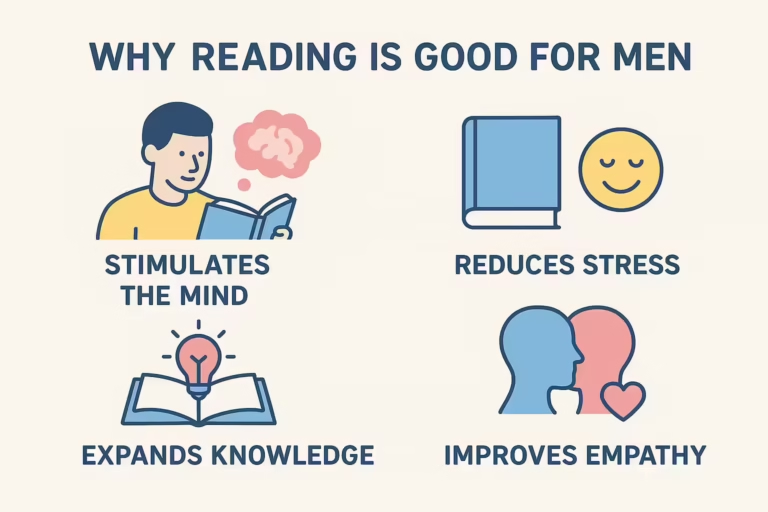
Books are guided experiences: they blend story, evidence, and repeatable frameworks that deliver both cognitive and emotional returns. Reading opens you to new perspectives. Things like building empathy and emotional insight, while offering clear models for problem-solving and durable coping.
Regular, focused reading also calms the nervous system, which can lower stress, improve sleep, and stabilize mood. Seen this way, a targeted reading habit works like preventive care and skills practice rolled into one.
self‑care outcomes
The benefits of reading a map clearly to distinguishing self‑care outcomes. It works best when paired with a few simple practices that turn insight into action.
- Stress reduction: Deep, immersive reading can lower heart rate and other markers of physiological arousal.
- Empathy building: Stepping into characters’ minds strengthens social understanding and emotional nuance.
- Resilience training: Memoirs and biographies provide real examples of coping, recovery, and perseverance.
- Cognitive maintenance: Non‑fiction that teaches skills or frameworks helps you make better decisions and sustain productive habits.
These outcomes make reading a flexible, low‑cost tool for men pursuing wellness and growth. Next, we’ll look at how reading specifically supports mental health and emotional intelligence.
Reading Improve Men’s Mental Health and Emotional Intelligence?
Reading helps in three overlapping ways: narrative empathy, cognitive restoration, and reflective practice. Narrative empathy grows when you see things from a character’s point of view. This helps you understand others better and handle conflict.
Cognitive restoration happens with focused, low-stimulation attention. Reading can lower stress and improve mood after a tough day. Reflective practice occurs when you turn what you read into small experiments. Write down a key takeaway, try a new behavior, or discuss an idea with someone else. This way, reading becomes practice, not just information.
Try a short journaling habit after each chapter. Write down one insight. Record how it made you feel. Plan one small action for the week. That simple loop turns passive reading into measurable emotional growth.
Building Resilience and Personal Development:
Memoirs, biographies, and practical self‑help offer both inspiration and blueprints for change. Memoirs let you observe how someone else handled a crisis, a mental rehearsal that builds grit and preparedness.
Practical self‑help provides repeatable frameworks: habit loops, reframes, decision matrices—that guide incremental improvement. Layered together, these genres give motivation plus tools, which speed real, lasting development.
Start by naming the outcome you want. For example: greater resilience, a career pivot, or relationship repair. Choose one model‑driven book, and commit to practicing one of its frameworks for 30 days.
Alternating an inspiring memoir with a workbook‑style title keeps motivation high. While you build skills, that combination tends to produce durable results.
If you prefer to learn more about men’s health, The Best Self‑Care Blog organizes reading lists and reviews by categories. That makes it easier to explore focused pathways and keep learning over time.
What Are the Top Fiction Books for Men to Inspire Adventure and Reflection?
Fiction expands imagination, models courage under pressure, and creates reflective mirror experiences that help with identity work and emotional processing. The right novel gives emotional challenge without real‑world risk, letting you practice empathy, moral reasoning, and perspective. Adventure and fantasy can revive curiosity and boldness, while literary fiction raises timeless questions about purpose and consequence.
Use fiction as self‑care by matching books to your mood and growth goals. On the other hand, survival stories for resilience, introspective novels for self‑examination, and speculative fiction to broaden perspective.
Unique Guide Just For you:
Below are fiction choices grouped by intent, with short rationales to guide your pick.
- For resilience and survival: Read novels that focus on endurance and problem-solving to build confidence and coping strategies.
- For introspection and identity: Choose literary works that examine motives, failures, and moral choices to sharpen self‑awareness.
- For imaginative reset: Pick fantasy or speculative fiction that opens possibility thinking and breaks repetitive worry.
Pair fiction with reflective prompts: after a session, note a theme that challenged you and one action inspired by a character’s choice.
Which Adventure and Fantasy Novels Are Best for Male Readers?
Adventure and fantasy give you a low‑risk space to rehearse courage, explore uncertainty, and reconnect with curiosity. Survival narratives show persistence and decision-making under pressure; fantasy encourages creative problem-solving and ethical reflection.
If your aim is growth rather than pure escape, favor stories with clear stakes and moral shape, those provoke thought instead of simple distraction. Short adventure tales fit downtime reading; longer epics work well for immersive weekends.
To make adventure reading practical, extract one behavioral takeaway per book. This is an embodied habit or a framing technique, and test it for two weeks to see if it nudges daily life.
What Classic Fiction Books Should Every Man Read?
Classics endure because they dig into identity, ambition, ethics, and mortality. Which issues matter across stages of life? These books compress cultural wisdom and psychological insight into tight narratives that still speak to modern concerns.
Choose a classic based on what you want to examine. Pick from moral choice, the cost of ambition, or steady endurance. Then read it through a contemporary lens so you can translate older wisdom into present‑day action.
A practical method: aim for one classic a year, read with a notebook, and pull three lessons that apply to your current life stage. Those lessons become prompts for journaling or conversations that extend the book’s value beyond the page.
Which Non‑Fiction Books for Men Offer the Best Insights on Leadership and Success?
Non‑fiction about leadership, productivity, and habits gives explicit models you can apply at work and in life. Things like habit loops, decision heuristics, and resilience practices that map directly to daily choices.
Match a book’s approach to where you are professionally. Tactical productivity for early‑career readers, strategic leadership for managers, and reflective memoirs for those reassessing values. A quick comparison of core titles helps you pick what fits.
The table below compares three recognizable titles and the core lesson each provides for different reader goals.
Different leadership and productivity books suit distinct goals and reader profiles.
| Book Title | Primary Theme | Key Takeaway / Recommended Reader |
|---|---|---|
| Atomic Habits | Habit formation & systems | Small, consistent changes compound into meaningful results — ideal for readers who want practical, everyday systems. |
| Meditations | Stoic leadership & self-discipline | Short reflective exercises that cultivate perspective and self-mastery — best for readers seeking philosophical grounding. |
| Man's Search for Meaning | Purpose & resilience | Meaning-making as a core resilience strategy — recommended for readers in transition or looking for deeper purpose. |
What Are the Best Self‑Help Books for Men Focused on Habit Formation?
Effective books on habits and systems break big goals into micro‑steps, provide tracking tools, and show how to reshape your environment so good behaviors stick.
Readers get the most from these titles when they pick one system‑oriented book, adopt two micro‑habits, and track progress for 30 days. That sequence reduces overwhelm and produces quick wins that fuel longer‑term follow‑through.
Practical steps for habit‑focused reading:
- Start small: Choose one micro‑habit anchored to something you already do.
- Track consistently: Use a simple daily log to reinforce the behavior.
- Adjust environment: Remove friction that blocks the habit.
- Layer habits: Add a second habit only after the first is stable.
Follow that sequence and your reading becomes an experiment: testable, measurable, and aligned with real change instead of abstract advice.
Which Biographies and History Books Provide Valuable Lessons?
Biographies and history act as case studies in leadership, failure, and moral complexity. These are useful models for decision-making. They show how character, strategy, and circumstance interact, and they surface the trade‑offs leaders made under pressure.
To get practical value, read with prompts like: which decision would I make differently? Plus, what small behavior could I adopt to mirror a strength I admire? That turns historical narrative into modern skill practice.
After a biography, note one leadership behavior to emulate and one risk‑management change you can test in your role over the next 60 days.
How Can Books for Men Support Emotional Well‑Being?
Books that address depression, anxiety, mindfulness, and vulnerability can provide therapeutic frameworks and concrete exercises that complement clinical care and daily routines. Some function as workbooks, CBT‑style exercises, and journaling prompts. While others normalize experience through narrative. Reading is a useful adjunct to therapy. It clarifies emotional language, offers coping tools, and supplies structured practices to use.
Knowing a book’s mechanism—cognitive reframing, mindfulness practice, or narrative meaning‑making—helps you choose one that fits your needs. The table below clarifies which book types address specific mental‑health concerns and what you can expect to gain.
This table helps match books to mental‑health goals and practical use.
| Book Title / Type | Target Issue | Therapeutic Angle / Actionable Practice |
|---|---|---|
| Mindfulness guides/workbooks | Anxiety/stress | Short daily practices — breathing, body scans, grounding — to lower physiological arousal. |
| CBT-based workbooks | Depression / negative thinking | Cognitive reframing exercises and behavioral activation tasks that shift mood through action. |
| Memoirs of recovery | Isolation / meaning-making | Honest stories that model emotional openness and offer narrative strategies for making sense of hardship. |
What Are the Best Books for Male Depression, Anxiety, and Mindfulness?
When choosing books for depression or anxiety, distinguish between practical workbooks and reflective memoirs. Workbooks complement therapy with concrete exercises; memoirs offer perspective and validation.
For anxiety, short mindfulness guides with daily grounding practices can ease symptoms. For mild depression, behavioral‑activation workbooks encourage scheduling activity to counter withdrawal. If symptoms are severe, prioritize professional care and use reading to support treatment. Practice therapist‑assigned exercises or journal between sessions.
A cautious 3‑step approach works well:
- (1) decide if you need practical skills or narrative validation,
- (2) select a workbook or memoir that fits,
- (3) pair reading with a daily 10–15 minute practice that applies the book’s exercises.
(Note: The Best Self‑Care Blog has a mindfulness category topic to explore deeper.
How Do Books on Vulnerability and Masculinity Help Men Embrace Emotional Intelligence?
Books about vulnerability and masculinity reframe cultural scripts and give men language and small, repeatable steps for emotional expression. Also, reducing shame and improving relationships. They often mix personal stories with social insight and include exercises.
By normalizing emotional disclosure and offering stepwise practices, these books lower the activation energy for trying new relational behaviors. Over time, small, repeated disclosures build trust and measurable gains in communication and intimacy.
Try progressive exposure: begin with a low‑risk disclosure to a trusted friend, reflect on the result, and slowly increase the level of vulnerability. Using book‑driven prompts accelerates learning and helps you lock in emotional intelligence gains.
How Do You Choose the Right Book for Your Personal Growth?
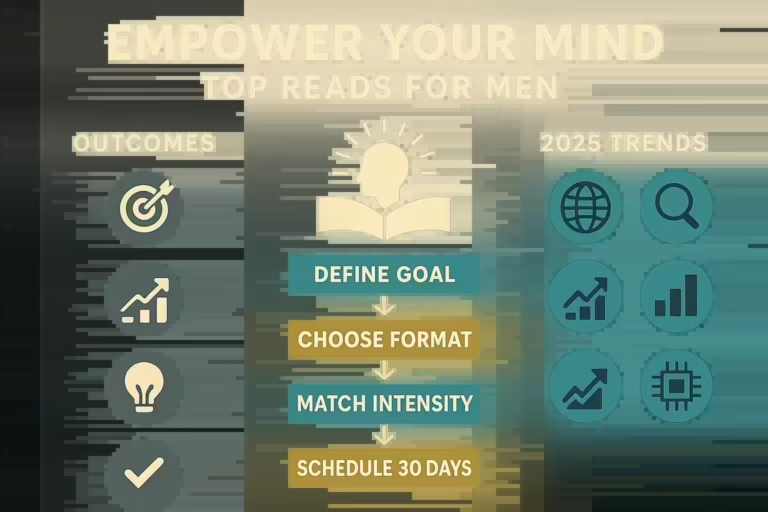
Choosing the right book starts by naming the outcome you want: less stress, better relationships, stronger career skills, or deeper purpose. Match format to lifestyle, workbooks, and audiobooks fit busy schedules; reflective reading benefits from quiet time and note‑taking.
Consider life stage: early‑career people often need tactical skills, midlife readers lean toward leadership and meaning, and older adults may focus on legacy and health. Use a short decision checklist to narrow options and build a reading plan that suits your time and goals.
Daily Checklist:
Decision checklist for selecting a growth book:
- Define the primary goal: What change do you want in the next 30–90 days?
- Choose the format: Audio for commuting, a workbook for hands‑on practice, or a printed book for deep reflection?
- Match intensity to capacity: Pick a short, practical book for quick wins or a longer classic for deeper work.
- Schedule application: Commit to one concrete practice from the book for 30 days.
Following this checklist reduces choice paralysis and makes reading a measurable self‑care intervention.
What Factors Should Men Consider When Picking Books for Different Life Stages?
Life stage changes priorities:
- Younger adults often need career and habit tools,
- midlife readers prioritize leadership and relationships,
- older adults focus on meaning and health.
Time constraints affect format; a busy parent may prefer audiobooks or short workbooks. While someone aiming for major change should set aside longer reading sessions.
Temperament matters too: action‑oriented readers thrive with habit‑based books; reflective readers gain more from memoir and philosophy. Align genre and format with current demands so reading becomes a sustainable habit rather than an unfinished intention.
A practical yearly plan: one tactical non‑fiction, one memoir or classic, and one lighter fiction for emotional reset. That mix balances growth, perspective, and rest.
How Can Reading Complement Other Self‑Care Practices Like Meditation and Stress Management?
Reading pairs well with meditation, journaling, and sleep hygiene. All by supplying scripts, exercises, and prompts that make those practices easier to follow. Use short mindfulness chapters as pre‑meditation prompts, and let CBT workbook exercises guide your daily journaling.
Reading before bed, preferably low‑arousal fiction or guided relaxation scripts, helps sleep more than screen time. Blending reading with other practices turns solitary learning into a multi‑modal routine.
Sample evening routine: 10 minutes of calm reading, 5 minutes of breathing practice, and 5 minutes of journaling. That sequence consolidates insight, lowers arousal, and supports better sleep and emotional processing.
What Are the Latest Must‑Read Books for Men in 2026?
Recent publishing has leaned toward hybrids that combine memoir, practical mental‑health tools, and cultural analysis of masculinity. Rather than listing every title, focus on themes that matter: vulnerability memoirs, mental‑health workbooks, and interdisciplinary books linking neuroscience to everyday habit practice.
New releases that pair narrative with clear, actionable practices tend to give the best return on reading time in 2026. The table below highlights the kinds of new releases to watch in 2024–2026 and why they matter for men’s self‑care and development.
This table summarizes trends and reader takeaways for recent releases and why they’re relevant now.
| New Release Type (Representative) | Why it matters in 2026 | Themes / Reader Takeaway |
|---|---|---|
| Emerging memoirs on vulnerability (2024–26) | Bring lived experience to mental-health conversations | Offer concrete models for emotional honesty and practical steps to practice vulnerability. |
| Contemporary masculinity studies (2024–26) | Reframe male norms in light of social change | Provide language and practices for new relational habits and ethical reflection. |
| Mindfulness + habit hybrids (2024–25) | Combine evidence-based practice with daily systems | Deliver short practices that integrate easily into work and home life. |
Which New Releases Address Men’s Mental Health and Personal Development?
New releases increasingly blend memoir with practical frameworks. Validation plus tools, a good fit for men who want both story and skills. If your priority is immediate coping tools, favor books with step‑by‑step practices or companion workbooks.
If you need perspective and normalization, choose narrative‑driven titles. Ask whether you need short‑term coping tools or longer‑term meaning work, and let that answer guide your first pick.
Reader‑fit tip: pick a hybrid workbook‑memoir for immediate skill‑building and a reflective memoir when you need perspective and validation.
What Are Critics and Readers Saying About These Top Books for Men?
Reception often splits between praise for authenticity and criticism of overly prescriptive advice. Readers value books that balance honest narrative with practical exercises; critics look for methodological rigor in mental‑health titles.
When scanning reviews, focus on usability. Did readers actually implement the exercises? Plus, on sustained benefit rather than temporary inspiration. Those signals point to real‑world effectiveness.
Overall, readers favor titles that combine vulnerability with concrete steps. Readable, actionable books tend to have the most lasting impact.
The Best Self‑Care Blog keeps curated, updated lists and reviews. Topics organized by outcome: mental health, habits, and leadership. So you can prioritize new releases and build a reading plan that fits your goals and life stage.
Frequently Asked Questions:
How can I incorporate reading into my daily routine for self‑care?
Make reading simple and repeatable. Pick a consistent time—morning coffee, a lunch break, or before bed—and set a short, achievable target (10–20 minutes). Use audiobooks for commutes or while exercising. Keep a small notebook or a quick phone note to capture one insight each day so you can apply what you learn. Small, regular sessions add up more than infrequent marathon reads.
What types of books are best for improving emotional intelligence?
Look for books that encourage perspective taking and reflection: memoirs, character‑driven fiction, and practical guides with interpersonal exercises. These genres help you practice empathy, recognize emotional cues, and try new conversation habits. Titles with journaling prompts or discussion questions make it easier to turn reading into real skill development.
Are there specific genres that are more beneficial for men’s mental health?
Yes. Non‑fiction on mental health and self‑development offers practical strategies; workbooks provide exercises you can practice. Memoirs normalize struggle and reduce isolation. Fiction that explores resilience and inner life helps process emotions indirectly. Choose based on whether you need tools, validation, or reflective space.
How do I choose the right book for my current life challenges?
Start by naming your immediate goal—reduce anxiety, fix a habit, improve communication. Then match format and intensity to your schedule: a workbook for hands‑on practice, an audiobook for a busy commute, or a longer book for deep reflection. Read summaries and a few reviews to check whether the tone and level of practicality match what you need.
Can reading fiction really help with personal growth?
Definitely. Fiction strengthens empathy, widens perspective, and creates safe spaces to examine values and choices. Complex characters and moral dilemmas give you practice in judgment and self‑reflection—skills that transfer to real‑life relationships and decisions.
What are some effective strategies for retaining insights from self‑help books?
Take notes, summarize chapters in a few lines, and write one small action step per chapter. Discuss insights with a friend or join a book group to reinforce learning. Revisit notes monthly to track progress and tweak experiments based on what worked.
How can I find new releases that align with my self‑care goals?
Follow trusted book blogs, subscribe to newsletters, and join online communities focused on mental health and personal growth. The Best Self‑Care Blog curates lists by theme and reader need, which makes discovery easier. Look for books that combine narrative with clear, testable practices if your aim is skill‑building.
Conclusion
Building a reading habit can meaningfully boost personal growth, emotional intelligence, and mental well‑being.
When you choose books that align with specific self‑care goals, and pair them with small, concrete practices. In the end, reading becomes a dependable tool for change.
Curated lists and practical recommendations make it easier to find titles that suit your needs and life stage. Start small, stay consistent, and let purposeful reading become a steady part of your self‑care routine.
Top 50 Empowering Books for Men:
This list features 50 empowering books for men, highlighting their authors, publication years, and brief descriptions. Each title is selected for its potential to inspire personal growth, emotional intelligence, and resilience.
- The 7 Habits of Highly Effective People by Stephen R. Covey (1989): A foundational self-help book that outlines essential habits for personal and professional effectiveness.
- Man’s Search for Meaning by Viktor E. Frankl (1946) – A profound memoir that explores finding purpose through suffering, based on Frankl’s experiences in Nazi concentration camps.
- Atomic Habits by James Clear (2018) – A practical guide on building good habits and breaking bad ones through small, incremental changes.
- Wild at Heart by John Eldredge (2001) – This book encourages men to embrace their adventurous spirit and understand their God-given purpose.
- How to Win Friends and Influence People by Dale Carnegie (1936) – A classic on interpersonal skills that teaches effective communication and relationship-building techniques.
- The Power of Now by Eckhart Tolle (1997) – A spiritual guide that emphasizes living in the present moment to achieve mental clarity and peace.
- Grit: The Power of Passion and Perseverance by Angela Duckworth (2016) – This book explores the importance of grit in achieving long-term goals and success.
- Awaken the Giant Within by Tony Robbins (1991) – A motivational book that provides strategies for taking control of your life and achieving personal mastery.
- Mindset: The New Psychology of Success by Carol S. Dweck (2006) – Dweck discusses the difference between a fixed and growth mindset and how it impacts achievement.
- The Subtle Art of Not Giving a F*ck by Mark Manson (2016) – A counterintuitive approach to living a good life by focusing on what truly matters.
- Can’t Hurt Me by David Goggins (2018) – A memoir that details Goggins’ journey from a troubled childhood to becoming a Navy SEAL and ultra-endurance athlete.
- Deep Work by Cal Newport (2016) – This book emphasizes the importance of focused work in a distracted world and offers strategies to cultivate deep concentration.
- Start with Why by Simon Sinek (2009) – Sinek explores how great leaders inspire action by focusing on the “why” behind their actions.
- Drive: The Surprising Truth About What Motivates Us by Daniel H. Pink (2009) – Pink examines the science of motivation and how autonomy, mastery, and purpose drive human behavior.
- Rich Dad Poor Dad by Robert Kiyosaki (1997) – A personal finance classic that contrasts the financial philosophies of Kiyosaki’s two father ps.
- Thinking, Fast and Slow by Daniel Kahneman (2011) – Kahneman delves into the dual systems of thought and how they shape our decisions and judgments.
- Leaders Eat Last by Simon Sinek (2014) – This book discusses the importance of leadership that prioritizes the well-being of team members for organizational success.
- The Alchemist by Paulo Coelho (1988) – A philosophical novel about following one’s dreams and listening to one’s heart.
- Manhood: The Bare Reality by Steve Biddulph (2017) – A guide to understanding masculinity and the challenges men face in modern society.
- Essentialism: The Disciplined Pursuit of Less by Greg McKeown (2014) – McKeown advocates for focusing on what truly matters and eliminating the non-essential.
- Braving the Wilderness by Brené Brown (2017) – Brown explores the importance of belonging and the courage to stand alone in a world of conformity.
- Outliers: The Story of Success by Malcolm Gladwell (2008) – Gladwell examines the factors that contribute to high levels of success, emphasizing the role of culture and opportunity.
- Presence: Bringing Your Boldest Self to Your Biggest Challenges by Amy Cuddy (2015) – Cuddy discusses how body language and mindset can influence our performance and confidence.
- The Four Agreements by Don Miguel Ruiz (1997) – A spiritual guide that outlines four agreements to create love and happiness in life.
- Unshakeable by Tony Robbins (2017) – Robbins provides insights on financial freedom and how to achieve a secure financial future.
- Fierce Conversations by Susan Scott (2004) – This book emphasizes the importance of having honest and direct conversations in both personal and professional settings.
- Emotional Intelligence 2.0 by Travis Bradberry and Jean Greaves (2009) – A guide to understanding and improving emotional intelligence for better relationships and success.
- Awareness by Anthony de Mello (1990) – A spiritual guide that encourages self-awareness and mindfulness in everyday life.
- The Art of Happiness by the Dalai Lama and Howard Cutler (1998) – A blend of Buddhist philosophy and psychology that explores the nature of happiness.
- Principles: Life and Work by Ray Dalio (2017) – Dalio shares his principles for success in life and business, emphasizing radical transparency and truth.
- Rising Strong by Brené Brown (2015) – Brown discusses the process of rising after a fall and the importance of vulnerability in personal growth.
- Good to Great by Jim Collins (2001) – Collins analyzes what makes companies successful and how they can transition from good to great.
- Never Split the Difference by Chris Voss (2016) – A former FBI negotiator shares negotiation techniques that can be applied in everyday life.
- Awakening the Giant Within by Tony Robbins (1991) – Robbins provides strategies for taking control of your life and achieving personal mastery.
- Boundaries by Dr. Henry Cloud and Dr. John Townsend (1992) – This book teaches the importance of setting healthy boundaries in relationships.
- Drive Your Plow Over the Bones of the Dead by Olga Tokarczuk (2009) – A unique narrative that explores themes of justice, morality, and the human-animal relationship.
- What I Talk About When I Talk About Running by Haruki Murakami (2007) – A memoir that intertwines running and writing, reflecting on discipline and creativity.
- Can’t Hurt Me: Master Your Mind and Defy the Odds by David Goggins (2018) – Goggins shares his life story and the mental toughness required to overcome obstacles.
- Radical Acceptance by Tara Brach (2003) – A guide to embracing life with compassion and mindfulness, promoting emotional healing.
- Quiet: The Power of Introverts in a World That Can’t Stop Talking by Susan Cain (2012) – Cain advocates for the value of introverts and their contributions to society.
- Becoming by Michelle Obama (2018) – A memoir that chronicles Obama’s journey from her childhood to her role as First Lady, emphasizing resilience and authenticity.
- Start Where You Are by Pema Chödrön (1994) – A guide to mindfulness and compassion, encouraging readers to embrace their current circumstances.
- Essentialism: The Disciplined Pursuit of Less by Greg McKeown (2014) – McKeown advocates for focusing on what truly matters and eliminating the non-essential.
- Manhood: The Bare Reality by Steve Biddulph (2017) – A guide to understanding masculinity and the challenges men face in modern society.
- Braving the Wilderness by Brené Brown (2017) – Brown explores the importance of belonging and the courage to stand alone in a world of conformity.
- Awaken the Giant Within by Tony Robbins (1991) – A motivational book that provides strategies for taking control of your life and achieving personal mastery.
- Mindset: The New Psychology of Success by Carol S. Dweck (2006) – Dweck discusses the difference between a fixed and growth mindset and how it impacts achievement.
- Rich Dad Poor Dad by Robert Kiyosaki (1997) – A personal finance classic that contrasts the financial philosophies of Kiyosaki’s two fathers ps.
- Thinking, Fast and Slow by Daniel Kahneman (2011) – Kahneman delves into the dual systems of thought and how they shape our decisions and judgments.
Affiliate Disclosure:
The links contained in this product review may result in a small commission. This goes towards supporting our research and editorial team and please know we only recommend high-quality products.
Note: This article is for informational purposes only and is not intended to diagnose, treat, or cure any disease. Always consult a healthcare professional before taking any supplement or making any changes to your diet or lifestyle.