
cozy evening with cat sunset view

Types of Wrinkles On The Face: What Causes Them And What Helps

How this guide was made: researched from the American Academy of Dermatology, Cleveland Clinic, MedlinePlus, WebMD, the FDA, The Aesthetic Society and the American Society of Plastic Surgeons, plus Anna's own routine. Prices are typical 2026 US ranges.

Welcome to Comfort Mind Body, where we look at the whole face, one gentle step at a time. Let’s map out your wrinkles together.

Not all wrinkles are the same. There are several types of wrinkles on the face, and each one has its own cause. Some come from movement, some from sun, some from your pillow, and some from losing volume as we age. That’s why one cream rarely fixes everything.

This guide is the map. It shows every common type, what causes it, and what helps. When you want the full story for one area, follow the link to my detailed guide for it.

What helps depends on your type of line: movement lines, fine surface lines, deeper folds, or loose skin. Daily sunscreen and moisturizer are the base for all of them. 

A retinoid can slowly improve fine wrinkles. For bigger changes, a board-certified dermatologist can tell you if Botox Cosmetic, resurfacing, or treatment for volume loss fits your lines.

There’s no fast fix. Tretinoin, for example, can take 3 to 4 months to show a change, sometimes up to 6.

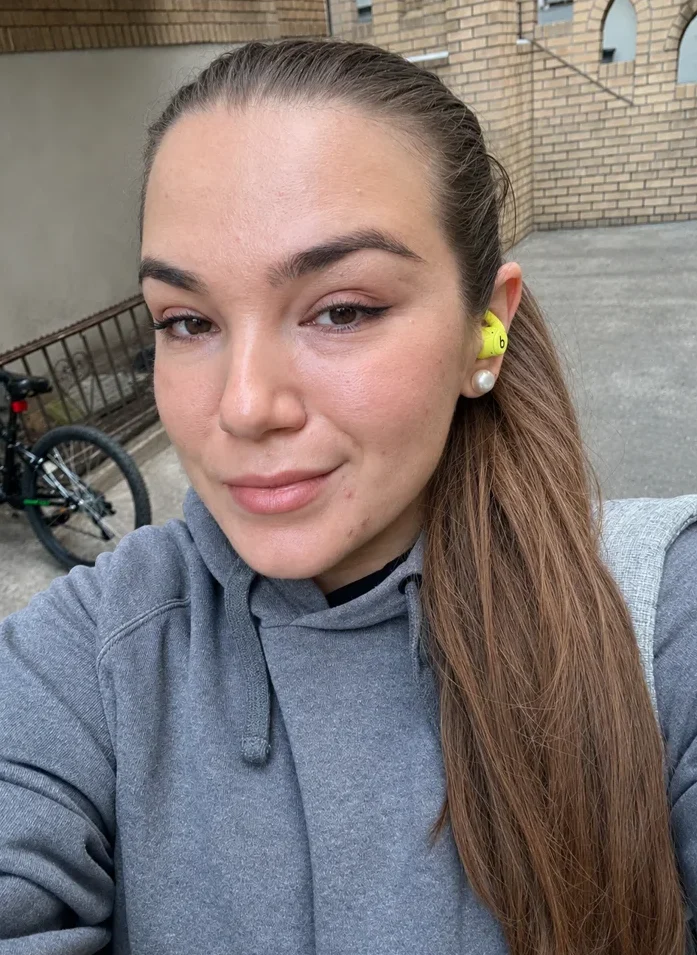
Anna, a woman in her mid-thirties with a long brown ponytail and a gray hoodie, taking a daylight selfie outdoors while wearing everyday makeup
With makeup
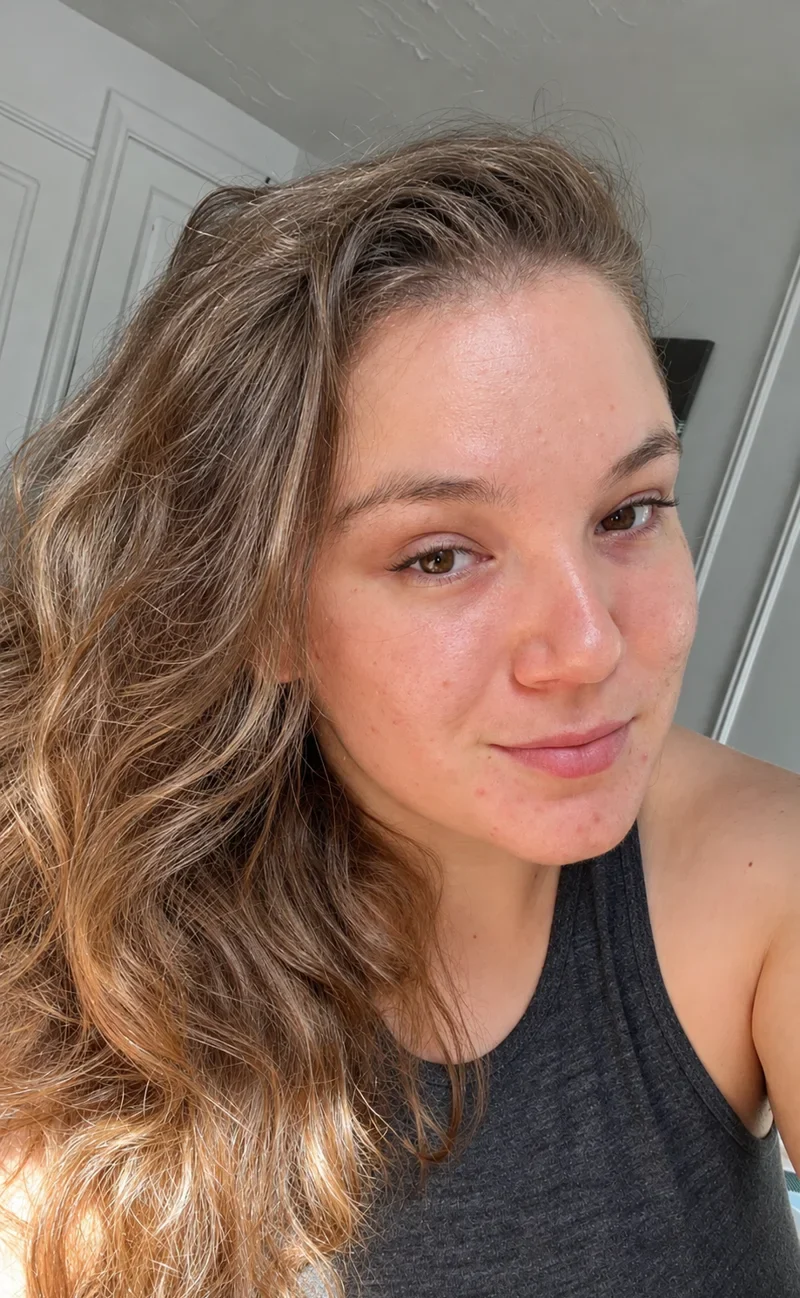
Anna with long wavy brown hair and no makeup, taking a selfie in warm sunlight at home, showing her bare skin
No makeup

Hi, I'm Anna

I'm 34, and this is my real face, with my everyday makeup and with none. I first noticed my smile lines starting to form around 33. This guide is everything I've learned about wrinkles since, area by area.
The 4 Types Of Wrinkles

Wrinkles can be described by when they show up, what adds to them, and how deep they look. These types overlap, so one area can have more than one. Knowing yours helps you choose what to try first.

Dynamic Wrinkles (Expression Lines)

These show up only when you move your face: when you raise your brows, frown, or smile. WebMD names forehead lines and crow’s feet as classic examples. Because a muscle causes them, Botox-type injections can soften them.

Static Wrinkles

After years of the same expressions and sun damage, some lines stay even when your face is relaxed. These are static wrinkles. They soften slowly with sunscreen and a retinoid. Deeper lines need an in-person assessment by a dermatologist.

Sleep Lines

Sleep lines come from pressing your face into the pillow, not from muscles. A 2016 review in the Aesthetic Surgery Journal, summarized by The Aesthetic Society, found that they form most often on the forehead, lips, and cheeks, and often run in a different direction than expression lines.

Botox can’t remove them. Sleeping with less pressure on your face may help prevent new ones, but it isn’t proven to erase lines you already have.

Fine Lines And Crepey Skin

Thin, crinkly lines come from dryness and sun damage. Moisture makes them look softer right away, and sunscreen keeps them from getting worse.

Deeper folds overlap with all of these. As skin sags and volume drops, creases deepen around the nose, mouth, and chin.

Your Face Wrinkle Map

Use this map to find your lines, then jump to the guide for that area.

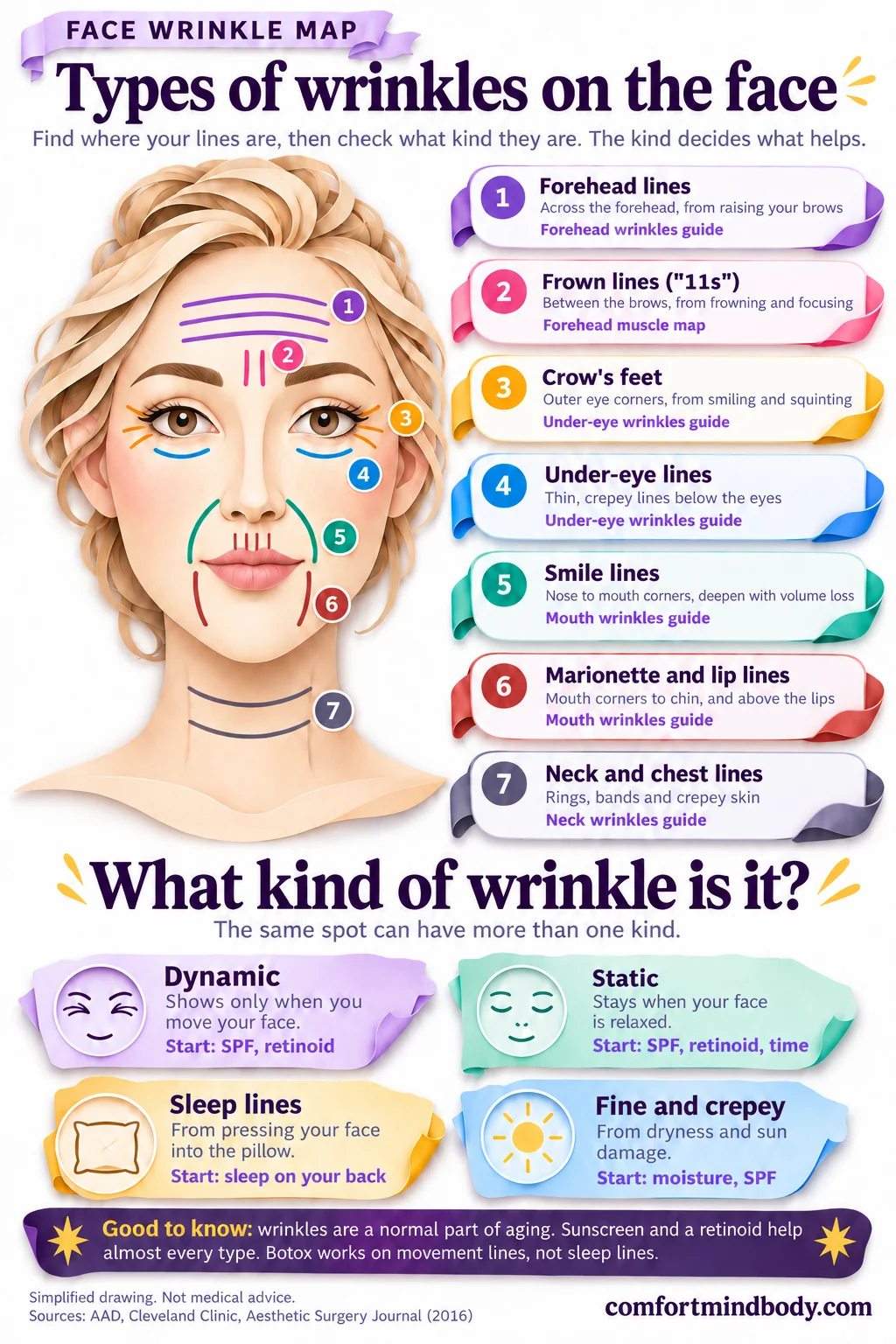
Face wrinkle map showing the types of wrinkles on the face: forehead lines, frown lines, crow's feet, under-eye lines, smile lines, marionette and lip lines, and neck lines, plus dynamic, static, sleep and crepey wrinkles.
Read the infographic text

Face Wrinkle Map: Types of wrinkles on the face

Find where your lines are, then check what kind they are. The kind decides what helps.

Where are your lines?

  • 1. Forehead lines: across the forehead, from raising your brows. See the forehead wrinkles guide.
  • 2. Frown lines ("11s"): between the brows, from frowning and focusing. See the forehead muscle map.
  • 3. Crow's feet: outer eye corners, from smiling and squinting. See the under-eye wrinkles guide.
  • 4. Under-eye lines: thin, crepey lines below the eyes. See the under-eye wrinkles guide.
  • 5. Smile lines: nose to mouth corners, deepen with volume loss. See the mouth wrinkles guide.
  • 6. Marionette and lip lines: mouth corners to chin, and above the lips. See the mouth wrinkles guide.
  • 7. Neck and chest lines: rings, bands and crepey skin. See the neck wrinkles guide.

What kind of wrinkle is it?

The same spot can have more than one kind.

  • Dynamic: shows only when you move your face. Start with SPF and a retinoid.
  • Static: stays when your face is relaxed. Start with SPF, a retinoid and time.
  • Sleep lines: from pressing your face into the pillow. Start by sleeping on your back.
  • Fine and crepey: from dryness and sun damage. Start with moisture and SPF.

Good to know: wrinkles are a normal part of aging. Sunscreen and a retinoid help almost every type. Botox works on movement lines, not sleep lines.

Simplified drawing. Not medical advice. Sources: AAD, Cleveland Clinic, Aesthetic Surgery Journal (2016).

Comfort Mind Body

How To Get Rid Of Wrinkles, Area By Area

Here’s a summary of each area. Each one links to the full guide, with my own photos, products, and routine.

Forehead Lines

These horizontal lines come from the frontalis, the muscle that raises your eyebrows. When they show only on movement, Botox Cosmetic is the strongest option, and it’s FDA-approved for forehead lines. Lines that stay at rest soften slowly with a retinoid and daily sunscreen.

Read more: What causes forehead wrinkles and how to get rid of them

Frown Lines (The "11s")

The vertical lines between your brows come from two small muscles that pull your brows together when you frown or focus. Botox Cosmetic is FDA-approved for these lines too.

Read more: What muscle causes wrinkles across the forehead

Crow's Feet And Under-Eye Wrinkles

Crow’s feet fan out from the outer corners of your eyes when you smile or squint. The thin, crepey lines under the eyes are different: they’re mostly about dryness and sun damage. 

Botox Cosmetic is FDA-approved for crow’s feet. Gentle eye creams, sunscreen, and patience help both.

Read more: How to remove wrinkles under eyes

Smile Lines, Marionette Lines, and Lip Lines

Smile lines run from your nose to your mouth corners, and marionette lines run down to your chin. Both deepen as cheeks lose volume, so creams help less. 

A dermatologist can tell you if treatment for volume loss makes sense. Lip lines above the lips come from puckering and sun, and a lip balm with SPF 30 is a key first step.

Read more: How to get rid of wrinkles around the mouth

Neck And Chest Lines

Neck lines come as rings, vertical bands, and crepey skin. Your neck has fewer oil glands than your face, so it dries out and gets irritated more easily. Sunscreen and a gentle retinoid help with rings and crepey skin. Botox Cosmetic is FDA-approved for neck bands.

Read more: How to get rid of neck wrinkles and my best creams for neck wrinkles

How To Prevent Wrinkles: Daily Care That Helps

You can’t stop wrinkles completely, but these basics slow new ones down and help with most lines you already have. They’re also ways to get rid of wrinkles naturally, as far as that’s possible.

  • Sunscreen every day. SPF 30 or higher on your face, neck, and lips, even when it’s cloudy. UV light breaks down collagen, and that’s a big part of how wrinkles form.
  • Sunglasses and a hat in strong sun, so you squint less and shade your face.
  • A retinoid at night. Start slowly, every other night. MedlinePlus says tretinoin may take 3 to 4 months to improve fine wrinkles, sometimes up to 6. Skip retinoids if you’re pregnant or trying to get pregnant.
  • Other helpful ingredients. Vitamin C serums, AHAs, and peptides can help too, but they have less evidence behind them than retinoids.
  • Moisturizer morning and night. Hydrated skin makes fine lines look softer right away.
  • No smoking. Smoking damages collagen and adds lines around the lips.
  • Less pressure while you sleep. Sleeping on your back, or on a smooth pillowcase, may help prevent new sleep lines.
  • Be gentle. No harsh scrubbing, and pat your face dry.
  • Patch test new products twice a day for 7 to 10 days on your inner arm first, as the American Academy of Dermatology suggests.

Need help picking a sunscreen? See my Sunscreen Match Guide.

How To Get Rid Of Face Wrinkles Fast: The Honest Answer

There’s no fast way to remove a wrinkle at home. A moisturizer can make fine lines look smoother the same day, and patches or face tape can smooth lines for a few hours.

Real change from a retinoid takes months. In-office treatments act faster, but they cost more and need repeat visits.

Does Vicks VapoRub Help Wrinkles?

You may have seen this trend online. There’s no study showing Vicks VapoRub reduces wrinkles. The Drug Facts label says it’s for the chest and throat to relieve cough, and for muscle and joint aches. 

It warns against contact with the eyes, use in the nostrils, and use on damaged skin. A plain moisturizer is a safer choice for your face.

Non-Surgical Wrinkle Treatments At A Glance

If your lines bother you, these in-office options are the most common. I haven’t had any of them, so this part is research only.

Non-Surgical Treatments Compared

TreatmentBest forTypical 2026 US priceGood to know
Botox Cosmetic and similar injectionsMovement lines: forehead, frown lines, crow's feet, neck bandsAbout $10–$20 per unit, often $200–$600 per areaBotox Cosmetic is FDA-approved for these areas; other brands have their own approvals. Doesn't work on sleep lines. Effects last a few months.
Hyaluronic acid fillerFolds and lost volume: smile lines, marionette linesAbout $600–$2,000 per syringeTemporary. Needs a trained injector. Risks include swelling, bruising and, rarely, blood vessel injury.
Skin resurfacing (lasers, chemical peels and similar)Static lines, lip lines, sun damage, textureLasers about $500–$5,000 per session; peels about $100–$800Downtime depends on the treatment. Lasers usually cost more and need more downtime.
MicroneedlingFine lines and textureAbout $200–$700 per sessionUsually done as a series.
Ultrasound or radiofrequency tighteningMild loose skin on the face and neckVariesResults build gradually and vary.

Prices are typical 2026 US ranges from published med spa price guides, not official averages. They vary a lot by city, provider and how much product you need, so ask for a written quote.

My Whole-Face Routine For Wrinkles

This is what I actually do right now. My routine changes a little with the seasons, and I’ve linked each area’s guide for details.

Morning

  • Cleanser or toner pads. In summer, I wash twice a day. In winter, once is enough for my skin, so in the morning I often just use toner pads.
  • Double cleanse with an oil cleanser. In summer, every day, morning and evening. In winter, only in the morning, every other day.
  • Moisturizer.
  • Eye cream.
  • Sunscreen on my face and neck. I use my favorite one for both.
  • Lip balm with SPF 30. More in my mouth wrinkles guide.

Evening

  • Cleanser, then toner.
  • My prescribed tretinoin, every other night. It goes around my mouth, but not on my lips.
  • An essence or serum.
  • Moisturizer.
  • My Medicube Age-R Booster Pro, most nights, mostly on the Booster and Derma Shot modes. Check your own device’s instructions before pairing it with a retinoid.

The Extras

  • Face massage and face exercises in the evening. I use gua sha and switch between different face workout videos. I usually do them over a heavy moisturizer, so my fingers and the stone glide without pulling my skin. I use coconut oil mostly on my body, and only very occasionally on my face for a deep massage. Good to know: coconut oil can clog pores for some people, especially if your skin is oily or acne-prone. There’s also little research on face massage and exercises for wrinkles.
  • Neck care. My neck gets the same sunscreen as my face. My full neck routine is in my neck creams post.
  • Under the eyes. See my under-eye wrinkles guide for what I use there.

FAQs About Face Wrinkles

What are the main types of wrinkles on the face?
There are four main types: dynamic wrinkles from facial movement, static wrinkles that stay when your face is relaxed, sleep lines from pressing your face into the pillow, and fine, crepey lines from dryness and sun damage. Deeper folds, like smile lines, form when skin loses volume and firmness.
What is the main cause of wrinkles?
Aging is the base cause, because skin makes less collagen and elastin over time. Sun exposure is the biggest outside factor. Smoking, repeated facial expressions and sleep position add to it.
At what age do wrinkles start?
There's no set age. It depends on your genes, how much sun you've had and whether you smoke. Movement lines usually show first, and lines that stay when your face is relaxed come later. I first noticed my smile lines starting to form around 33.
What's the difference between fine lines and wrinkles?
Fine lines are shallow and often come from dryness or early sun damage, usually under the eyes or around the mouth. Wrinkles are deeper creases. Fine lines respond faster to moisturizer and a retinoid.
Why do I have wrinkles on one side of my face?
Sleep position is one possible contributor. If you always sleep on the same side, that side gets pressed and folded every night. A 2016 review in the Aesthetic Surgery Journal describes these sleep lines. Sun on one side, like the driver's side of a car, can add to it too.
How can I get rid of wrinkles naturally?
Daily sunscreen, moisturizer, not smoking and less pressure on your face while you sleep are the most natural steps, and they help prevent new lines. They won't erase deep wrinkles. For visible change, a retinoid is the best-studied home option.
What is the best non-surgical treatment for wrinkles?
It depends on the type. Botox-type injections are common for movement lines, fillers for folds and volume loss, and resurfacing for static lines and texture. A board-certified dermatologist can tell you which fits your lines.

Final Thoughts

Every wrinkle on your face has a cause, and the cause decides what helps. Find your area on the map, and check which kind of lines you have. 

Then start with the basics: sunscreen, a retinoid, and moisturizer. Give it a few months before you judge. If you want faster or bigger changes, talk to a board-certified dermatologist about the treatment that matches your type.

And remember, wrinkles are a normal part of life. Caring for your skin should feel good, not stressful.

Every line tells a story,

Anna

Sushi, a brown tabby cat with white paws, stretched out on a dark gray blanket next to a plush toy

P.S. from Sushi: I always watch Mommy do her skincare. Afterward, she brushes me so I feel included. Meow!


Safety Notes

Safety Notes

  • This guide is for general information, not medical advice. See a doctor or dermatologist for your skin.
  • Don't use retinoids if you're pregnant, breastfeeding or trying to get pregnant, unless your doctor says it's OK.
  • Retinoids can cause dryness, peeling and sun sensitivity. Start slowly and wear sunscreen every day.
  • Patch test new products first, and stop if you get a rash, burning or swelling.
  • Choose a board-certified dermatologist or plastic surgeon for injections and lasers. Never buy filler online.
  • Get urgent care for vision changes, severe pain or skin color changes after a filler injection.
Scroll to Top