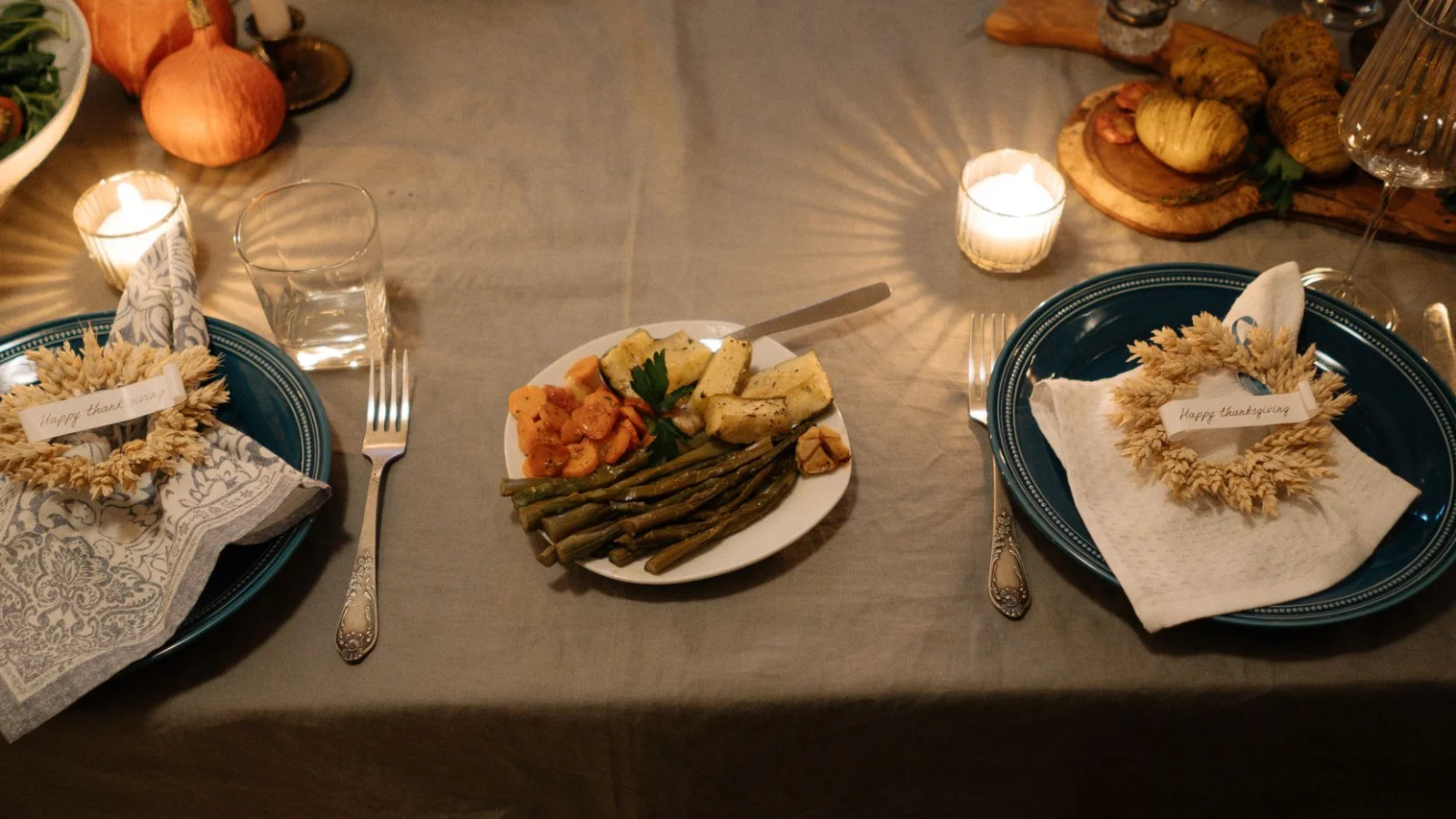
Candlelit holiday dinner table with a plate of roasted vegetables and asparagus between two place settings

How to Avoid Holiday Weight Gain: A Realistic Plan

Last updated: November 2026. Rewritten with a feast-day plan, new research and our own holiday plans.

Affiliate disclosure: This post may contain affiliate links. If you buy through them, we may earn a small commission at no extra cost to you.

How this guide was made: Based on CDC and NIDDK guidance and published research on holiday weight gain, including a randomized trial on preventing it. The plan is an editorial tool, not a clinically tested program. The personal parts describe my own family’s holidays.

Please note: This guide is for general information, not medical advice. If you have diabetes or another health condition, ask your doctor how to handle holiday meals.

Welcome to Comfort Mind Body, where we do the research so the holidays can stay about people, not pounds. This year my mom and little brother are flying in from Switzerland, my husband and I are hosting, and Sushi has already claimed the comfiest seat, so I’m writing this one for my own table, too.

You don’t have to skip the pie or sit out the party. Most holiday weight doesn’t come from the big days. It comes from the ordinary days in between that quietly turn into holidays too.

Enjoy the real feast days, and keep the ordinary days between them ordinary. On the big days, eat normally beforehand, fill up on the foods you love most, and go easy on drinks. On regular days, keep your usual meals, movement and sleep. One habit was tested in a randomized trial and helped: check in with yourself regularly, by stepping on the scale or noticing how your clothes fit, so small changes don’t sneak up on you.

Feast Days vs. Normal Days

Between Thanksgiving and New Year’s Day there are about five weeks, but only a handful of true feast days. Here’s what a typical season can look like:

Type of dayExamplesHow many (roughly)The plan
Feast daysThanksgiving, Christmas Eve, Christmas Day, New Year’s EveAbout 4Enjoy them. Eat normally that morning, and savor your favorites.
Party daysOffice party, friends’ dinner, a cookie swapUsually a fewPick 2 or 3 favorites, hold a non-alcoholic drink between drinks.
Normal daysWorkdays, errands, weekends at homeMost of the season, often 25 or moreKeep your usual meals, movement and bedtime.

If you protect the normal days, the feast days take care of themselves. Count yours: grab a calendar and mark only the days you’re truly celebrating. Most people are surprised how few there are.

What the Research Says About Holiday Weight

  • The average gain is small. In a 2000 study of 195 adults (a convenience sample near the NIH), the average gain over the holidays was about 0.8 pounds. Some people gained 5 pounds or more, more often those who were already overweight.
  • It tends to stay. In the same study, the average holiday gain hadn’t come off a year later. A 2016 study of 2,924 smart-scale users in the US, Germany and Japan also found weight was higher in the 10 days after Christmas than in the 10 days before.
  • Prevention can work. In the 2018 Winter Weight Watch Study, 272 adults were randomly assigned to two groups before Christmas. The group that weighed themselves regularly, got simple weight-management tips, and learned how much activity it takes to burn off festive foods didn’t gain weight on average, while the comparison group gained a little.

These are group averages, and your season depends on your body, routine and starting point. The takeaway isn’t fear of the scale. It’s that small, regular check-ins work better than a January rescue plan.

The Comfort Mind Body Method: Notice, Pick, Check In, Keep

This is the simple method we use across our weight guides. For the holidays it looks like this:

  1. Notice. Look at your calendar and your usual habits. Which days are real celebrations, and where do the extras usually sneak in for you: drinks, grazing, skipped workouts, late nights?
  2. Pick. Choose one or two moves for the whole season, not ten. For example, “water between drinks” and “a walk after big meals.”
  3. Check in. Once or twice a week, check how you’re doing: the scale if it helps you, or how your jeans fit if you’d rather skip it.
  4. Keep. In January, keep the habit that felt easiest. That’s your head start for next year.

Anna’s Note: I don’t weigh myself; I go by how my clothes fit. I train 4 days a week, track my protein, and swap soda for water or tea. When I don’t feel like a workout, I put on music and commit to just 10 minutes.

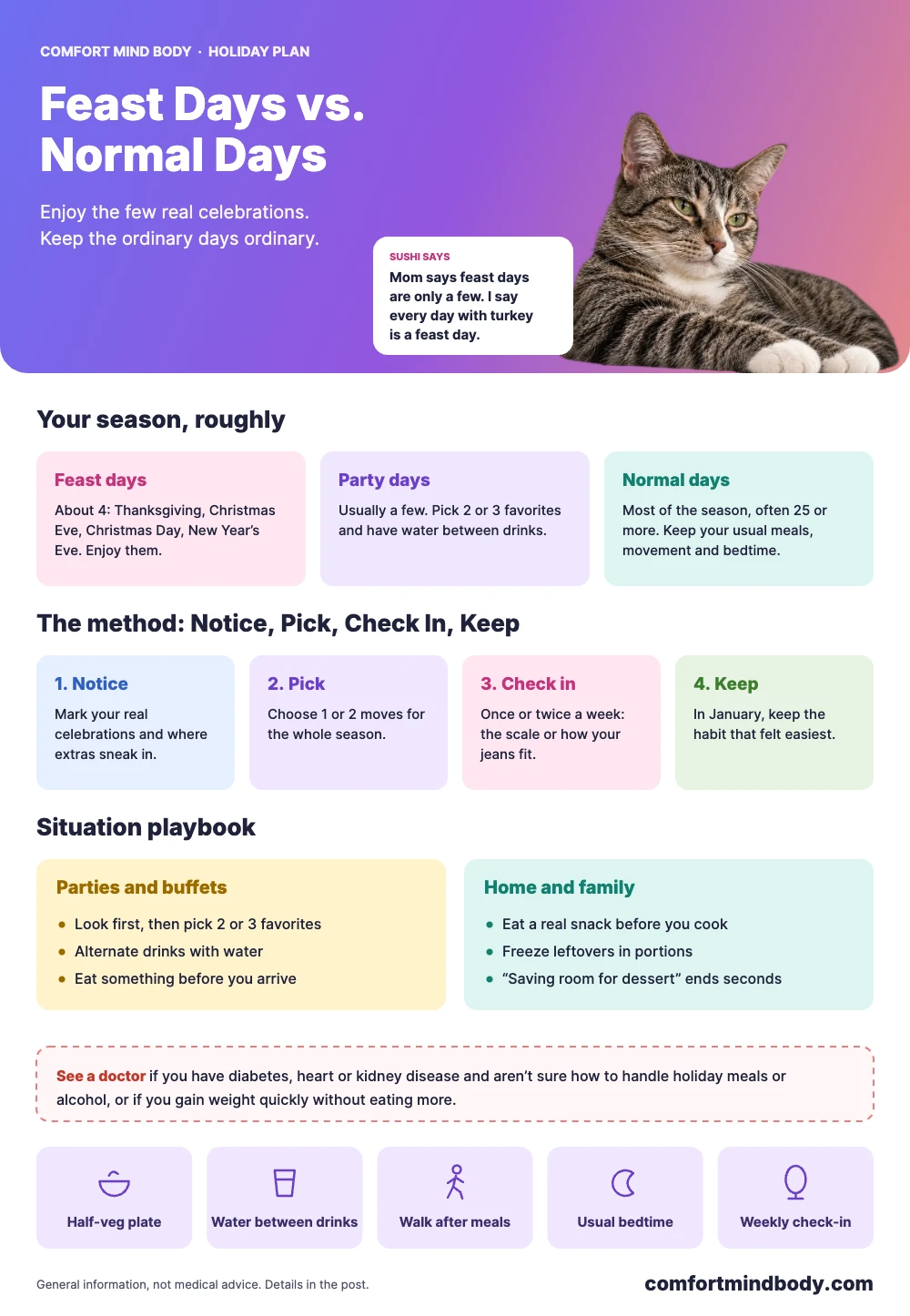
Infographic with Sushi the cat: feast days vs. normal days, the Notice, Pick, Check In, Keep method, a situation playbook and when to see a doctor
Save it: feast days vs. normal days
Read the infographic text

Feast days vs. normal days. Enjoy the few real celebrations. Keep the ordinary days ordinary.

Your season, roughly: about 4 feast days (Thanksgiving, Christmas Eve, Christmas Day, New Year’s Eve), enjoy them; usually a few party days, pick 2 or 3 favorites and have water between drinks; most of the season, often 25 or more, is normal days, keep your usual meals, movement and bedtime.

The method: Notice your real celebrations and where extras sneak in. Pick 1 or 2 moves for the whole season. Check in once or twice a week, with the scale or how your jeans fit. Keep the habit that felt easiest in January.

Situation playbook: at parties and buffets, look first, pick 2 or 3 favorites, alternate drinks with water and eat something before you arrive. At home, eat a real snack before you cook, freeze leftovers in portions, and “saving room for dessert” ends the seconds conversation.

See a doctor if you have diabetes, heart or kidney disease and aren’t sure how to handle holiday meals or alcohol, or if you gain weight quickly without eating more.

Simple habits: half-veg plate, water between drinks, walk after meals, usual bedtime, weekly check-in.

Your Holiday Situation Playbook

Generic tips don’t help when you’re standing next to the cookie tray. Here’s one move for each moment that usually trips people up.

The momentOne move that helps
The office cookie tableTake one you really want, put it on a napkin, and walk away from the table to eat it.
Grazing while you cookEat a real snack before you start cooking, and taste with a small spoon, not a fork.
A relative keeps offering seconds“It was so good, I’m saving room for dessert.” Kind, and it usually ends the conversation.
Buffet or big family dinnerLook at everything first, then pick your 2 or 3 favorite dishes and skip the ones you’re “meh” about.
A party with drinksAlternate each drink with water or sparkling water, and eat something before you arrive.
Travel daysPack a protein snack and water, and keep meal times close to normal.
Leftovers everywhereFreeze some in portions right away, and send some home with guests.

Sushi’s Note: Mom says the trick at buffets is to pick your favorites and skip the rest. My favorite is the turkey. I’m still working on the skipping part.

Build a Plate You’ll Actually Enjoy

There’s no need to skip anything. A simple guide for big meals: about half the plate vegetables and salad, a quarter turkey or other protein, and a quarter your favorite sides. Then dessert, slowly, on purpose. Protein and fiber help you feel full, so you’re less likely to keep picking afterward.

Drinks, Sleep and Stress: The Hidden Three

  • Drinks. Holiday drinks like eggnog, cocktails and cider add up quickly, and alcohol makes snacking easier. Alternate with water or sparkling water, and have a few drink-free nights a week.
  • Sleep. Short sleep can make you hungrier the next day. Keep your bedtime close to normal on the ordinary days.
  • Stress. Hosting, shopping and family time can be a lot. A short walk, a few quiet minutes or a phone call often help more than another cookie. Our guide to holiday stress has more ideas.

Keep Moving, Even a Little

You don’t need to keep a perfect training schedule. A walk after big meals, taking the stairs, a family walk on Christmas morning, or 10 minutes of music and movement at home all count. If you can exercise safely, keeping at least part of your usual routine makes January much easier.

What to Do the Day After a Big Meal

One big meal won’t undo your progress. The scale may be up the next morning, and some of that can be fluid and food from the day before. Don’t skip meals or try to “burn it off” with a punishing workout. Eat your usual breakfast or first meal, drink water, add vegetables and protein, and take a walk. Then let it go.

Example (illustrative, not a real case): A woman usually feels heavier every January. This year she marks her calendar: Thanksgiving, two parties, Christmas Eve, Christmas Day and New Year’s Eve. She enjoys those fully and keeps every other day normal. She picks two habits for the season (water between drinks and a walk after big meals) and checks how her jeans fit every Sunday. In January she feels like herself, and she keeps the Sunday check-in.

When to See a Doctor

Talk to your doctor if you have diabetes, heart or kidney disease and aren’t sure how to handle holiday meals or alcohol; if you gain weight quickly without eating more; or if you notice new swelling, shortness of breath, or bloating that lasts or comes with pain.

Frequently Asked Questions

How much weight do people gain over the holidays?

In a 2000 study, the average was about 0.8 pounds, but some people gained 5 pounds or more, and the average gain hadn’t come off a year later.

Is it bad to overeat on Thanksgiving or Christmas?

One big meal isn’t the problem. What matters more is what happens on the many ordinary days around it.

Should I skip meals before a big dinner?

No. Arriving very hungry usually makes it harder to stop. Eat normally earlier in the day.

Should I weigh myself over the holidays?

It helped in the research, but it’s not the only way. Some people prefer checking how their clothes fit. Pick the check-in that keeps you calm and consistent.

How do I lose weight after the holidays?

Final Thoughts: The Time Matters More

Our table this year is smaller than our family. My dad and the rest of our family are in Ukraine, so the evenings we do get together matter more than any number on a scale. I’d rather spend them talking than counting.

So keep two or three habits steady, enjoy the dishes that mean something to you, and let the rest go. January can start from a good place.

Anna

Sushi the tabby cat curled up in her fluffy gray bed by a sunny window
Sushi, saving her energy for the turkey
P.S. from Sushi: Mom says the holidays are about the people at the table. I agree, especially the people who drop turkey. Please share.

Safety Notes

Safety Notes

  • This guide is general information, not medical advice.
  • If you have diabetes, heart disease or kidney disease, ask your doctor how to handle holiday meals, alcohol and salty foods.
  • Alcohol can lower blood sugar in people who take insulin or some diabetes medicines.
  • Don’t skip meals or over-exercise to make up for eating more.
  • Regular weighing isn’t right for everyone. If food, weight or exercise feel stressful or out of control, talk to a doctor or contact the National Alliance for Eating Disorders helpline.

Helpful Resources

Scroll to Top