Affiliate Disclosure: This article may contain affiliate links. If you buy through these links, ComfortMindBody may earn a small commission at no extra cost to you. This does not affect the review or the recommendations.
Quick Summary: Hyperbolic Stretching is a paid digital flexibility program with short follow-along routines. It may help people who want more structure, but it should not be treated as a guaranteed shortcut, pain cure, or replacement for professional guidance.
Want to see the program?
Hyperbolic Stretching is a paid digital flexibility program with short follow-along routines. Review the details, price, and refund policy before deciding if it fits your body and goals.
View Hyperbolic Stretching ProgramHyperbolic Stretching benefits are often promoted in bold ways, but the realistic answer is more balanced. The program may support better flexibility, improved range of motion, easier movement, and more body awareness when used consistently. However, it should not be treated as a guaranteed shortcut to the splits, a cure for pain, or a replacement for professional care.
Hyperbolic Stretching is not just a general stretching style. It is a branded online flexibility program built around short home video routines. This review-style guide explains what it is, how it claims to work, what benefits are realistic, who may benefit, and who should be careful before trying it.
Quick Navigation
ToggleWhat Is Hyperbolic Stretching?
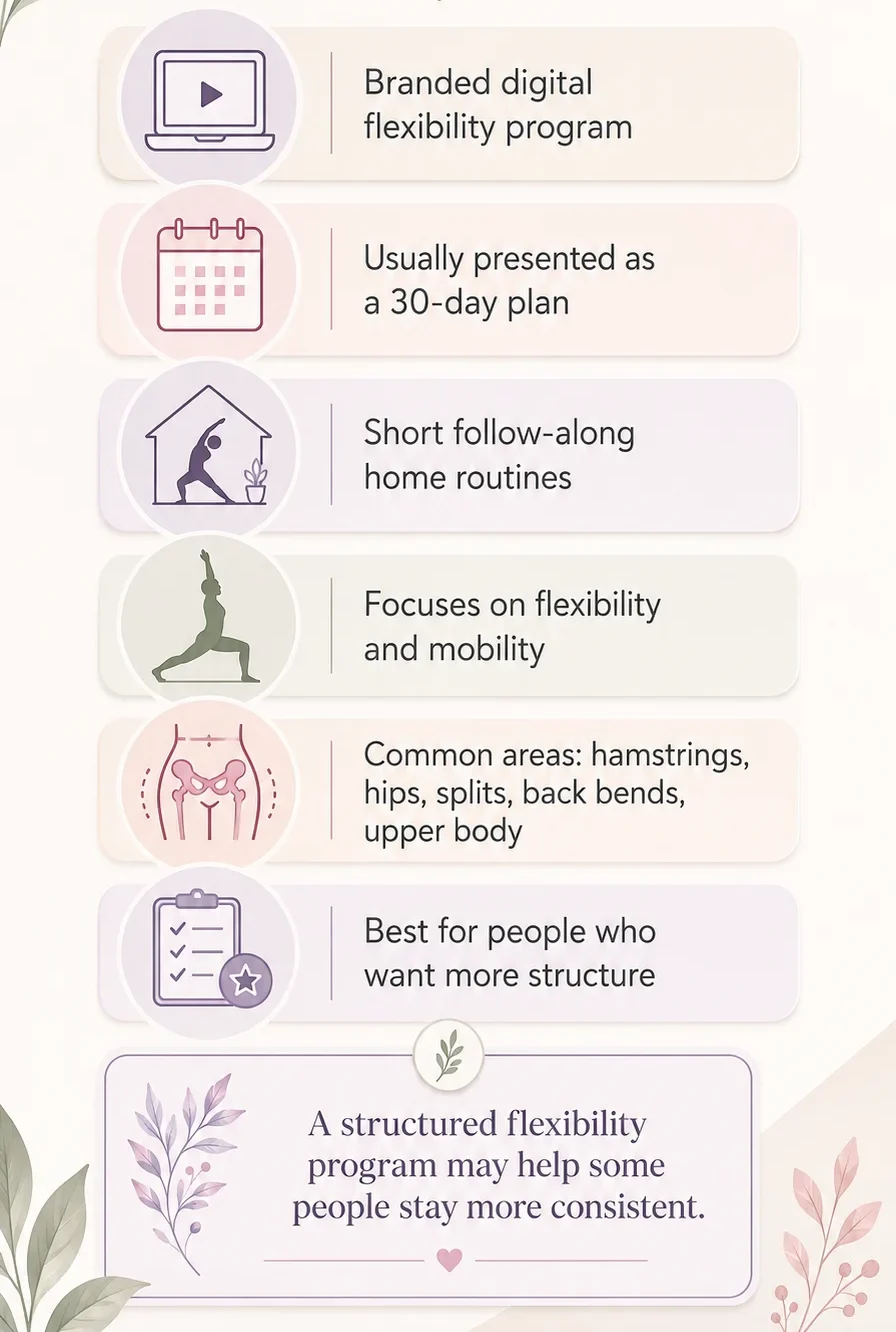
Hyperbolic Stretching is a branded digital flexibility program. It is usually described as a 30-day online plan with follow-along video routines that can be done at home. The program focuses on flexibility goals such as hamstrings, hip flexors, splits, back bends, and upper-body mobility.
That matters because “hyperbolic stretching” is not the same as simply saying “stretching.” When people search for a hyperbolic stretching review, they are usually trying to decide whether the paid hyperbolic stretching program is useful, safe, and worth buying.
The program appears to use a mix of active stretching, strength-based flexibility work, and contract-relax style movements. These methods may help some people improve flexibility over time, but results vary from person to person.
Hyperbolic Stretching Benefits: Quick Answer
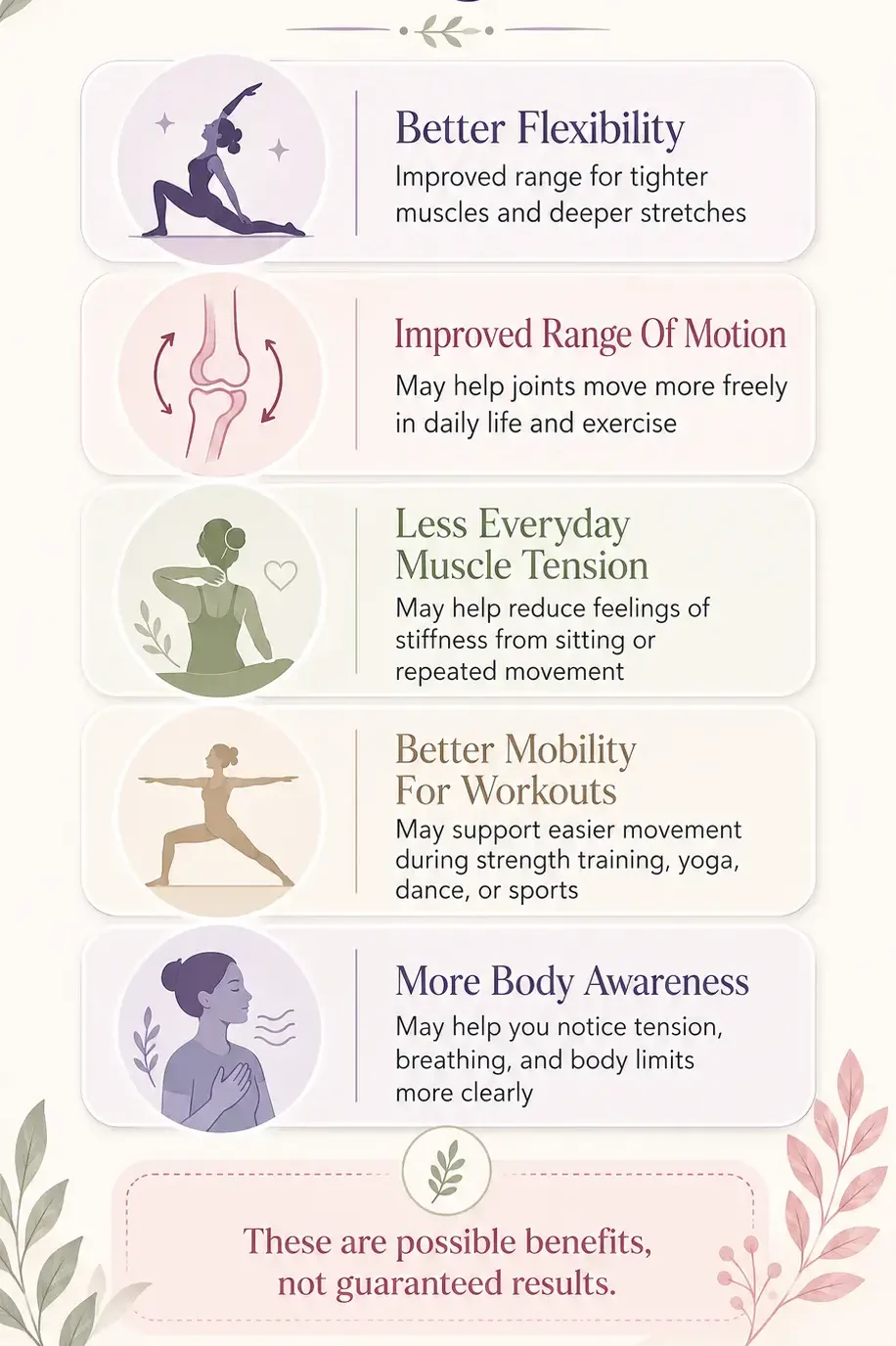
The main potential Hyperbolic Stretching benefits include better flexibility, improved range of motion, less everyday muscle tightness, better workout mobility, and more body awareness. These are realistic possibilities, especially for people who follow the routines consistently.
Still, there is no strong evidence that Hyperbolic Stretching is more effective than other well-designed stretching methods. Stretching in general can help improve flexibility and joint range of motion, according to Mayo Clinic, but studies on stretching benefits are mixed in some areas, such as soreness and athletic performance.
So the safest answer is this: Hyperbolic Stretching may work as a structured flexibility routine, but it is not magic. It works best when expectations are realistic and the user listens to their body.
Quick Note From Anna: Flexibility can feel personal, especially when online programs promise faster progress, deeper stretches, or dramatic results in a short time. ComfortMindBody is here to keep wellness realistic, supportive, and grounded. This guide is not about pushing your body into painful positions or making you feel like you need a paid program to do wellness “right.” It is about understanding what Hyperbolic Stretching may support, what it cannot promise, and how to choose movement that respects your real body.
How Hyperbolic Stretching Claims To Work
Hyperbolic Stretching claims to improve flexibility by training the muscles and nervous system to relax into deeper ranges of motion. In plain language, this means the program may use controlled tension, active muscle engagement, and repeated stretching positions to help the body become more comfortable moving through a larger range.
Some routines may feel different from basic static stretching, where you simply hold one position. Instead, Hyperbolic Stretching appears to include more active effort, such as contracting certain muscles before relaxing into a stretch.
This type of approach can be useful for some people, but it should be done carefully. Pushing too hard can irritate muscles, tendons, or joints. A stretch should feel controlled and tolerable, not sharp, forced, or painful.
Possible Benefits Of Hyperbolic Stretching
1. Better Flexibility
One of the biggest potential Hyperbolic Stretching benefits is improved flexibility. This is the main reason most people look into the program. It may be especially appealing to people with tight hamstrings, stiff hips, or limited lower-body flexibility.
Using Hyperbolic Stretching for flexibility may help because the program gives users a clear routine to follow. Many people do not struggle because stretching is complicated. They struggle because they do not know what to do, how long to do it, or how to stay consistent.
A structured program can remove some of that guesswork.
2. Improved Range Of Motion
Range of motion refers to how freely a joint can move. Better range of motion may make everyday activities feel easier, such as bending, reaching, squatting, walking, or exercising.
Mayo Clinic notes that stretching can improve flexibility and, as a result, the range of motion of your joints. This does not mean every stretching program works the same way for every person, but it does support the general idea that regular stretching can help movement quality.
3. Less Everyday Muscle Tension
Hyperbolic Stretching may help some people feel less tight, especially if they sit for long periods or repeat the same movements every day. Tight hips, hamstrings, shoulders, and lower back areas are common complaints among desk workers.
That said, stretching is not a cure for pain. Muscle tension can come from many causes, including stress, poor sleep, weak muscles, injury, posture habits, or medical conditions.
If you sit most of the day, stretching may work best when paired with movement breaks, strength training, and healthier workspace tips.
4. Better Mobility For Workouts
Another possible benefit is better mobility during workouts. If your hips, hamstrings, shoulders, or ankles feel restricted, certain exercises may feel harder than they need to.
Better flexibility and mobility may support activities like strength training, yoga, dance, martial arts, running, and sports. For example, improved hip mobility may help with squats and lunges, while better hamstring flexibility may make bending and hinging movements feel smoother.
For workouts, dynamic stretching and warmup movements are often more useful before exercise, while slower stretching may fit better after training or during a separate mobility session.
5. More Body Awareness
A slower flexibility routine can help you notice how your body feels. You may become more aware of which side is tighter, where you compensate, how your breathing changes under tension, and when you are pushing too far.
This type of awareness matters because flexibility is not only about reaching deeper positions. It is also about control, patience, and knowing your limits.
For a more complete wellness routine, you can pair stretching with mindfulness and body awareness.
Does Hyperbolic Stretching Really Work?
So, does Hyperbolic Stretching work? It may work for some people, especially those who want a clear, follow-along flexibility plan and are willing to practice consistently.
But the results are not guaranteed. Your progress depends on several factors, including your starting flexibility, age, training history, injuries, consistency, recovery, and how carefully you follow the routines.
Someone who is already active and has no major mobility limits may notice progress faster. Someone with old injuries, joint limitations, or a very sedentary lifestyle may need more time and a gentler approach.
The program may be helpful because it gives structure. That does not mean it is automatically better than regular stretching, yoga, mobility training, or working with a qualified coach or physical therapist.
Hyperbolic Stretching Review: What Users Should Know Before Buying
From a buyer’s point of view, Hyperbolic Stretching is best understood as a digital flexibility course. You are not buying a medical treatment or a personalized physical therapy plan. You are buying access to guided routines that you can follow at home.
That can be useful if you like structure. A program can help you stay on track better than random stretching videos. It may also save time because the routines are already organized around specific flexibility goals.
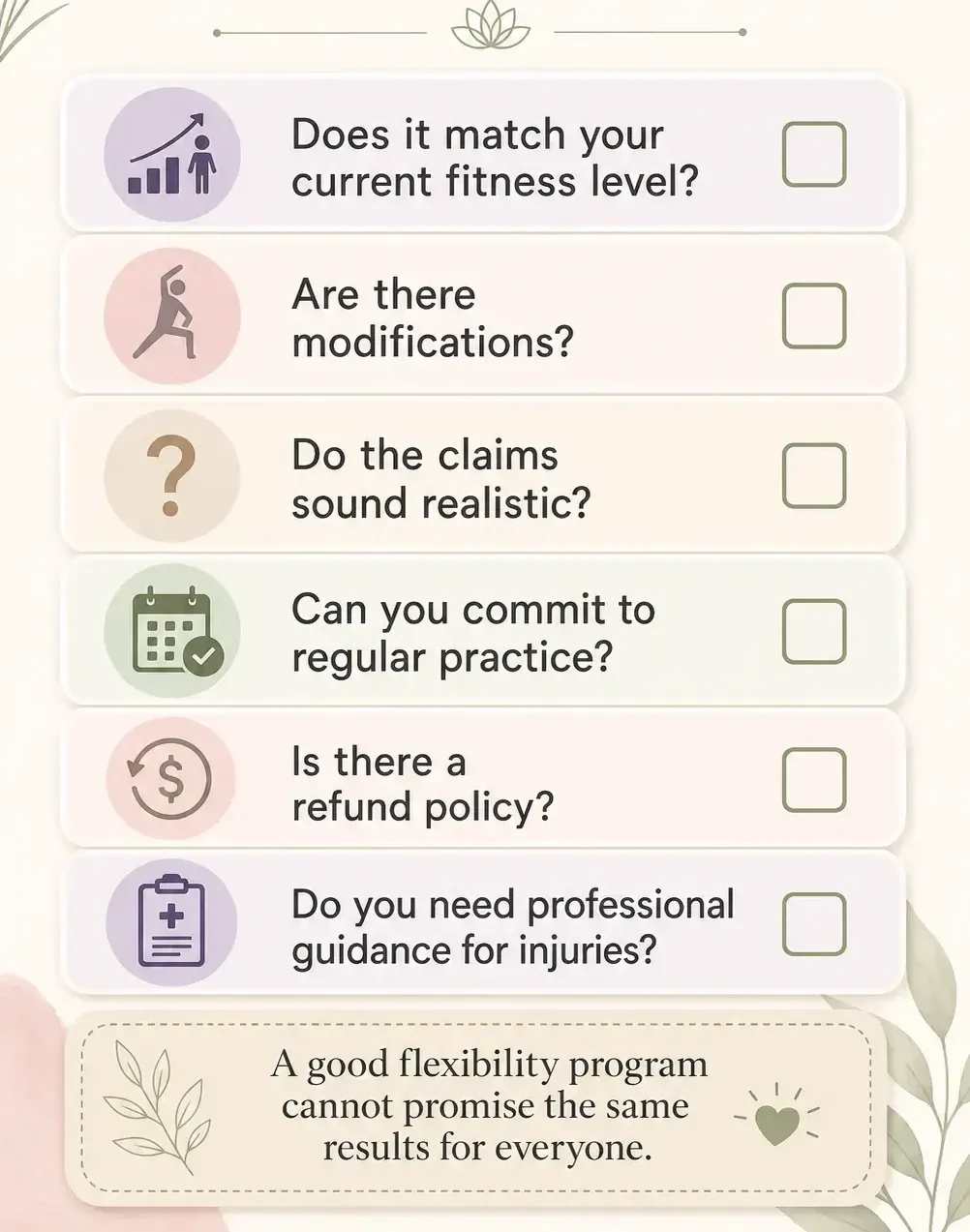
Before buying, pay attention to a few things:
- whether the routines match your current fitness level
- whether the program explains modifications
- whether the claims sound realistic
- whether you can commit to regular practice
- whether there is a refund policy
- whether you have injuries that need professional guidance
Be careful with any marketing that suggests guaranteed splits, instant results, pain cures, or dramatic body transformation. A good flexibility routine can help, but it cannot promise the same outcome for everyone.
Who May Benefit From Hyperbolic Stretching?
Hyperbolic Stretching may be useful for people who want a structured routine instead of guessing what stretches to do. It may also appeal to people who prefer home workouts and short daily sessions.
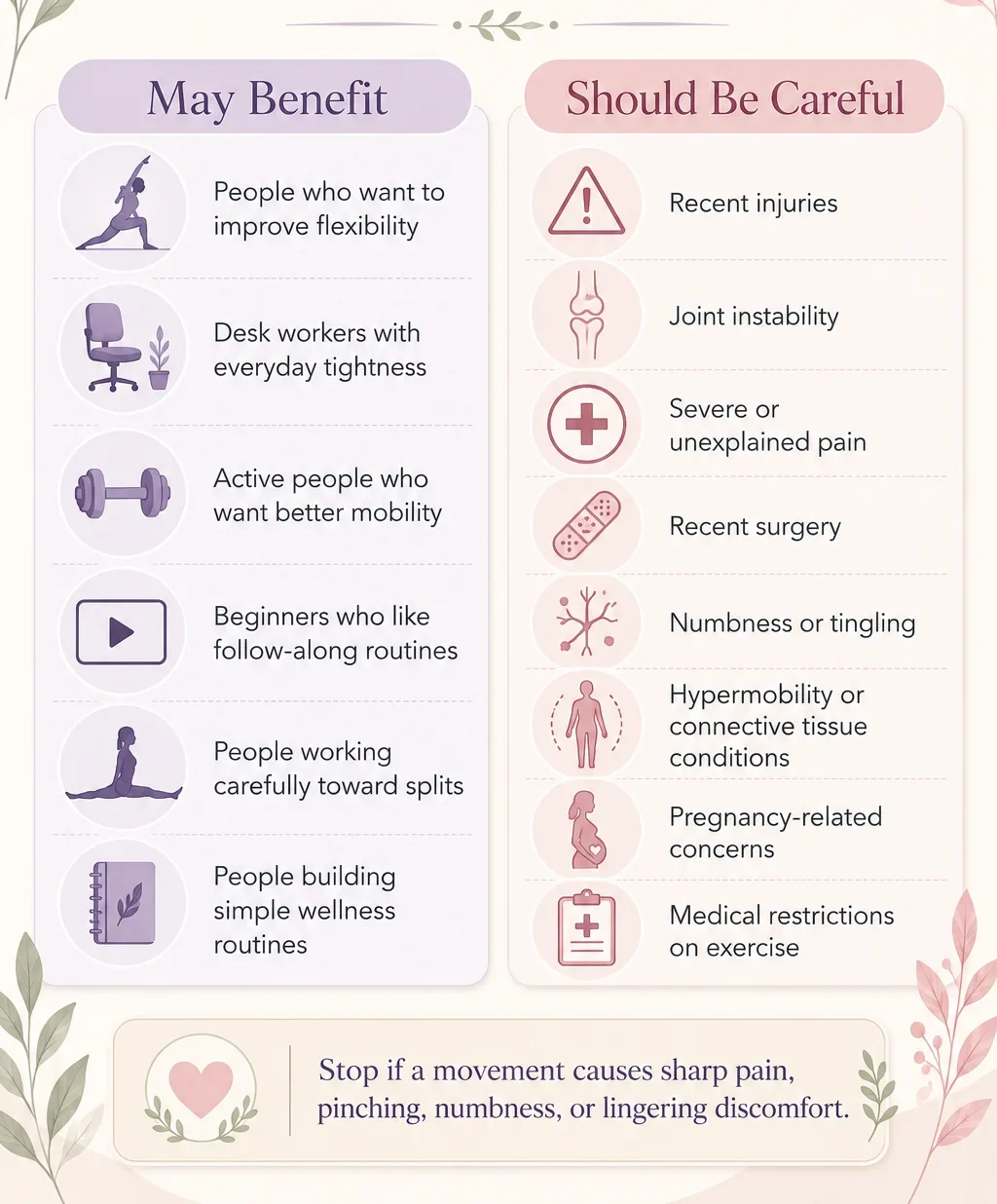
It may be a good fit for:
- people who want to improve general flexibility
- desk workers with everyday tightness
- active people who want better mobility for workouts
- beginners who like follow-along videos
- people working carefully toward splits or deeper stretches
- people building simple daily wellness routines
The key word is “carefully.” Flexibility gains should feel gradual, not forced.
Who Should Be Careful With It?
Hyperbolic Stretching is not ideal for everyone. Some people should be extra cautious or speak with a qualified professional before starting.
This includes people with:
- recent injuries
- joint instability
- severe or unexplained pain
- recent surgery
- nerve symptoms such as tingling or numbness
- hypermobility or connective tissue conditions
- pregnancy-related concerns
- medical restrictions on exercise
If a movement causes sharp pain, pinching, numbness, or lingering discomfort, stop. Stretching should not feel like a test of pain tolerance.
Hyperbolic Stretching Vs Regular Stretching
| Category | Hyperbolic Stretching | Regular Stretching |
|---|---|---|
| Format | Guided digital program | Can be self-guided or free |
| Structure | Organized routines and goals | Depends on the person |
| Cost | Usually paid | Often free |
| Flexibility Goals | Often focused on splits, hips, hamstrings, back, and upper body | Can target any area |
| Evidence | No strong proof it is superior to other stretching methods | Stretching in general can support flexibility and range of motion |
| Best For | People who want a follow-along plan | People who can stay consistent on their own |
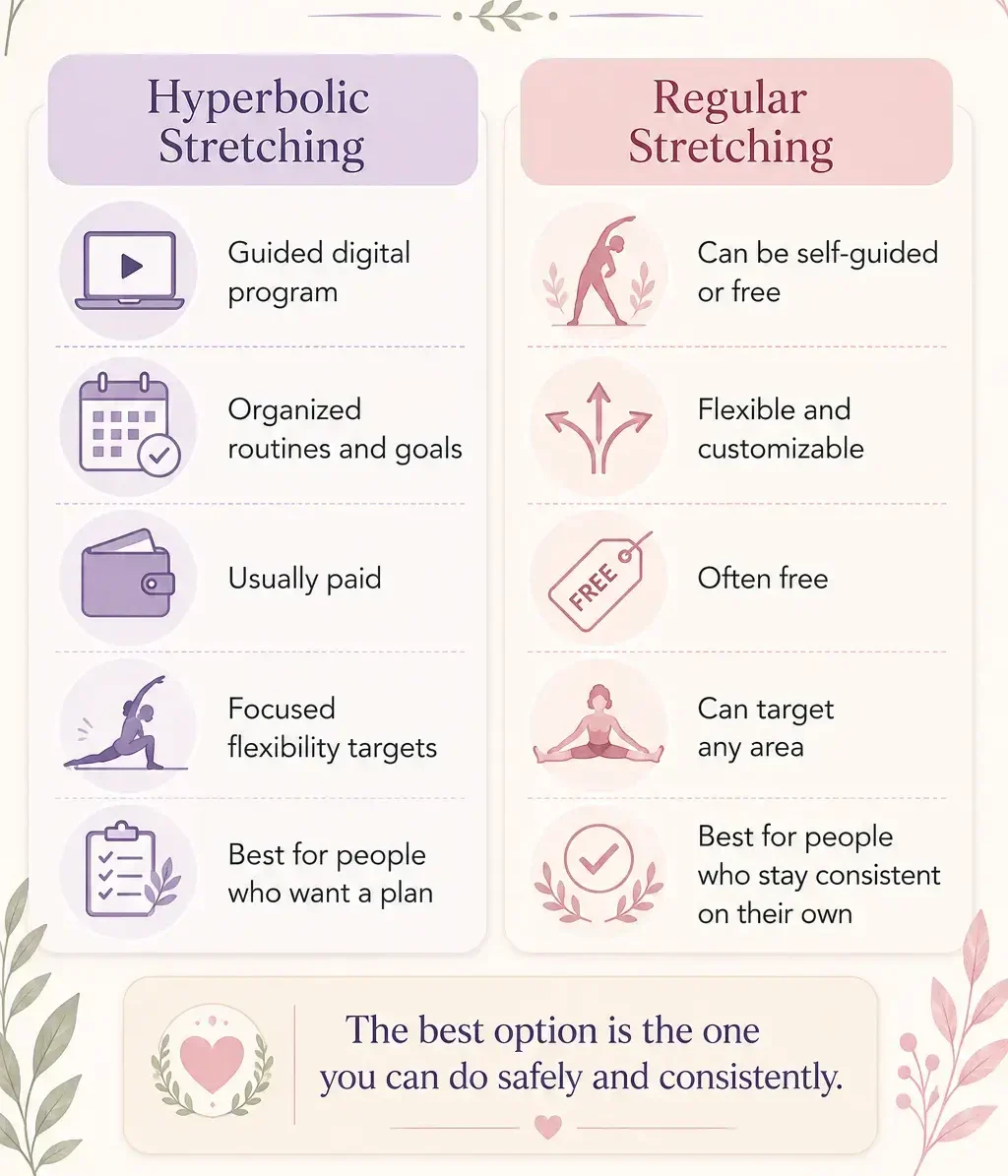
The biggest advantage of the Hyperbolic Stretching program is structure. The biggest advantage of regular stretching is flexibility, no pun intended. You can choose free routines, adjust your pace, and avoid paying for a program.
Neither option is automatically better. The best one is the one you can do safely and consistently.
Pros And Cons
Pros
- Short routines may be easier to fit into the day
- Can be done at home
- No gym required
- May help improve flexibility with consistent use
- Gives users a clear plan to follow
- Targets common flexibility goals
Cons
- It is a paid program
- Some marketing claims may sound too bold
- It is not personalized medical care
- Results vary
- Some routines may feel too intense for beginners
- People with injuries may need professional guidance
Is Hyperbolic Stretching Worth It?
Hyperbolic Stretching may be worth it if you want a guided flexibility plan, prefer video routines, and know you are more likely to stay consistent when a program tells you what to do.
It may not be worth it if you expect guaranteed splits, fast pain relief, posture correction, or a dramatic transformation in 30 days. Those expectations are too high.
A fair way to look at it is this: the program may support your flexibility goals, but it will not do the work for you. Consistency, patience, and safe technique matter more than the name of the program.
For best results, combine stretching with healthy lifestyle habits such as regular movement, strength training, sleep, hydration, and recovery.
Bottom Line: Hyperbolic Stretching may be worth considering if you want a guided flexibility plan and prefer short follow-along routines at home. It may not be the best fit if you expect guaranteed splits, fast pain relief, or a personalized therapy plan.
Shushi’s Soft Reminder: Not every flexibility goal needs to become pressure. Some tightness is normal. Some progress takes time. Some days your body may need gentler movement instead of deeper stretching. Pause, breathe, and choose the stretch that feels supportive instead of forceful.
Extra Benefits People Often Look For
Some people look into Hyperbolic Stretching for more specific goals, such as yoga, dance, martial arts, running, or general workout mobility. These goals are reasonable, but the claims should stay realistic.
- Yoga: Better flexibility may make some poses feel easier over time.
- Dance: Mobility and range of motion may support smoother movement.
- Martial arts: Hip and hamstring flexibility may support kicking range when paired with proper warm-ups and strength work.
- Desk tension: Gentle stretching may help some people feel less stiff after long periods of sitting.
- Workout mobility: Better range of motion may make some exercises feel more comfortable.
These are possible benefits, not guarantees. Results depend on consistency, starting flexibility, recovery, and whether the movements are done safely.
Final Thoughts
The most realistic Hyperbolic Stretching benefits are improved flexibility, better range of motion, easier movement, and greater body awareness. These benefits are possible, but they are not guaranteed.
Hyperbolic Stretching may be helpful because it gives users a structured plan. That structure can make consistency easier, especially for people who do not know where to start.
Still, it is important to keep expectations grounded. Hyperbolic Stretching is not a cure, not a medical treatment, and not proven to be better than every other stretching method. It is a flexibility program that may help when used carefully and consistently.
If your goal is broader wellness, flexibility can be one part of a larger plan for enhanced wellness.
FAQs
What is Hyperbolic Stretching?
Hyperbolic Stretching is a branded online flexibility program with follow-along routines. It is often promoted as a 30-day plan focused on areas like hamstrings, hips, splits, back bends, and upper-body flexibility.
What are the main Hyperbolic Stretching benefits?
The main possible benefits include better flexibility, improved range of motion, less everyday tightness, better workout mobility, and more body awareness.
Does Hyperbolic Stretching work?
Hyperbolic Stretching may work for some people if they use it consistently and safely. However, results vary, and there is no guarantee that it will work better than other stretching routines.
Is Hyperbolic Stretching good for flexibility?
It may be useful for flexibility because it provides structure and routine. Stretching in general can support flexibility and range of motion when practiced regularly.
Can Hyperbolic Stretching help with splits?
It may help some people work toward splits, especially if they need more hip and hamstring flexibility. However, it should not be seen as a guaranteed way to achieve splits in 30 days.
Is the Hyperbolic Stretching program safe?
It may be safe for healthy users who follow the routines carefully and avoid pushing into pain. People with injuries, joint problems, nerve symptoms, or medical conditions should speak with a qualified professional first.
How long does Hyperbolic Stretching take each day?
The program is generally promoted as using short daily routines. The exact time may vary depending on the routine and program version.
Is Hyperbolic Stretching better than regular stretching?
Not necessarily. Hyperbolic Stretching may be better for people who want a structured program, but there is no strong evidence that it is better than all regular stretching methods.
Who should avoid Hyperbolic Stretching?
People with severe pain, recent injuries, recent surgery, joint instability, hypermobility concerns, numbness, tingling, or medical restrictions should be cautious and seek professional advice before trying it.
Is Hyperbolic Stretching worth buying?
It may be worth buying if you want a guided flexibility program and are likely to follow it consistently. It may not be worth it if you expect guaranteed results or a quick fix.