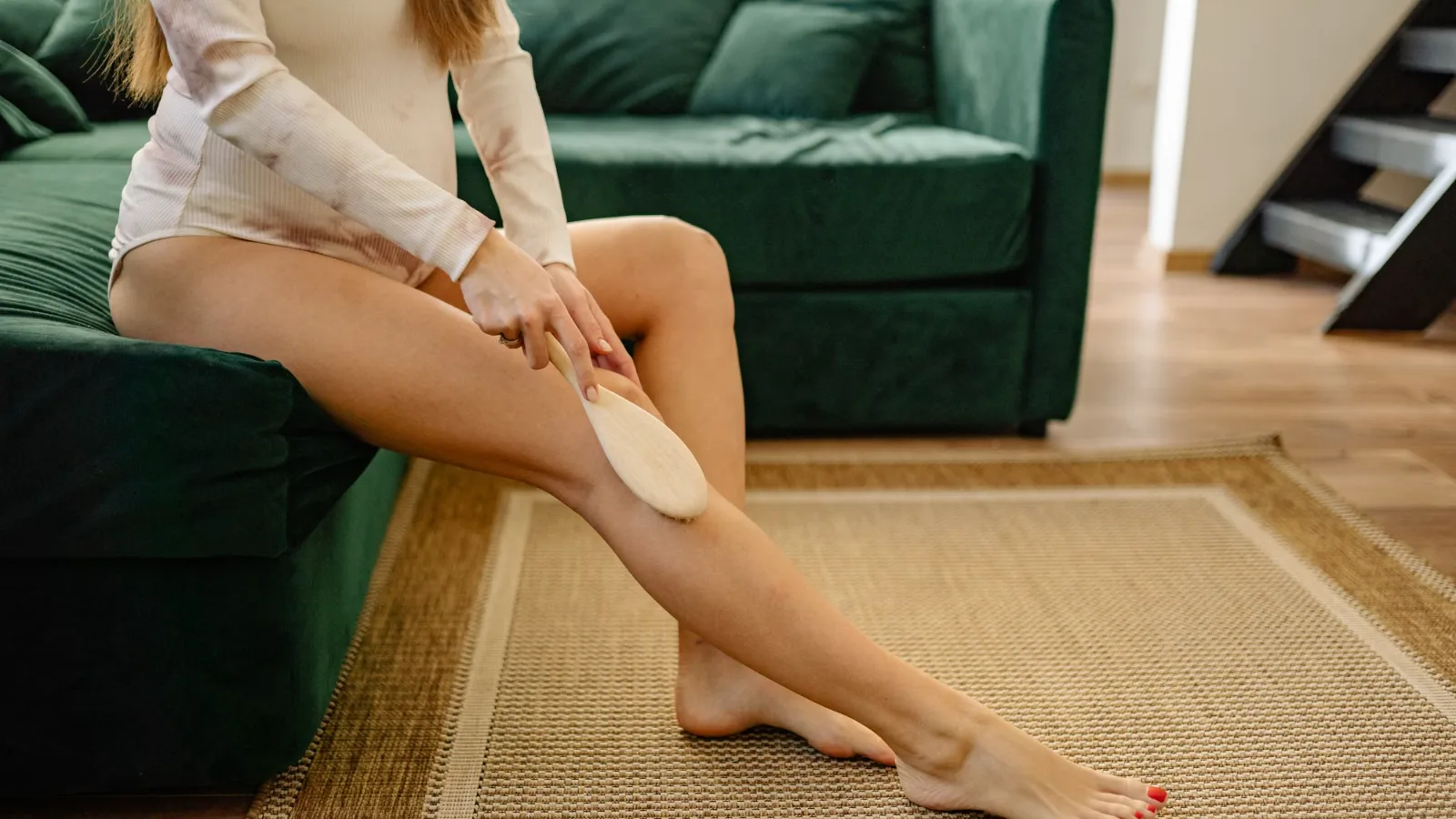
Woman dry brushing her legs on a green couch to exfoliate and prevent ingrown hairs

Ingrown Hair: How to Get Rid of It, Treat a Cyst and Stop It Coming Back

Last updated: November 2026. Updated based on research, our family’s picks and dermatology guidance.

Affiliate disclosure: This post contains affiliate links. If you buy through them, Comfort Mind Body may earn a small commission at no extra cost to you. As an Amazon Associate I earn from qualifying purchases. Read my affiliate disclosure.

How this guide was made: products marked “In our home” are ones my husband and I use. Products marked “Worth comparing” are popular picks we haven’t tried; for those I rely on the brands’ own descriptions. Researched with American Academy of Dermatology guidance. Drafted with AI help, then edited by Anna.

Please note: this is general education, not medical advice. See a doctor for a bump that’s very painful, hot, spreading, or comes with a fever.

That one stubborn bump on the bikini line, the red dot on your leg that won’t go away, the sore spot under a beard: ingrown hairs show up wherever hair gets removed. Welcome to Comfort Mind Body, where I share what works in our home, and ingrown hairs are something we deal with after shaving and trimming too.

Here’s how to get rid of an ingrown hair without making it worse, what to do if it turns into a cyst or gets infected, and how to stop them coming back, area by area.

Most ingrown hairs go away on their own in a week or two. To help: hold a warm, damp cloth on it for 5 to 10 minutes a few times a day, exfoliate gently around it, and leave it alone. If the hair is clearly visible above the skin, you can lift the tip out with clean tweezers, but never dig for it. Stop removing hair in that spot until it heals, and see a doctor if it gets hot, very painful, or keeps growing.

What Is an Ingrown Hair?

An ingrown hair is a hair that curls back or grows sideways into the skin instead of growing out. The skin treats it like a splinter, so you get a red or skin-colored bump, sometimes with pus or a dark dot where the hair is trapped. They’re most common with curly or coarse hair, and after shaving, waxing, epilating or plucking, because those leave sharp tips or broken hairs right at the skin’s surface.

Ingrown Hair vs Pimple vs Razor Bump: How to Tell

Ingrown hairPimpleRazor bumps
WhereAnywhere you remove hairFace, chest, back, oily areasAlong the shave line
Looks likeOne bump, often with a trapped hair or dark dotA whitehead or red bump, no hairSeveral small red bumps after shaving
CauseA hair growing back into the skinA clogged poreMany hairs curling back after a close shave
What helpsWarm compress, gentle exfoliation, hands offAcne care (salicylic acid, benzoyl peroxide)Shaving less often and gentler shaving

Razor bumps are basically lots of ingrown hairs at once from shaving. If that’s what you’re dealing with, my guide on how to get rid of razor bumps covers shaving technique and products.

How to Remove an Ingrown Hair Safely, Step by Step

  1. Stop shaving, waxing or plucking that spot.
  2. Use a warm compress: a clean, warm, damp cloth for 5 to 10 minutes, 2 to 3 times a day.
  3. Exfoliate gently around it once a day, with a soft exfoliating glove in the shower or a glycolic or salicylic acid product.
  4. If the hair loops above the skin, clean fine-point tweezers with rubbing alcohol and lift just the tip out. Don’t pull the whole hair out; just free the end.
  5. If you can’t see the hair, don’t dig, squeeze or use a needle. That’s how ingrowns turn into infections, cysts and dark marks.
  6. Moisturize, and give it a week or two.

Should You Pull Out an Ingrown Hair?

Only the tip, only if it’s already out of the skin, and only with clean tweezers. Pulling the whole hair out restarts its growth cycle, and the new hair can grow in the same way.

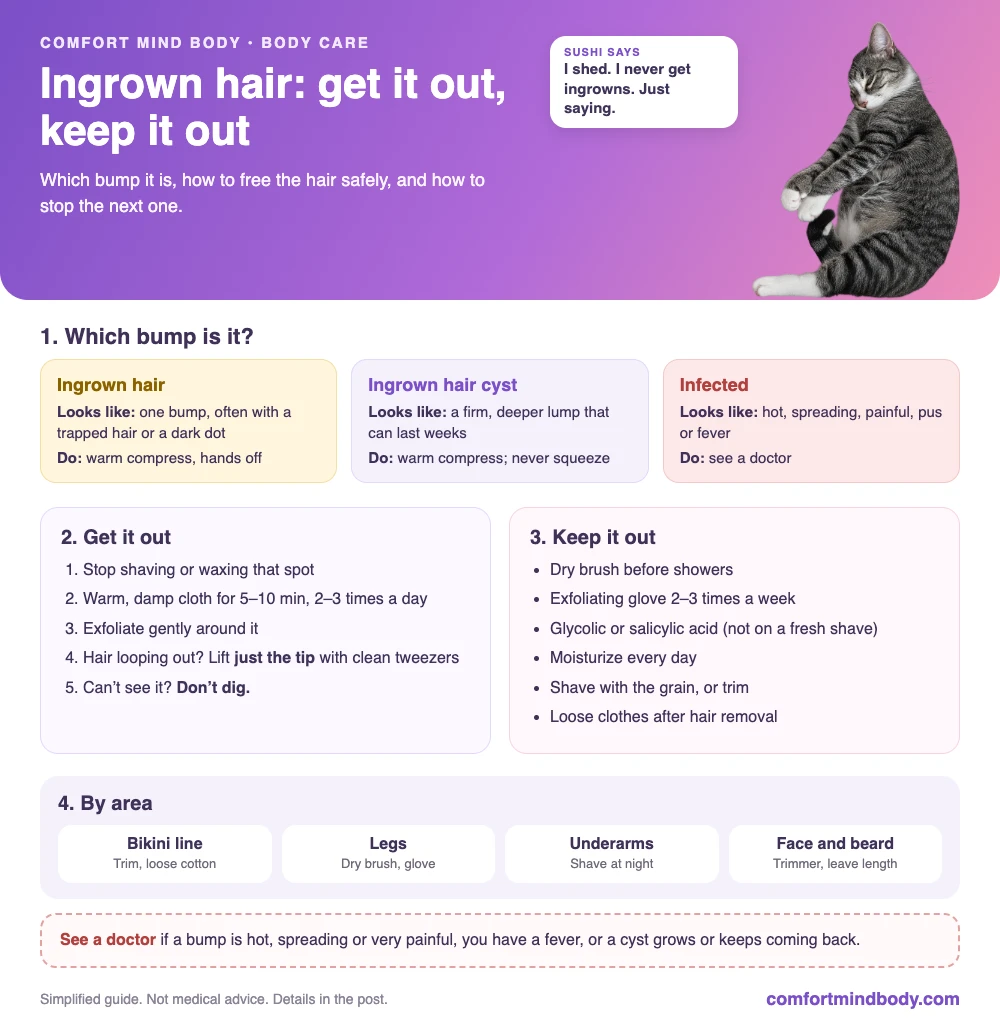
Infographic: how to tell an ingrown hair, an ingrown hair cyst and an infected ingrown apart, how to get an ingrown hair out safely, how to prevent them, and tips by body area, with Sushi the cat
Save it: get ingrown hairs out, and keep them out
Read the infographic text

Sushi says: I shed. I never get ingrowns. Just saying.

Which bump is it: An ingrown hair is one bump, often with a trapped hair or a dark dot: warm compress, hands off. An ingrown hair cyst is a firm, deeper lump that can last weeks: warm compress, never squeeze. An infected ingrown is hot, spreading, painful, with pus or fever: see a doctor.

Get it out: Stop shaving or waxing that spot. Warm, damp cloth for 5 to 10 minutes, 2 to 3 times a day. Exfoliate gently around it. If the hair is looping out, lift just the tip with clean tweezers. If you can’t see it, don’t dig.

Keep it out: Dry brush before showers. Exfoliating glove 2 to 3 times a week. Glycolic or salicylic acid (not on a fresh shave). Moisturize every day. Shave with the grain, or trim. Loose clothes after hair removal.

By area: Bikini line: trim, loose cotton. Legs: dry brush, glove. Underarms: shave at night. Face and beard: trimmer, leave length.

See a doctor if a bump is hot, spreading or very painful, you have a fever, or a cyst grows or keeps coming back.
Ingrown Hair Cyst: What It Is and What to Do

Sometimes the hair stays trapped deeper and the bump grows into a firm, round lump under the skin, often on the bikini line, inner thighs, armpits, neck or beard area. That’s an ingrown hair cyst. It can last weeks and feel sore or tender.

Warm compresses help it settle or drain on its own. Don’t squeeze it, and don’t try to tweeze a hair you can’t see: pushing on a cyst can spread the inflammation deeper and leave a scar or dark mark. See a dermatologist if it’s large, painful, keeps coming back, or doesn’t go down in a couple of weeks. Depending on the cyst, a doctor may use a steroid injection or cream, antibiotics if it’s infected, or drain or remove it.

Infected Ingrown Hair: Signs and Treatment

Signs of infection: growing redness, warmth, swelling, pus, pain that gets worse instead of better, and sometimes a fever. A small amount of pus that clears in a day or two is common; a spreading, hot, painful area isn’t.

For a mild one, keep using warm compresses and keep the area clean; an over-the-counter antibiotic ointment can help. See a doctor if it spreads, you get a fever, or it isn’t better in a few days, since you may need prescription antibiotics.

Ingrown Hairs After Waxing, Shaving and Epilating

After Waxing

Hairs that break instead of coming out from the root grow back with a weak or blunt tip that can curl under. Exfoliate gently starting 2 to 3 days after waxing (not right away), and moisturize every day.

After Shaving

A close shave leaves a sharp tip at or under the skin. Shave with the grain, use shaving cream, and consider an electric shaver. The full routine is in my razor bumps guide.

After Epilating or Plucking

Same problem as waxing: broken hairs and new hairs growing into a closed-up follicle. Epilate after a warm shower and exfoliate between sessions.

Ingrown Hairs by Area

Bikini Line and Pubic Area

The most common spot, because the hair is coarse and curly and clothes rub. Trim instead of shaving close where you can, wear loose cotton underwear after hair removal, and exfoliate with a glove (not acids right after shaving).

Legs and Inner Thighs

Dry brushing before showers and an exfoliating glove in the shower help most here. Moisturize right after you get out.

Underarms

Sweat and deodorant irritate fresh ingrowns. Shave at night and put deodorant on in the morning.

Face, Neck and Beard

Common for men who shave close. A trimmer or electric shaver that leaves a little length helps most. Don’t use body exfoliating gloves or dry brushes on the face.

How to Prevent Ingrown Hairs

  • Exfoliate 2 to 3 times a week: a dry brush, an exfoliating glove, or a glycolic or salicylic acid product (one at a time, not all on the same day).
  • Moisturize every day, especially right after the shower.
  • Use a sharp, clean blade or an electric shaver, and shave with the grain.
  • Leave a little length: trim instead of shaving close where you can.
  • Wear loose clothes after hair removal.
  • Shave or wax less. At-home IPL or professional laser reduces the hair itself, which means fewer ingrowns; see my guide to permanent hair removal at home.

What We Use at Home for Ingrown Hairs

Our routine is simple: dry brush before the shower, exfoliating gloves in the shower, an acid toner a few evenings a week, and coconut oil after. Here’s what that looks like.

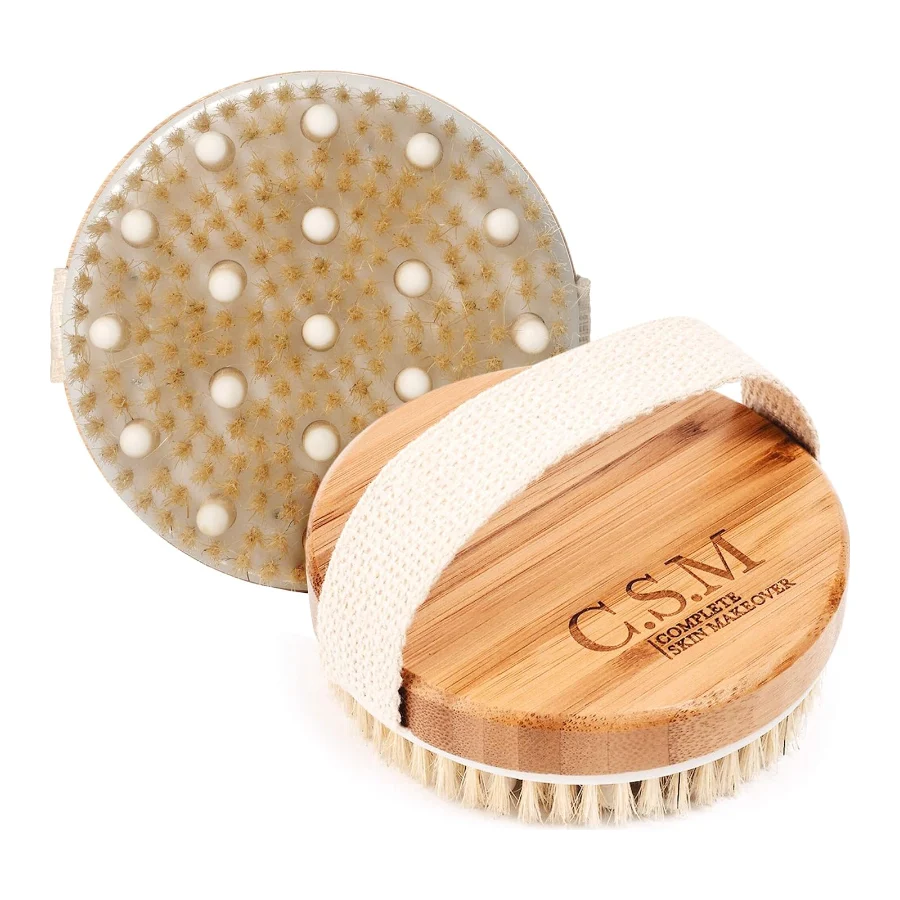
C.S.M dry brushing body brushes with natural boar bristles and a bamboo back

In our home

C.S.M Dry Brushing Body Brush Set

Best fit: legs, arms, back and thighs, on dry skin right before the shower, 2 to 3 times a week.

Why we use it: natural boar bristles sweep away dead skin so hairs can grow out instead of under, and it takes two minutes. The set comes with a smaller, softer brush too.

Watch: brush gently in long strokes; skip the bikini line, face, broken skin and fresh ingrowns.

Check on Amazon
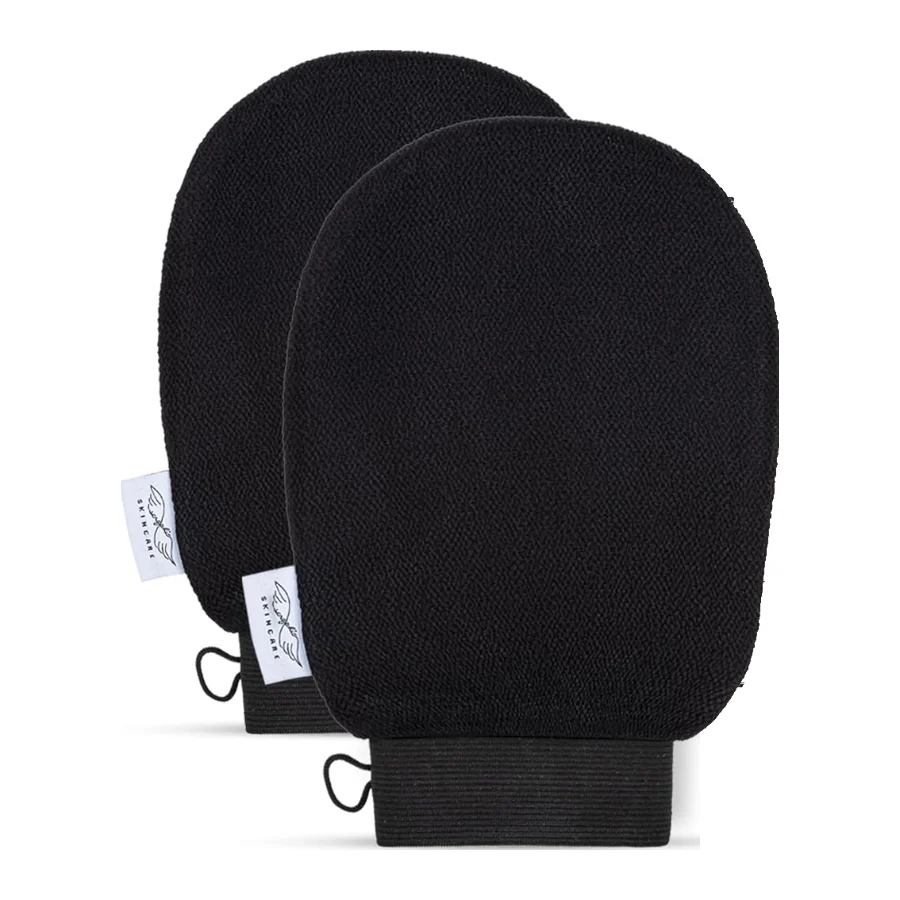
Seraphic Skincare black exfoliating body mitts, 2 pack

In our home

Seraphic Skincare Exfoliating Gloves (2 pack)

Best fit: legs, underarms and the bikini line in the shower, 2 to 3 times a week.

Why we use it: gentle enough for the bikini line and easy to control, and they don’t need any product.

Watch: light pressure only, not on freshly shaved or waxed skin; rinse and let them dry between uses.

Check on Amazon
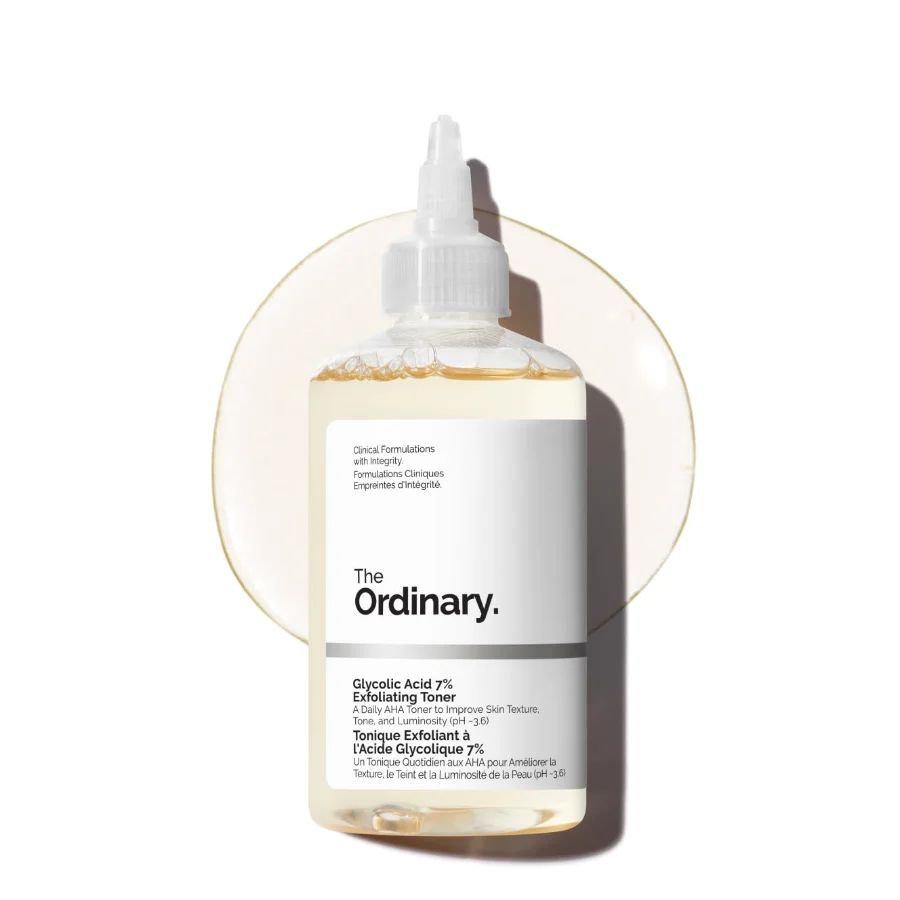
The Ordinary Glycolic Acid 7% Exfoliating Toner bottle

In our home

The Ordinary Glycolic Acid 7% Exfoliating Toner

Best fit: legs and the bikini line, on dry skin in the evening, a day or more after hair removal.

Why we use it: glycolic acid loosens dead skin so hairs can grow out instead of curling back in, and it helps fade the dark marks old ingrowns leave.

Watch: it stings on freshly shaved or broken skin; start a few times a week and use SPF on exposed areas.

Check on Amazon
Viva Naturals Organic Extra Virgin Coconut Oil jar

In our home

Viva Naturals Organic Extra Virgin Coconut Oil

Best fit: body after the shower: legs, arms and the bikini line.

Why we use it: soft, moisturized skin lets hairs grow out more easily, and a jar lasts us ages.

Watch: it can clog pores on acne-prone skin, so keep it off your face and back if you break out.

Check on Viva Naturals
Worth Comparing

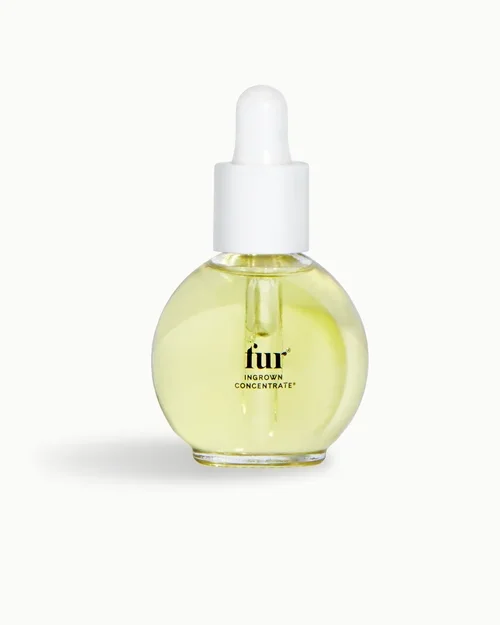
Fur Ingrown Concentrate dropper bottle

Worth comparing

Fur Ingrown Concentrate

Best fit: spot-treating single ingrowns on the bikini line, underarms, face and neck. Fur lists chamomile, coconut oil, tamanu and tea tree oil, and it comes with a textured finger mitt.

Why compare: a soothing oil for bumps that are already there, plus a mitt for gentle exfoliation.

Watch: tea tree can irritate sensitive skin; patch test first.

Check on Amazon
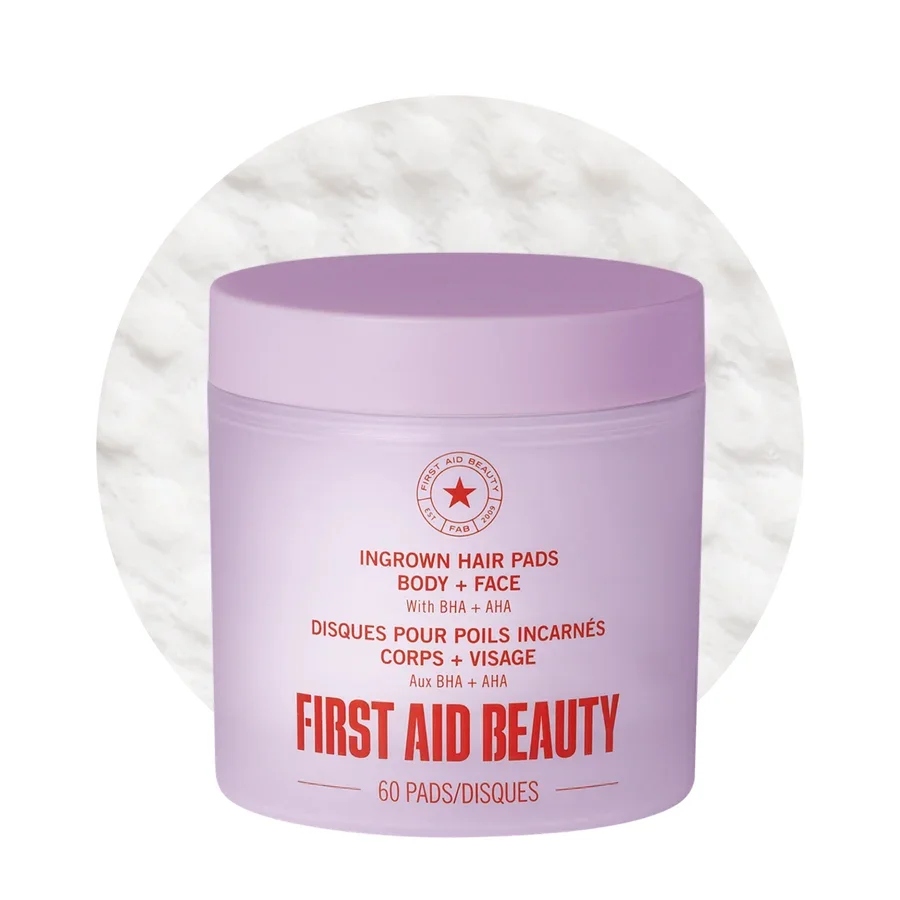
First Aid Beauty Ingrown Hair Pads with BHA and AHA

Worth comparing

First Aid Beauty Ingrown Hair Pads

Best fit: body and face, between hair removal sessions, once the skin is calm and unbroken. First Aid Beauty describes them as pads with BHA and AHA for ingrown hairs and razor bumps.

Why compare: pre-soaked pads are the easiest way to add an exfoliating acid to your routine.

Watch: don’t use them on the same day as another acid, or on broken skin.

Check on Amazon


When to See a Dermatologist

  • The bump is hot, spreading, very painful, or you have a fever.
  • A cyst is large or keeps coming back.
  • Ingrowns leave dark marks or scars.
  • You get them constantly despite changing your routine; prescription creams or laser hair removal can help.

Frequently Asked Questions

How long does an ingrown hair last?
Most clear in 1 to 2 weeks with warm compresses and gentle exfoliation. Cysts can take longer.
Should I pop an ingrown hair?
No. Squeezing pushes the hair and bacteria deeper and can leave a scar or dark mark.
Can an ingrown hair turn into a cyst?
Yes, if the hair stays trapped deep under the skin. Warm compresses help; see a dermatologist if it grows or keeps coming back.
What is the best treatment for ingrown hairs?
For most, warm compresses plus gentle exfoliation. An infected ingrown or a painful cyst needs a doctor.
Do ingrown hair serums and pads work?
Exfoliating serums and pads with glycolic or salicylic acid can help prevent new ingrowns; they don’t pull out a hair that’s already trapped.
Why do I get ingrown hairs on my bikini line?
Coarse, curly hair, close shaving or waxing, and tight clothes. Trimming, loose cotton underwear and regular exfoliation help.
Does laser hair removal help with ingrown hairs?
Yes. Less hair means fewer hairs that can grow back into the skin.

Final Thoughts

Ingrown hairs are annoying but rarely serious: a warm cloth, gentle exfoliation, moisturizer and a bit of patience fix most of them. The real win is prevention, so the next one never starts. If shaving is the main trigger, start with the razor bumps guide; if you’re ready to shave less, read about permanent hair removal at home.

Hands off the bumps, gentle on the skin, and smooth enough to forget about it.
Anna

Sushi the tabby cat stretching on her cat tree, looking grumpy
Sushi, mid-stretch and mildly offended
P.S. from Sushi: Mom exfoliates, brushes and moisturizes. I groom myself with my tongue twelve times a day and have never had a single ingrown hair. Just saying.

Safety Notes

Safety Notes

  • Never dig into the skin with tweezers, needles or pins.
  • Don’t squeeze a cyst or a painful bump.
  • Don’t use acids or scrubs on freshly shaved, waxed or broken skin.
  • See a doctor for spreading redness, warmth, pus with a fever, or a bump that keeps growing.
  • If you have diabetes or a weakened immune system, have an infected-looking bump checked early.
Scroll to Top