
My Boyfriend Doesn’t Take Care of His Health! This is the strongest if the goal is ranking and keeping readers engaged.
If you’ve found yourself thinking, “Why doesn’t my boyfriend take better care of himself?” you’re not alone. Watching someone you love ignore their health can be frustrating, confusing, and, honestly, scary.
Maybe he refuses to see a doctor even when something feels wrong. Maybe his diet is terrible, he barely sleeps, ignores stress, skips exercise, or brushes off symptoms like they’re no big deal. At first, it may seem like a minor bad habit. Over time, it can start to affect your relationship, your stress levels, and even how you see your future together.
The hard part? You want to help, but you don’t want to sound controlling, critical, or like you’re parenting your partner.
In many cases, health neglect isn’t just about laziness. Fear, stress, denial, depression, unhealthy routines, or simply not knowing where to start can all play a role.
This guide will help you understand why it happens, how to talk to your boyfriend about his health without pushing him away, what warning signs to take seriously, and how to support him without carrying the full responsibility yourself.
Quick Navigation
ToggleQuick Answer: My Boyfriend Doesn’t Take Care of His Health!
If your boyfriend doesn’t take care of his health, start with an honest but calm conversation. Focus on concern rather than criticism, ask what may be causing the behavior, and encourage small, realistic changes instead of trying to force a complete lifestyle overhaul.
Some men avoid taking care of their health because of stress, fear, unhealthy habits, depression, or simply not wanting to deal with medical issues. While you can offer support, encouragement, and practical help, you cannot make someone care for themselves if they are unwilling.
If his behavior is affecting your relationship, emotional well-being, or plans, it’s important to set healthy boundaries while still approaching the situation with compassion.
Why This Feels So Stressful
If your boyfriend ignores his health, your frustration probably isn’t just about the unhealthy habits themselves. It’s about what those habits represent.
Maybe he refuses to go to the doctor even when something feels clearly wrong. Maybe he lives on fast food, barely sleeps, ignores stress, or laughs off symptoms that would concern most people.
What starts as worry can slowly turn into anxiety, resentment, or even fear. You may find yourself asking questions like:
- What if something serious is going on?
- What happens if his health gets worse?
- Will I end up carrying the emotional or physical burden later?
- Why does it feel like I care more about his well-being than he does?
These feelings are more common than people admit. When someone you love neglects their health, it doesn’t just affect them. It affects the relationship, too. Health choices influence emotional connection, long-term plans, intimacy, shared routines, and the sense of stability between partners.
That’s what makes this so emotionally exhausting. You’re not just reacting to bad habits. You’re reacting to uncertainty about the future.
Why Some Men Don’t Take Care of Their Health
If your boyfriend doesn’t take care of his health, it’s easy to assume he just doesn’t care. But in many cases, the issue goes deeper than laziness or stubbornness.
People avoid health problems for all kinds of reasons, and understanding what may be driving their behavior can help you approach the situation more effectively.
1. He’s Afraid of What He Might Find Out
For some people, avoiding the doctor feels easier than facing bad news.
If he’s been dealing with symptoms, pain, fatigue, or changes in his body, fear may be keeping him from taking action. Some people convince themselves that if they ignore the problem, it will go away.
Unfortunately, health issues rarely work that way. Avoidance can feel comforting in the short term, but it often makes anxiety worse.
2. He Was Taught to “Push Through It.”
Many men grow up hearing messages like:
- “Man up.”
- “Stop complaining.”
- “You’re fine.”
- “Tough people deal with it.”
Over time, this can create the belief that asking for help, resting, or taking symptoms seriously is a weakness.
So instead of dealing with stress, pain, or emotional struggles, some men shut down or pretend nothing is wrong.
3. Stress or Burnout Is Taking Over
Sometimes, health neglect is less about choice and more about mental exhaustion.
If he’s overwhelmed with work, finances, family pressure, or life stress, basic self-care can start slipping.
That might look like:
- eating whatever is convenient
- skipping workouts
- sleeping poorly
- ignoring appointments
- relying on alcohol, caffeine, or unhealthy coping habits
When someone is mentally overloaded, even simple, healthy choices can feel like extra work.
4. Depression or Mental Health May Be Involved
This is an important one that people often miss. If your boyfriend has stopped caring about his hygiene, energy, sleep, eating habits, motivation, or overall well-being, mental health could be part of the picture.
Depression doesn’t always look like obvious sadness. Sometimes it looks like:
- constant exhaustion
- irritability
- emotional withdrawal
- loss of motivation
- neglecting responsibilities
- not caring what happens
If this sounds familiar, the issue may be bigger than “bad habits.”
5. He Simply Doesn’t See It as a Problem
Sometimes people normalize unhealthy behavior because it’s what they’ve always known.
If he grew up in an environment where no one went to the doctor, everyone ate poorly, stress was ignored, or health only mattered during emergencies, his habits may feel completely normal to him.
That doesn’t make them healthy. But it explains why your concern may surprise him.
6. He Feels Defensive or Controlled
Even if your intentions are good, repeated reminders can sometimes make someone feel criticized.
Once health conversations start sounding like lectures, people often stop listening and start defending themselves instead.
This creates the frustrating cycle where:
- You worry
- you bring it up
- he shuts down
- you push harder
- he resists more.
That pattern helps no one.
Signs Your Boyfriend May Be Neglecting His Health
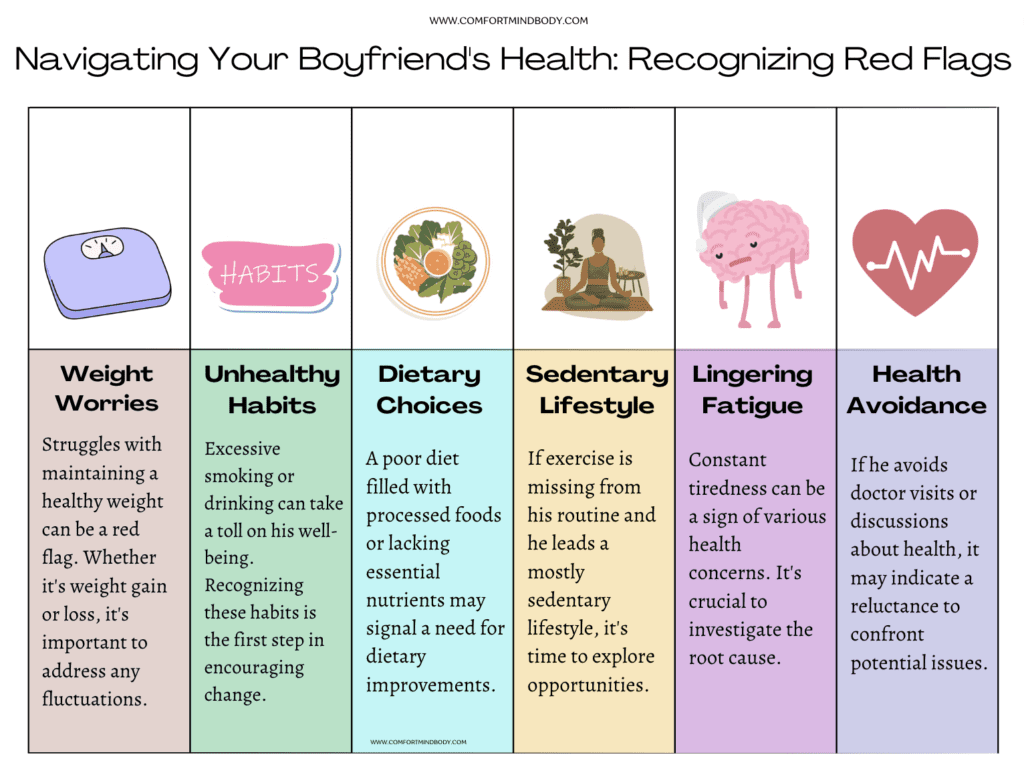
Not every unhealthy habit means there’s a serious problem. Everyone goes through stressful periods, eats poorly sometimes, skips workouts, or puts off appointments longer than they should.
The concern is when unhealthy behavior becomes a consistent pattern instead of an occasional phase. Here are some signs your boyfriend may not be taking proper care of his health.
He Ignores Symptoms That Should Be Checked
One of the biggest red flags is when he notices something is wrong but refuses to deal with it. This might include:
- ongoing pain
- chest discomfort
- shortness of breath
- constant headaches
- stomach issues
- unexplained fatigue
- changes in appetite
- sudden weight gain or weight loss
- unusual lumps, swelling, or persistent discomfort
Ignoring symptoms doesn’t make them disappear. It only delays answers.
He Refuses Regular Checkups or Medical Care
Some people avoid doctors unless there’s an emergency. But if your boyfriend consistently refuses routine checkups, ignores medical advice, or avoids getting something examined because “it’s probably nothing,” that may point to health avoidance rather than simple procrastination.
Preventive care exists for a reason.
His Diet Is Consistently Poor
No one eats all the time perfectly. But if most of his meals come from fast food, takeout, sugary snacks, processed foods, or energy drinks, his body will eventually feel the impact. Poor nutrition can affect:
- energy levels
- mood
- sleep quality
- focus
- digestion
- heart health
- weight
- immune function
It’s not about perfection. It’s about patterns.
He Barely Sleeps or Has Constantly Bad Sleep Habits
Chronic sleep neglect is often overlooked because people normalize being tired. But poor sleep affects nearly everything. If he regularly:
- stays up extremely late
- gets very little sleep
- relies heavily on caffeine
- wakes exhausted
- struggles with insomnia
- snores heavily or seems to stop breathing during sleep
…it may be more than just a bad routine.
He Avoids Physical Activity Completely
This doesn’t mean he needs to love the gym.
But if he spends most of his time sitting, avoids movement entirely, and has no interest in physical activity, that can affect both physical and mental health over time.
Even simple movement matters.
He Uses Alcohol, Smoking, or Other Unhealthy Coping Habits
Sometimes the issue isn’t just poor health habits. It’s unhealthy coping. Pay attention if he regularly turns to:
- excessive drinking
- smoking
- vaping
- substance use
- binge eating
- extreme caffeine dependence
These behaviors often signal stress, avoidance, or emotional struggles underneath.
His Hygiene or Self-Care Has Changed
This one can be emotionally difficult to notice. If he used to care about hygiene, grooming, routines, or general self-maintenance but has stopped, something may be going on.
Changes like this can sometimes point to stress, burnout, depression, or emotional withdrawal.
He Gets Defensive Every Time Health Comes Up
Sometimes the clearest sign isn’t the habit itself. It’s how he reacts when you mention it. If every conversation about health turns into:
- irritation
- sarcasm
- shutting down
- denial
- anger
- dismissiveness
There may be emotional resistance beneath the surface.
Important Reminder: One sign alone doesn’t automatically mean something serious is happening. But repeated patterns of avoidance, neglect, or defensiveness are worth paying attention to. The goal here isn’t to diagnose him. It’s to recognize when concern is reasonable.
What NOT to Say (If You Want Him to Actually Listen)
Even when you’re worried, the wrong wording can make your boyfriend shut down fast.
Health conversations are emotional. If he already feels embarrassed, stressed, ashamed, or defensive, criticism will usually push him further away instead of motivating change.
Here are some common mistakes to avoid.
“You’re So Lazy”
This may feel true in the moment, but labels rarely help. Calling someone lazy ignores the possibility that fear, stress, burnout, depression, or emotional avoidance may be part of the issue.
Even if the behavior frustrates you, attacking his character will almost always create defensiveness. Focus on the behavior, not the label.
Better: “I’m concerned because this has become a pattern.”
“You Never Take Care of Yourself”
Words like always and never make people feel attacked.
Even if you’re speaking from frustration, exaggeration tends to shift the conversation into arguing over details instead of addressing the actual issue. Instead of discussing his health, you end up debating whether he really “never” does anything right.
Better: “I’ve noticed some habits lately that worry me.”
“Fine, Ruin Your Health Then”
Threats, sarcasm, and emotional shutdown usually come from exhaustion. That’s understandable. But comments like this often communicate anger instead of concern.
When people feel emotionally cornered, they usually protect themselves rather than open up.
Better: “I’m frustrated because I care, not because I’m trying to control you.”
“I’m Not Your Mother”
This one often comes out when resentment has been building for a while. And honestly, the feeling behind it may be valid.
But saying it this way tends to create shame, embarrassment, or conflict rather than clarity. If you’re feeling like the relationship has become unbalanced, that conversation matters.
Just approach it directly instead of using a cutting remark.
Better: “I’ve started feeling like I’m carrying too much responsibility around this, and I want us to talk about that.”
Body-Shaming or Appearance Comments
Avoid comments like:
- “No wonder you’ve gained weight.”
- “You look unhealthy.”
- “You’ve really let yourself go.”
- “This is why I’m losing attraction.”
Even if appearance changes are part of your concern, leading with shame rarely creates healthy motivation. It usually creates embarrassment, distance, or secrecy. Focus on health, energy, well-being, and shared future concerns instead.
Constant Nagging
Even caring reminders can backfire when repeated too often. If every interaction becomes:
“Did you call the doctor?”
“Did you drink water?”
“Did you work out?”
“Did you eat something healthy?”
…the relationship can quickly slip into a parent-child dynamic. That doesn’t help either of you. Support should feel like a partnership, not supervision.
Turning It Into a Lecture
When people feel overwhelmed, long speeches usually get tuned out. You may have valid points.
But unloading weeks or months of frustration in one conversation often creates emotional overload.
Short, calm, honest conversations work better than dramatic monologues.
The Core Rule
If your words create shame, blame, or defensiveness, the conversation usually gets harder. So, if your words create safety, honesty, and ownership, change becomes much more possible.
That doesn’t guarantee he’ll respond well. But it gives the conversation the best chance.
Small Health Changes You Can Encourage Together
You don’t have to fix everything at once. In fact, trying to change his entire lifestyle overnight will probably make him feel overwhelmed, pressured, or defensive.
Small, realistic changes usually work better than dramatic plans that never last. The goal isn’t perfection. It’s progress.
Cook One Simple Healthy Meal Together
You don’t need a strict diet or complicated meal prep routine. Start with one simple meal each week that feels realistic for both of you.
That could be grilled chicken and vegetables, eggs and toast, homemade pasta, soup, rice bowls, or anything healthier than the usual fast food routine.
Doing it together makes it feel supportive instead of controlling.
Go for Short Walks Instead of “Working Out”
Not everyone likes the gym. And suggesting intense workouts can make someone shut down immediately.
A simple walk after dinner can feel much easier. It helps with stress, movement, sleep, and gives you quality time together without pressure.
Even 15 to 20 minutes is a good start.
Make Sleep a Shared Priority
Poor sleep affects mood, energy, stress, and overall health. If late nights are part of both your routines, focus on improving habits together instead of making it all about him.
That might mean:
- putting phones away earlier
- going to bed at a more reasonable time
- reducing caffeine late in the day
- creating a calmer nighttime routine
Small sleep changes can make a big difference.
Encourage a Checkup Without Acting Like a Doctor
If something has been bothering him physically, avoid trying to diagnose the issue yourself. That usually creates resistance. Instead, keep it simple.
Try saying: “I don’t want to guess what’s going on. I’d feel better if you got it checked out.”
This keeps the focus on care, not control.
Focus on One Habit at a Time
Trying to fix diet, exercise, sleep, stress, and doctor appointments all at once usually backfires. Pick one thing. Maybe that means:
- drinking more water
- walking twice a week
- replacing energy drinks with something healthier
- cooking at home one extra night
- finally scheduling one appointment
Small wins build momentum.
Keep Expectations Realistic: Real change usually happens slowly. Some progress is better than no progress.
And the healthiest habit is often the one someone is actually willing to stick with. The goal isn’t turning him into a completely different person overnight.
It’s helping create small, healthier choices that feel sustainable.
When You Should Be Genuinely Concerned
Sometimes, unhealthy habits are annoying but manageable. Other times, they may point to something more serious.
If your boyfriend has occasional bad eating habits or skips the gym, that’s one thing. But some signs should not be brushed off.
He’s Ignoring Ongoing Physical Symptoms
If he keeps dismissing symptoms that don’t go away, that’s a real concern. Watch for things like:
- chest pain or tightness
- shortness of breath
- constant fatigue
- unexplained weight loss or gain
- frequent headaches
- stomach pain that keeps returning
- dizziness
- unusual lumps or swelling
- ongoing pain anywhere in the body
- changes in bathroom habits
Ignoring persistent symptoms can delay treatment if something serious is happening.
His Mental Health Seems to Be Getting Worse
Physical health isn’t the only concern. If he suddenly stops caring about basic hygiene, loses motivation, isolates himself, becomes unusually irritable, sleeps constantly, barely sleeps at all, or seems emotionally disconnected, mental health may be part of the picture.
Sometimes what looks like “not caring” is actually emotional exhaustion, depression, anxiety, or burnout.
That deserves compassion, not judgment.
Alcohol or Unhealthy Coping Is Becoming a Pattern
Pay attention if stress is consistently being managed through:
- heavy drinking
- smoking
- vaping constantly
- substance use
- binge eating
- energy drink dependence
- avoiding responsibilities completely
One rough week is different from a repeated pattern.
If unhealthy coping becomes his default response to stress, that can affect both his health and your relationship.
He refuses all medical help, no matter what
Some people dislike doctors. That alone isn’t unusual.
But if he refuses help even when symptoms are clearly affecting daily life, that’s more concerning.
Avoidance based on fear or denial can become risky quickly.
His Health Is Starting to Affect the Relationship
This matters too. If his health neglect is causing:
- constant arguments
- emotional exhaustion
- resentment
- intimacy issues
- hygiene concerns
- anxiety about the future
- feeling like you’re becoming his caretaker
…then this is no longer just his issue. It’s affecting the relationship. That doesn’t mean you’re selfish. It means relationships are shared spaces, and repeated unhealthy patterns can impact both people.
Trust Your Instincts
If something feels seriously wrong, don’t ignore that feeling just because he does. You know his normal behavior. If his energy, habits, appearance, mood, or physical symptoms have noticeably changed, your concern may be valid.
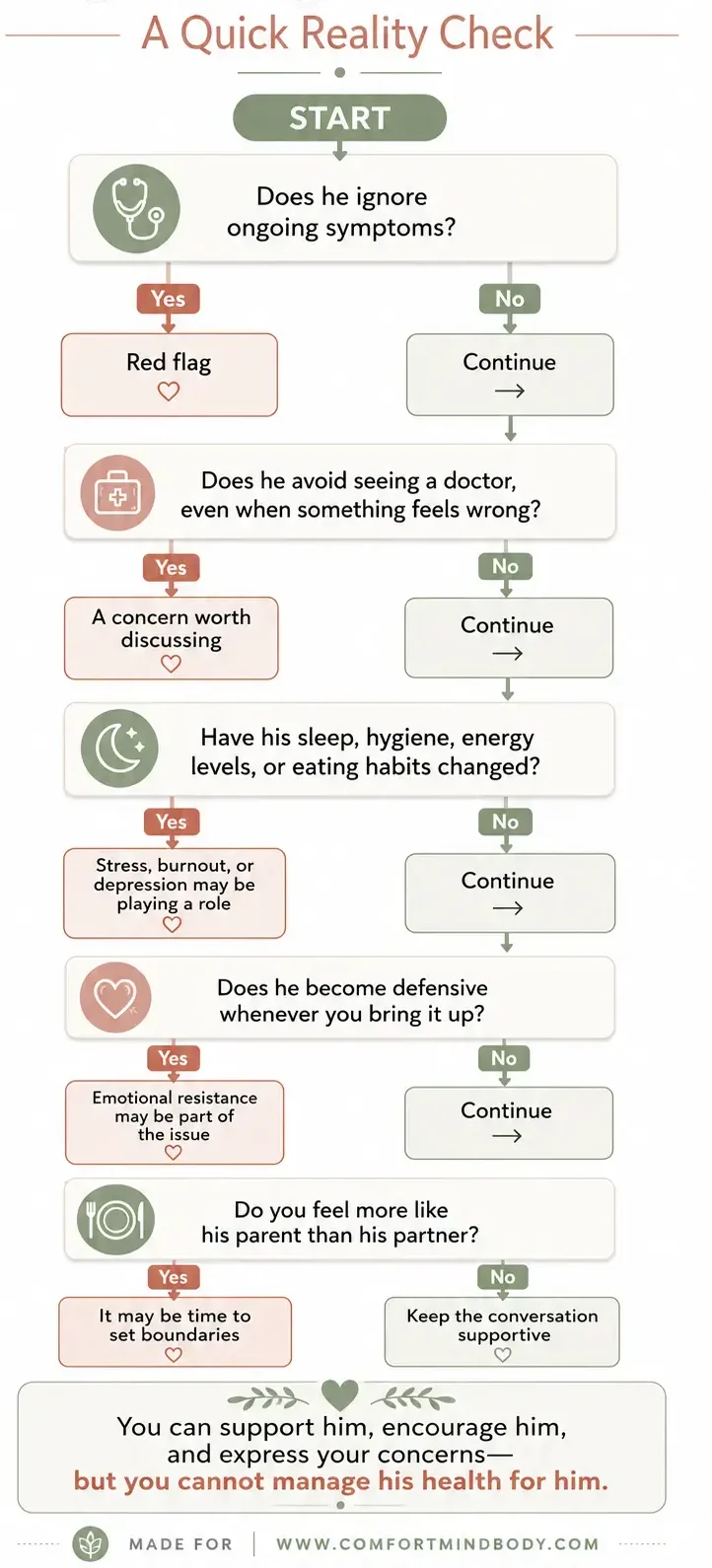
A Quick Reality Check: You cannot diagnose him.
But you also don’t have to pretend everything is fine if clear warning signs are there. Caring about someone means paying attention.
And sometimes paying attention means recognizing when a situation may be bigger than simple bad habits.
How to Support Him Without Becoming His Caretaker
My Boyfriend Doesn’t Take Care of His Health! Supporting someone you love is healthy. Feeling responsible for managing their entire well-being is not. This is where many relationships quietly become exhausting.
What starts as concern can slowly turn into constant reminders, emotional labor, frustration, and resentment. Without realizing it, you may begin acting less like a partner and more like a caretaker.
Offer Support, Not Responsibility
There’s a big difference between helping someone and taking over for them. Support looks like:
- encouraging a doctor visit
- offering to help find a provider
- cooking healthier meals together
- suggesting a walk
- listening when they’re overwhelmed
Taking responsibility looks like:
- repeatedly reminding them to book appointments
- monitoring what they eat
- constantly checking whether they followed through
- cleaning up the consequences of unhealthy habits
- managing problems they refuse to address
One is support. The other is emotional exhaustion.
Stop Chasing Change
This is hard, especially when you care deeply. But if every health conversation turns into you chasing and him avoiding, the pattern becomes unhealthy for both of you.
It can start looking like this:
- You remind him.
- He says later.
- You remind him again.
- He gets annoyed.
- You push harder.
- Nothing changes.
At some point, you’re no longer encouraging. You’re managing. And that usually creates resentment instead of progress.
Let Him Own His Choices
Adults are responsible for their own health decisions. That doesn’t mean you stop caring. It means you stop carrying what isn’t yours.
- You can express concern.
- You can be honest.
- You can offer help.
But you cannot force someone to care if they’ve decided not to. That’s one of the hardest relationship truths to accept.
Be Honest About How It’s Affecting You
Supporting him doesn’t mean pretending everything is fine. If his habits are causing anxiety, frustration, resentment, or emotional burnout, say that honestly.
For example:
“I care about you, but I need to be honest that this has been affecting me too.”
Or:
“I want to support you, but I’m starting to feel like I’m carrying responsibility that isn’t mine.”
That’s not punishment. That’s communication.
Watch for Caretaker Burnout
Ask yourself:
- Am I constantly worrying more than he is?
- Do I feel responsible for fixing this?
- Am I repeating the same conversations with no change?
- Do I feel emotionally drained by this pattern?
- Am I starting to resent him?
If the answer is yes, the issue may no longer be just his health habits. It may be the relationship dynamic itself.
Love Doesn’t Mean Self-Sacrifice Without Limits
Caring about someone doesn’t mean abandoning your own emotional well-being. Healthy support includes boundaries.
You are allowed to care deeply and protect your peace. You are his partner.
Not his parent. Not his therapist. Not his full-time health manager.
My Boyfriend Doesn’t Take Care of His Health: Reality Check
| Situation | What It Means | What to Remember |
|---|---|---|
| He keeps saying he’ll change but doesn’t | His words and actions are not matching | Patterns matter more than promises |
| You feel like you care more than he does | You may be carrying emotional responsibility that isn’t yours | You cannot want this more than he does |
| He may be scared, overwhelmed, or depressed | His refusal may have deeper emotional roots | Compassion helps, but it doesn’t mean sacrificing yourself |
| He refuses all responsibility | This creates a bigger relationship issue | You can support him, but you can’t manage him |
| You’re becoming resentful or anxious | His choices are affecting your well-being too | Your feelings matter |
| You feel like his parent or caretaker | The relationship dynamic may be unbalanced | You are his partner, not his health manager |
| You need to set boundaries | Boundaries explain what you can and cannot keep carrying | Boundaries are not threats |
| Nothing changes over time | His actions are giving you information | Decide what you can actually live with |
| Love isn’t fixing the pattern | Love alone does not create change | A healthy future requires mutual responsibility |
FAQs
Is it wrong to be upset that my boyfriend doesn’t take care of himself?
No. It’s understandable to feel worried, frustrated, or emotionally drained when someone you love ignores their health. His choices affect him, but they can also affect your relationship and your peace of mind.
How do I talk to him without sounding controlling?
Start with concern instead of criticism. Say what you’ve noticed, explain how it makes you feel, and ask what’s going on. Try saying, “I’m not trying to control you. I’m worried because I care about you.”
Can I make him go to the doctor?
No. You can encourage him, offer support, and explain why you’re concerned, but you can’t force him to take care of himself. He has to make that choice.
What if I’m losing attraction because he doesn’t take care of himself?
That can happen, and it doesn’t make you shallow. Health habits, hygiene, energy, and self-respect can affect attraction. Be honest, but avoid body-shaming or cruel comments.
Could depression be part of the problem?
Yes. If he has lost motivation, stopped caring about hygiene, sleeps too much or too little, withdraws emotionally, or seems constantly exhausted, mental health may be involved.
When is this a relationship dealbreaker?
It may become a dealbreaker if he refuses all responsibility, dismisses your concerns, ignores serious symptoms, or expects you to carry the emotional burden for him. A healthy relationship needs mutual responsibility.
Final Thoughts
If your boyfriend doesn’t take care of his health, your concern makes sense. It’s hard to watch someone you love ignore symptoms, avoid appointments, neglect basic habits, or act like their well-being doesn’t matter.
But you don’t have to handle it with anger, pressure, or constant reminders. Start with compassion. Ask what’s really going on. Share what you’ve noticed. Encourage one small next step.
At the same time, remember this:
- You can support him, but you cannot take responsibility for his health.
- A healthy relationship needs care from both sides. That includes emotional care, physical care, and the willingness to face hard things together.
- You are allowed to love him deeply and still need boundaries.
- You are allowed to be worried without becoming his caretaker.
And you are allowed to want a future with someone who takes their well-being seriously.
Medical Disclaimer: This article is for informational purposes only and does not replace professional medical advice, diagnosis, or treatment. If your boyfriend is experiencing concerning physical or mental health symptoms, encourage him to speak with a qualified healthcare professional.