
Last updated: November 2026. Merged with two older kids skincare posts and updated based on pediatric and dermatology guidance.
Affiliate disclosure: This post contains affiliate links. If you buy through them, Comfort Mind Body may earn a small commission at no extra cost to you. As an Amazon Associate I earn from qualifying purchases. Read my affiliate disclosure.
How this guide was made: the advice follows the American Academy of Pediatrics, the American Academy of Dermatology and children’s hospital dermatology teams. Every product is marked “Worth comparing”: chosen for gentle, kid-friendly formulas, not tested by a child in my family.
Please note: this guide is general information, not medical advice. Ask your pediatrician about rashes, eczema, acne or anything that doesn’t settle.
If your kid has started asking for serums, toners and the products they saw on TikTok, you’re not alone. Welcome to Comfort Mind Body, where we keep routines simple and check the trends against what doctors actually recommend.
Here’s the good news: kids need very little. A gentle cleanser, a moisturizer and sunscreen cover almost every child. Below you’ll find a simple skincare routine for kids by age, what tweens should skip, and gentle products worth comparing.
Quick Navigation
ToggleQuick Answer: What Is a Good Skincare Routine for Kids?
A good skincare routine for kids has three steps: wash with a gentle, fragrance-free cleanser, put on a light moisturizer, and use a broad-spectrum mineral sunscreen with SPF 30 or higher every morning. That’s it. Kids and tweens don’t need retinol, acids, vitamin C or anything labeled anti-aging, and pediatric dermatologists warn these can irritate young skin.
Start Here: The 3 Steps Every Kid Needs
- Cleanse: a gentle, fragrance-free wash. Once a day for little kids; morning and night once tweens get oilier skin or sweat from sports.
- Moisturize: a light lotion or cream, fragrance-free. Gel for oily skin, cream for dry skin.
- Protect: broad-spectrum mineral sunscreen, SPF 30+, every morning, even when it’s cloudy.
Do Kids Need a Skincare Routine?
Kids don’t need a routine the way adults do, but a simple one helps. Children’s skin is thinner and more sensitive than adult skin, so it reacts faster to harsh products and burns faster in the sun. A short routine teaches good habits early: washing off sweat and sunscreen, moisturizing dry patches, and protecting skin from the sun.
The risk is doing too much. Dermatologists see more tweens with irritation from adult products than kids who lack products. If a product stings or burns, it isn’t “working.” It’s irritating the skin, so stop using it.
Skincare Routine for Kids by Age
| Age | What their skin needs | What to use | Skip |
|---|---|---|---|
| Babies (under 1) | Gentle bathing and moisture | Plain water or a mild baby wash, fragrance-free cream; under 6 months, shade and clothing instead of sunscreen | Fragrance, bubble bath, adult products |
| Little kids (1 to 8) | Clean, moisturized, protected skin | Mild body and face wash, fragrance-free lotion, mineral sunscreen SPF 30+ | Scented products, sheet masks, “makeup” skincare |
| Tweens (9 to 12) | First oil and sweat, sometimes first breakouts | Gentle face wash morning and night, oil-free moisturizer, daily SPF 30+ | Retinol, acids, vitamin C, anti-aging creams, scrubs |
| Teens (13+) | More oil, acne, a real routine | A fuller routine with acne care; see my skincare for teens guide | Harsh scrubs, too many actives at once |
The routine barely changes from age 3 to 12. What changes is how often your child washes and whether their skin turns oily. For babies under 6 months, the American Academy of Pediatrics says to keep them out of direct sun and use shade, hats and clothing first; a little sunscreen on small areas like the face is OK when there’s no other option. Once your child turns 13 or breakouts start, my skincare for teens guide covers acne treatments and routines by skin type.
A Simple Skincare Routine for 10 Year Olds and Other Tweens
Around 9 to 12, skin starts making more oil, kids sweat more from sports, and some get their first breakouts. This is when a simple face routine makes sense, and when the TikTok wish lists start. Keep it to two or three steps:
- Morning: rinse or gentle cleanser, light moisturizer if skin feels dry, mineral sunscreen SPF 30+.
- Night: gentle cleanser to wash off sweat and sunscreen, then an oil-free moisturizer.
Look for words like fragrance-free, gentle, non-comedogenic and oil-free. Helpful ingredients include glycerin, ceramides, hyaluronic acid and panthenol. A routine with more than three steps is a sign something can go.
What Kids Should Skip: Retinol, Acids and Anti-Aging Products
The “Sephora kids” trend has tweens buying serums made for adult skin. Pediatric dermatologists are clear: anti-aging ingredients like retinoids, AHAs, BHAs and vitamin C were designed for wrinkles and sun spots, not young skin. On kids, they can cause redness, stinging and a weaker skin barrier.
| Fine for kids | Skip (unless a doctor prescribes it) |
|---|---|
| Gentle, fragrance-free cleanser | Retinol and retinoids |
| Fragrance-free moisturizer with ceramides or glycerin | Glycolic, lactic and salicylic acid toners and peels |
| Mineral sunscreen (zinc oxide, titanium dioxide) | Vitamin C serums |
| Plain lip balm | Anything labeled anti-aging, firming, brightening or wrinkle-reducing |
| A fun kids’ cleanser or headband | Scrubs, heavy fragrance, strong essential oils |
Is Retinol Safe for Kids?
Not for anti-aging. Over-the-counter retinol has no benefit for young skin and often irritates it. Retinoids do have one medical use in this age group: a doctor may prescribe a retinoid gel for acne, and then it’s used under their guidance. If your tween has breakouts, start with a pediatrician or dermatologist rather than a retinol serum.
What About Drunk Elephant and Other Trendy Brands?
Trendy brands aren’t bad, but many of their best sellers contain acids, retinol or vitamin C made for adults. If your child wants one, read the label together and pick a basic like a gentle cleanser or plain moisturizer instead of a serum. My Drunk Elephant routine guide shows which products hold the actives. Gen Z brands like Bubble market to teens and tweens too; my Bubble skincare review looks at what’s inside.
Sunscreen for Kids: The Step That Matters Most
Sunscreen is the one product every child over 6 months needs. Pediatric dermatologists recommend a broad-spectrum mineral sunscreen with SPF 30 or higher, with zinc oxide or titanium dioxide, every day, even when it’s cloudy. Creams and sticks are easier to apply evenly than sprays, and tinted mineral formulas can blend better on deeper skin tones.
Put it on before going outside, reapply every two hours outdoors, and again after swimming or towel-drying. Add hats, sunglasses and shade during midday. For more on filters and textures, see my guide on how to choose sunscreen.

Best Kids Skincare Products: Gentle Picks Worth Comparing
Every product here is fragrance-free or has a fragrance-free option, unless the box says otherwise, and none contains retinol, acids or anti-aging actives. Evereden is the kids’ brand we link to most; for a closer look at the brand, see my Evereden review. The rest are drugstore basics dermatologists often suggest.
Cleansers
Worth comparing
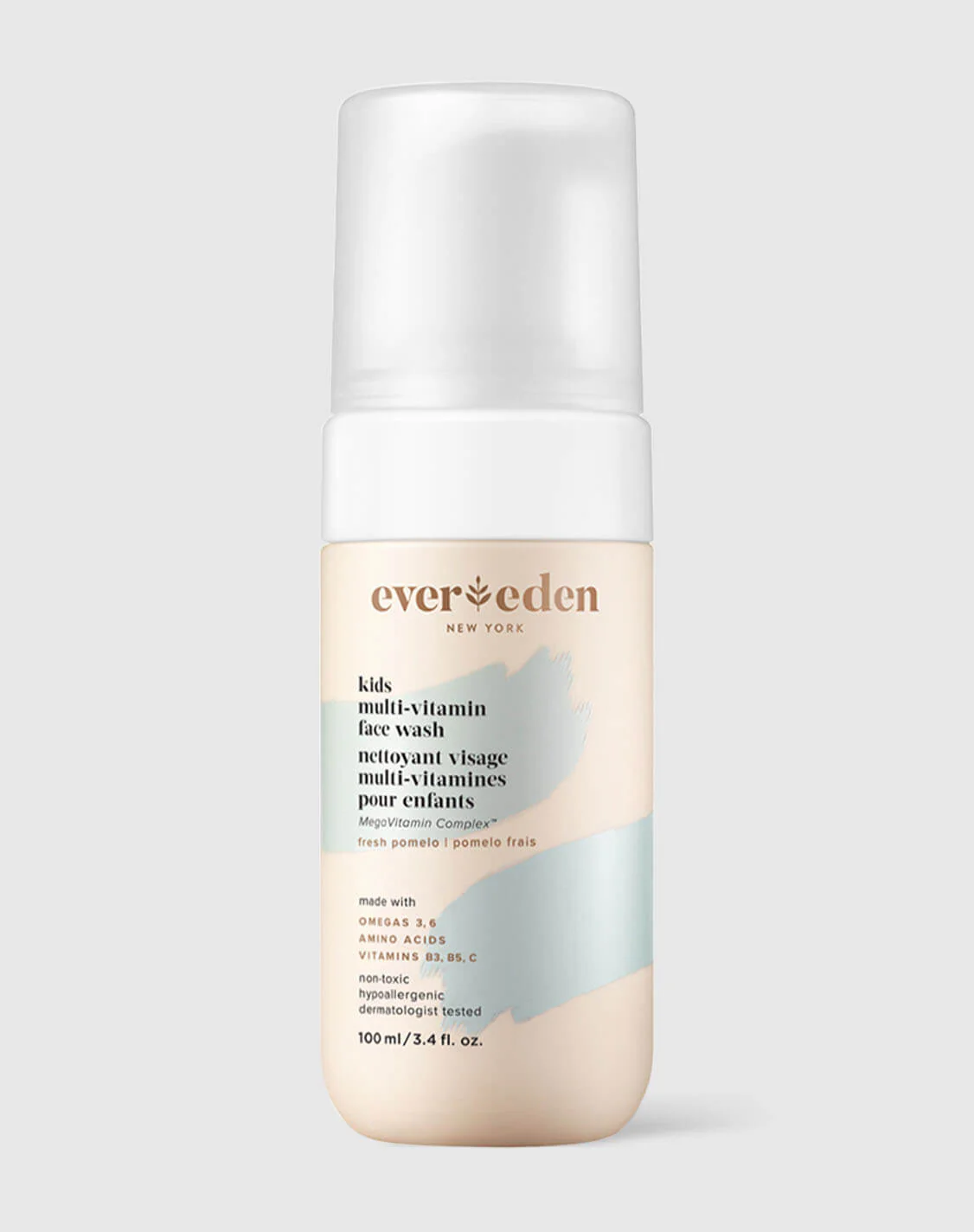
Evereden Kids Multi-Vitamin Face Wash
Best fit: tweens starting to wash their face morning and night.
Why compare: a gentle foaming wash for ages 3+ with niacinamide, panthenol, hyaluronic acid and ceramide, made for kids.
Watch: it comes in scented versions too; pick Fragrance Free for sensitive skin.
Check at Evereden
Worth comparing
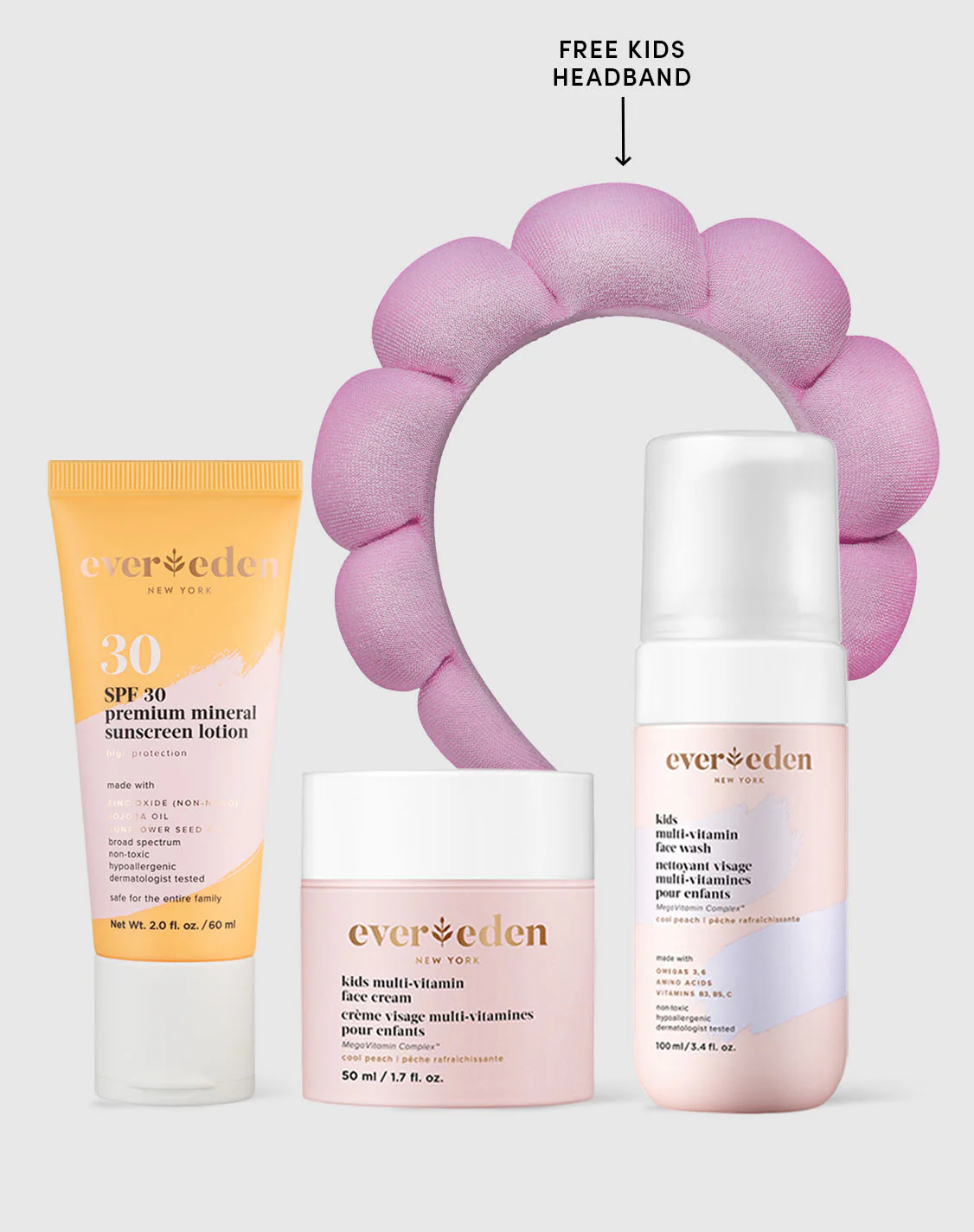
Evereden Kids Daily 1-2-3 Routine
Best fit: a first face routine for a tween who wants “skincare”.
Why compare: the whole 3-step routine in one set: face wash, face cream and a mineral SPF 30 sunscreen, made for ages 3+.
Watch: choose the Fragrance Free option; the other two are scented.
Check at Evereden
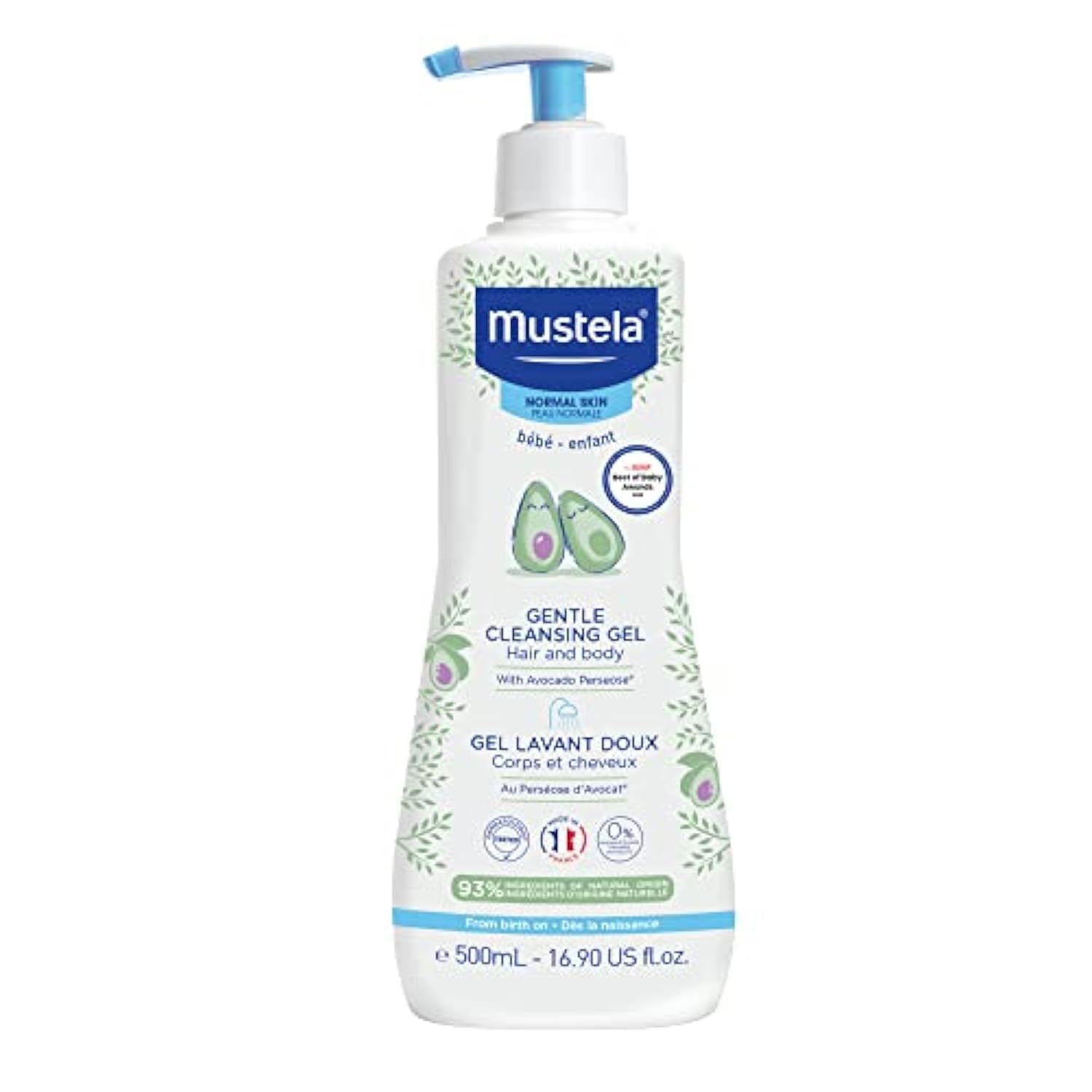
Worth comparing
Mustela Gentle Cleansing Gel
Best fit: babies and toddlers at bath time.
Why compare: one mild wash for hair and body, made for babies.
Watch: the classic version has a light fragrance; for eczema, pick a fragrance-free wash.
Check on AmazonMoisturizers
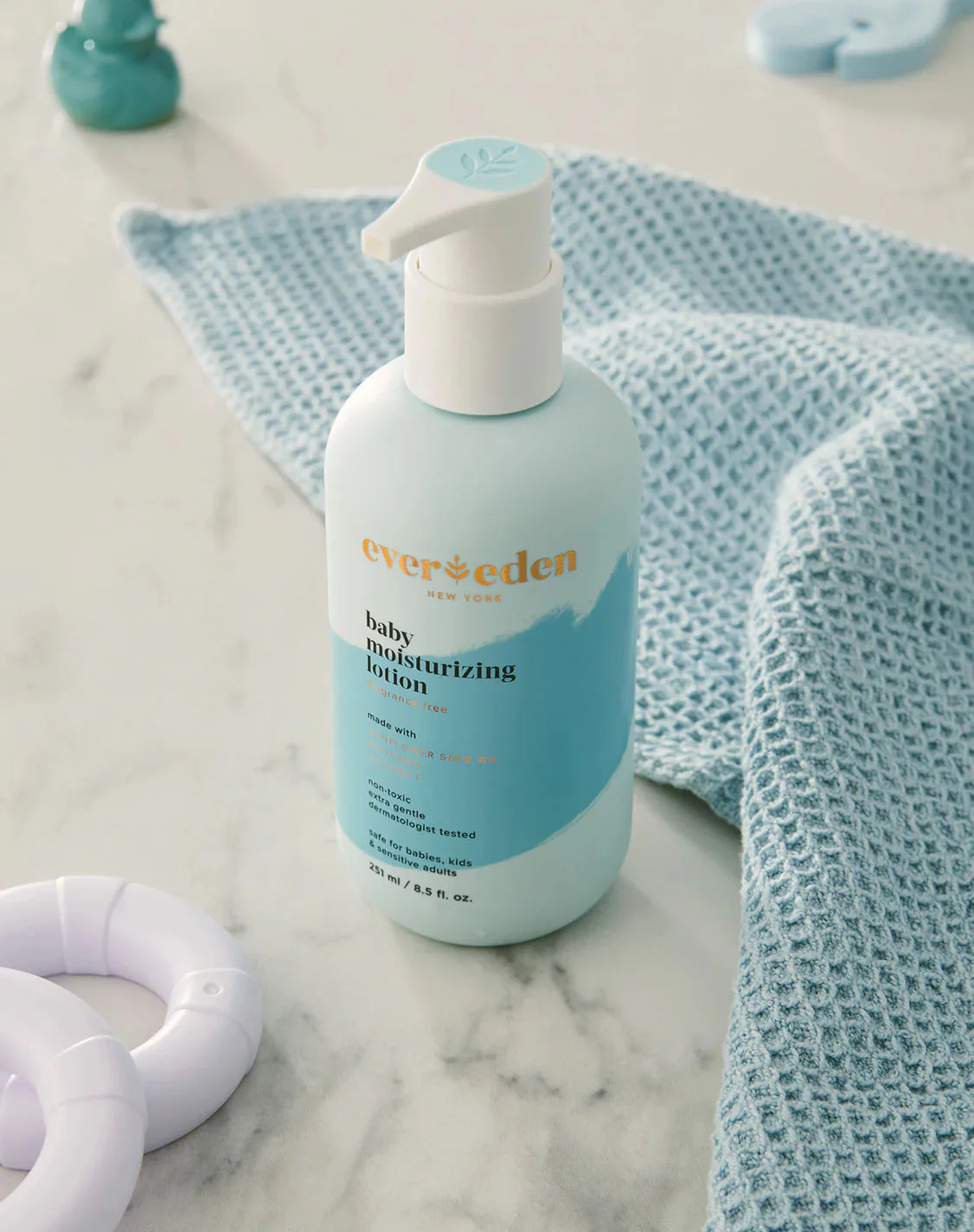
Worth comparing
Evereden Baby Moisturizing Lotion, Fragrance Free
Best fit: little kids and everyday dry patches.
Why compare: a fragrance-free lotion gentle enough for face and body.
Watch: a lotion is light; very dry winter skin may need a thicker cream.
Check at Evereden
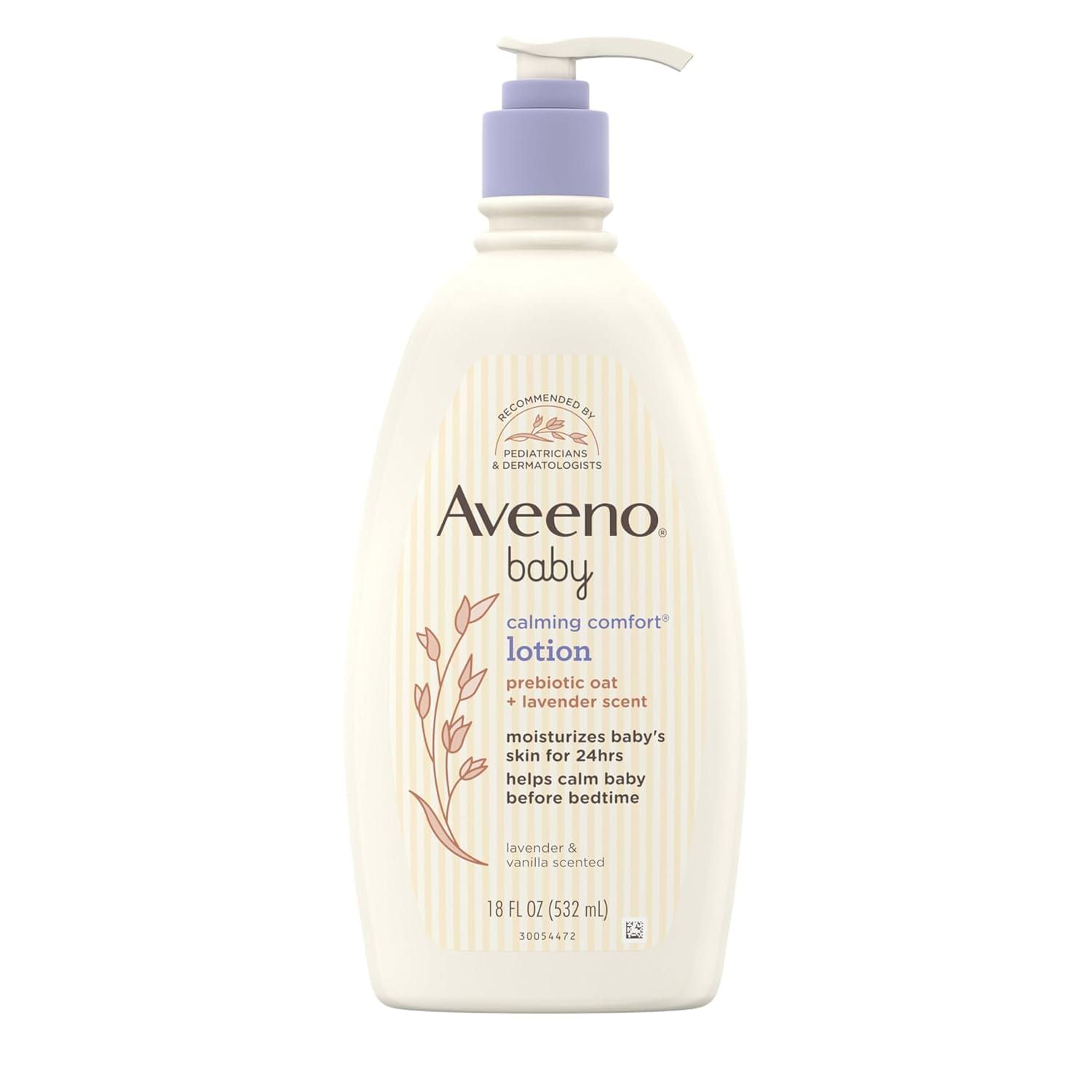
Worth comparing
Aveeno Baby Daily Moisture Lotion
Best fit: an everyday body lotion for the whole family.
Why compare: fragrance-free, with colloidal oatmeal for dry skin.
Watch: skip it if your child reacts to oats.
Check on AmazonSunscreen
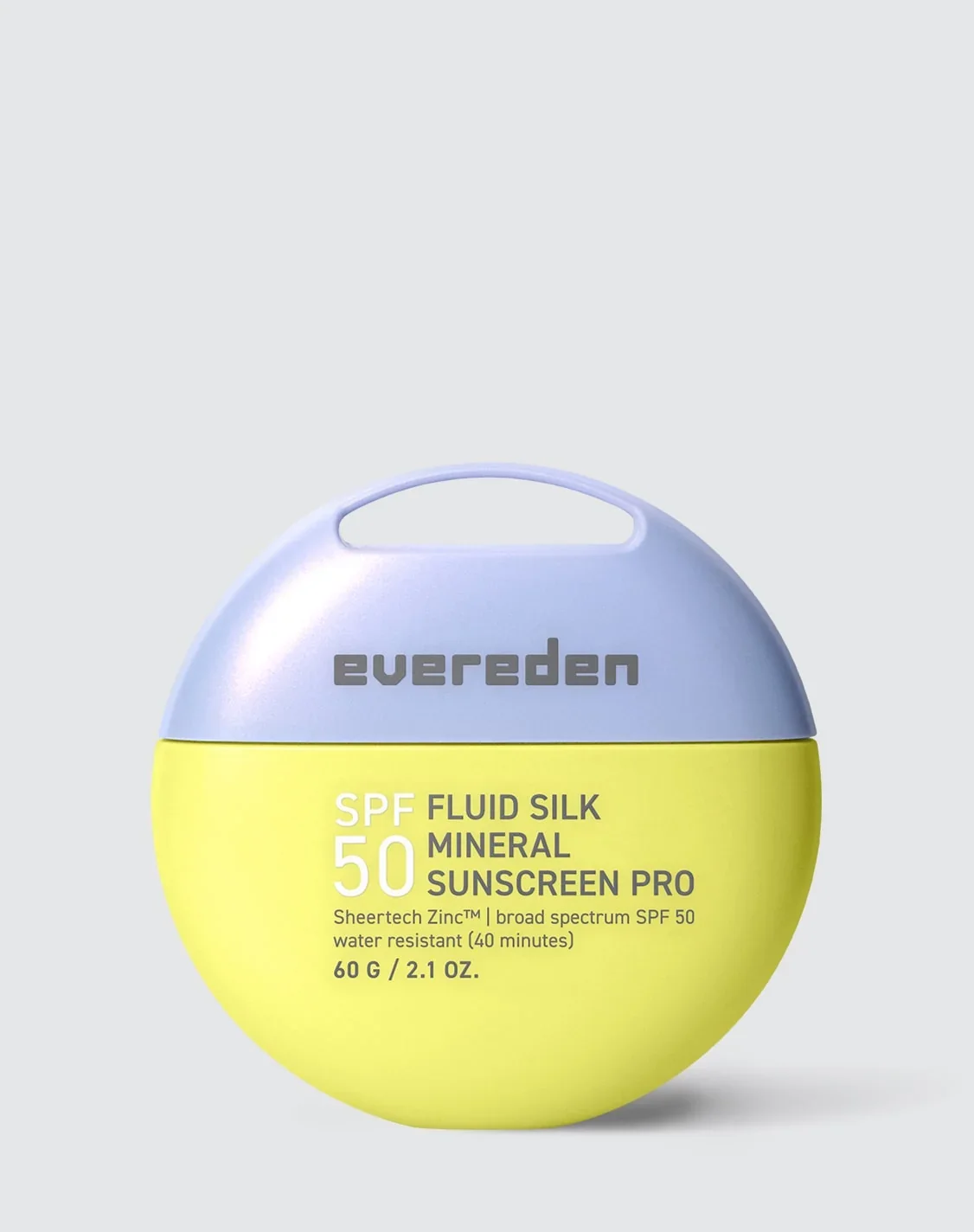
Worth comparing
Evereden Kids SPF50 Fluid Silk Mineral Sunscreen PRO
Best fit: daily face sunscreen for kids 6 months and up.
Why compare: broad-spectrum SPF 50 with zinc oxide and titanium dioxide, water and sweat resistant for 40 minutes.
Watch: reapply every two hours outside and after swimming.
Check at Evereden
Worth comparing
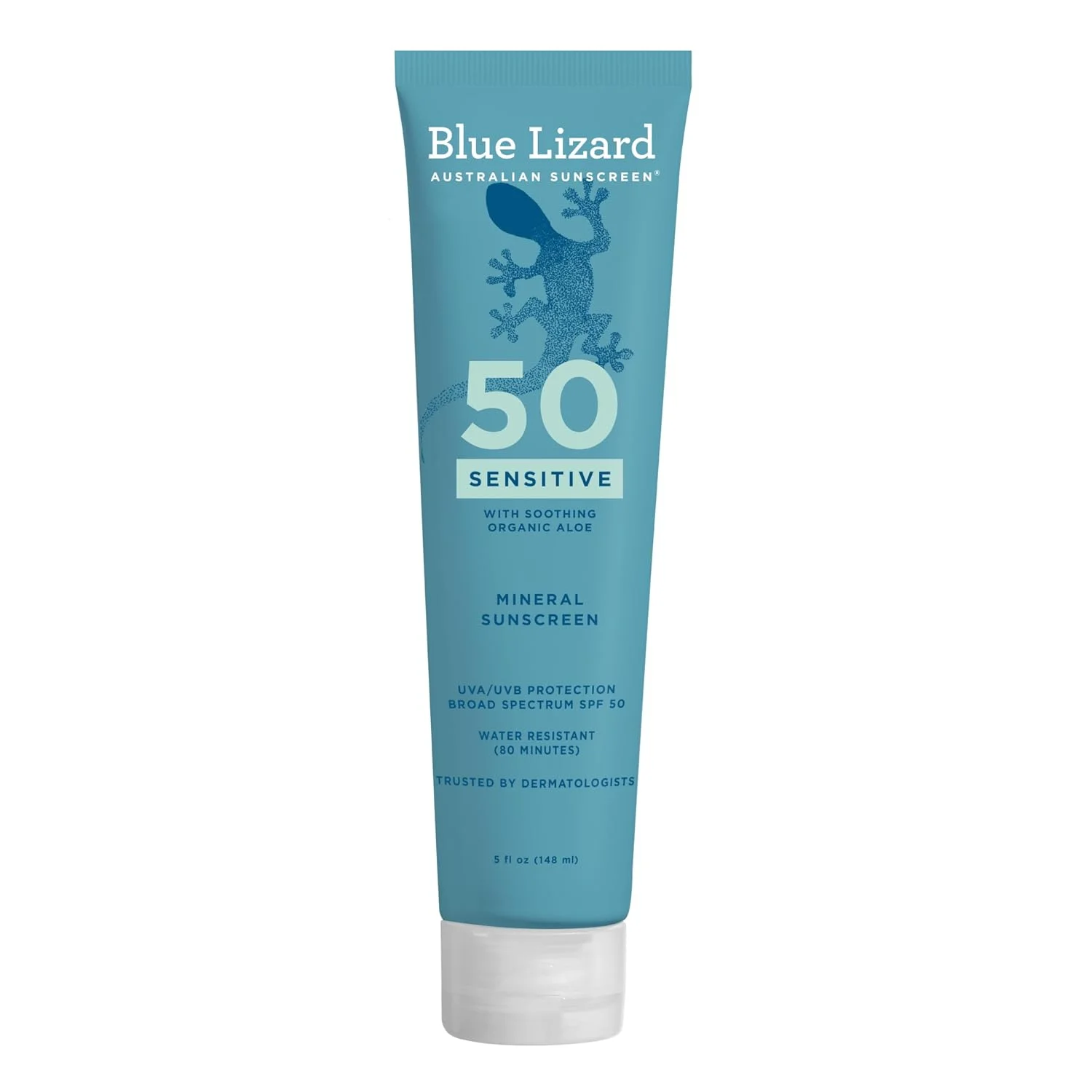
Blue Lizard Sensitive Mineral Sunscreen SPF 50
Best fit: sensitive skin, beach days and the whole family.
Why compare: a zinc oxide and titanium dioxide sunscreen without fragrance, a common pick for sensitive skin.
Watch: mineral formulas can leave a light white cast; rub in well.
Check on AmazonBody and Bath
Worth comparing
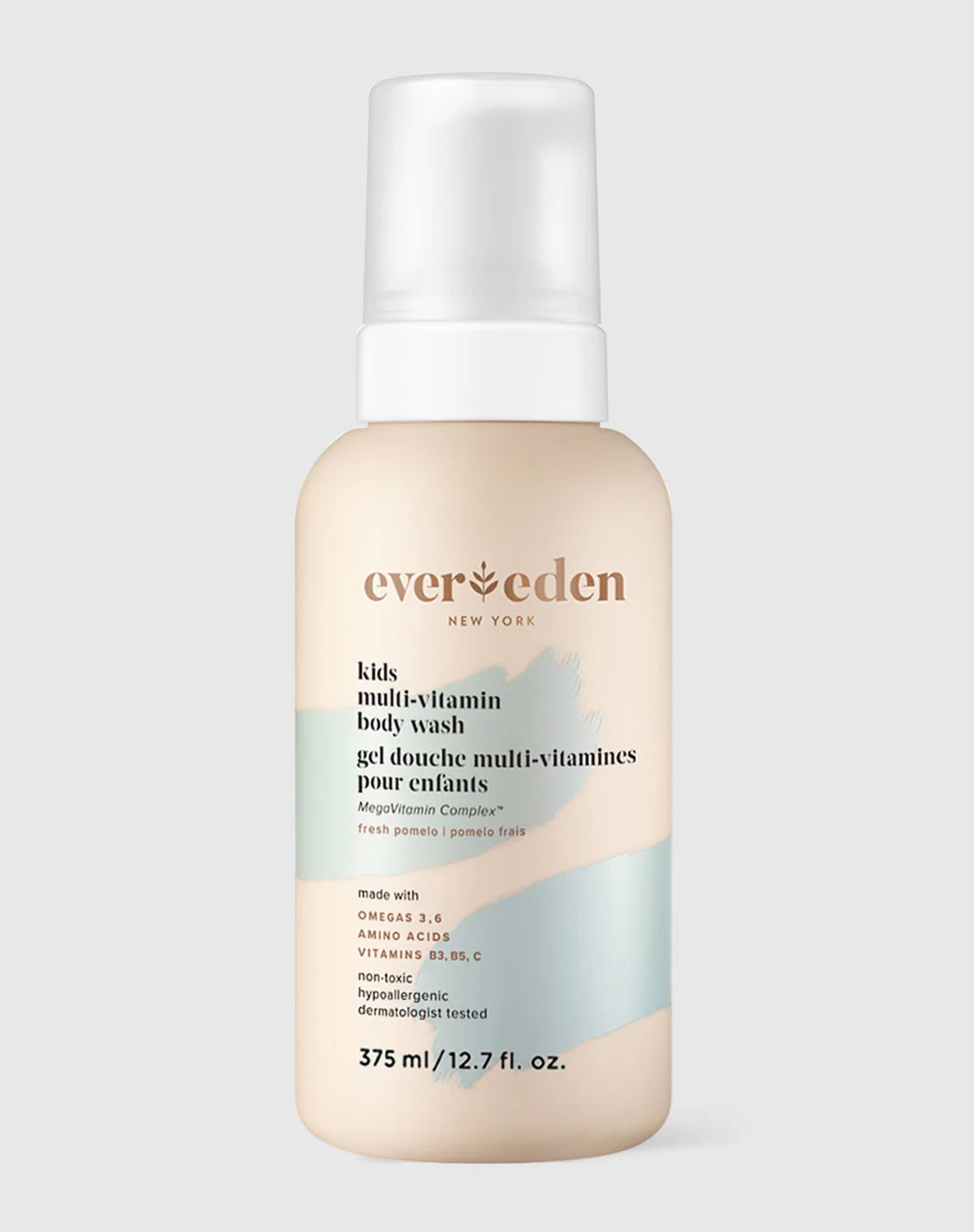
Evereden Kids Multi-Vitamin Body Wash
Best fit: bath time for kids 3 and up.
Why compare: a gentle kids’ body wash that pairs with the face wash.
Watch: it’s scented (Cool Peach); for eczema, use a fragrance-free wash instead.
Check at EveredenDry Skin and Eczema in Kids
Eczema (atopic dermatitis) is common in children and shows up as red, dry, itchy patches, often on the cheeks in babies and inside the elbows and behind the knees in older kids. Good daily care helps most children:
- Short, lukewarm baths with a fragrance-free cleanser.
- Pat skin partly dry, then put on a thick cream or ointment within 3 minutes.
- Moisturize at least twice a day, and more in winter when indoor heat dries the air.
- Choose soft cotton clothes and fragrance-free laundry detergent.
If patches crack, ooze, look infected or keep your child up at night, see your pediatrician or a dermatologist. For more winter tips, see my guide to dry skin in winter.
Worth comparing
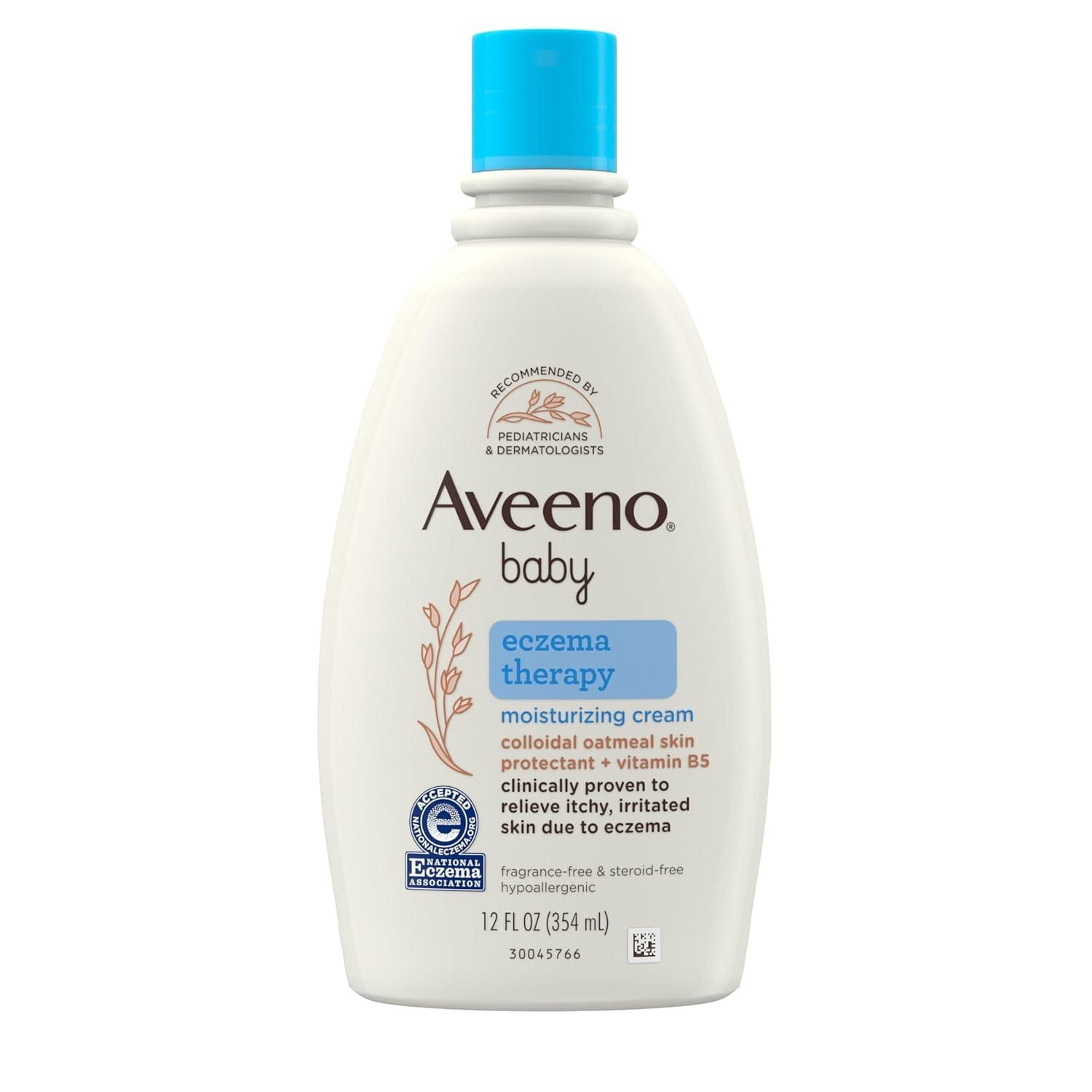
Aveeno Baby Eczema Therapy Moisturizing Cream
Best fit: kids with eczema-prone, very dry skin.
Why compare: a thick, fragrance-free cream with colloidal oatmeal, made for eczema-prone skin.
Watch: skip it if your child reacts to oats; ask your pediatrician about flares that don’t settle.
Check on Amazon
Worth comparing
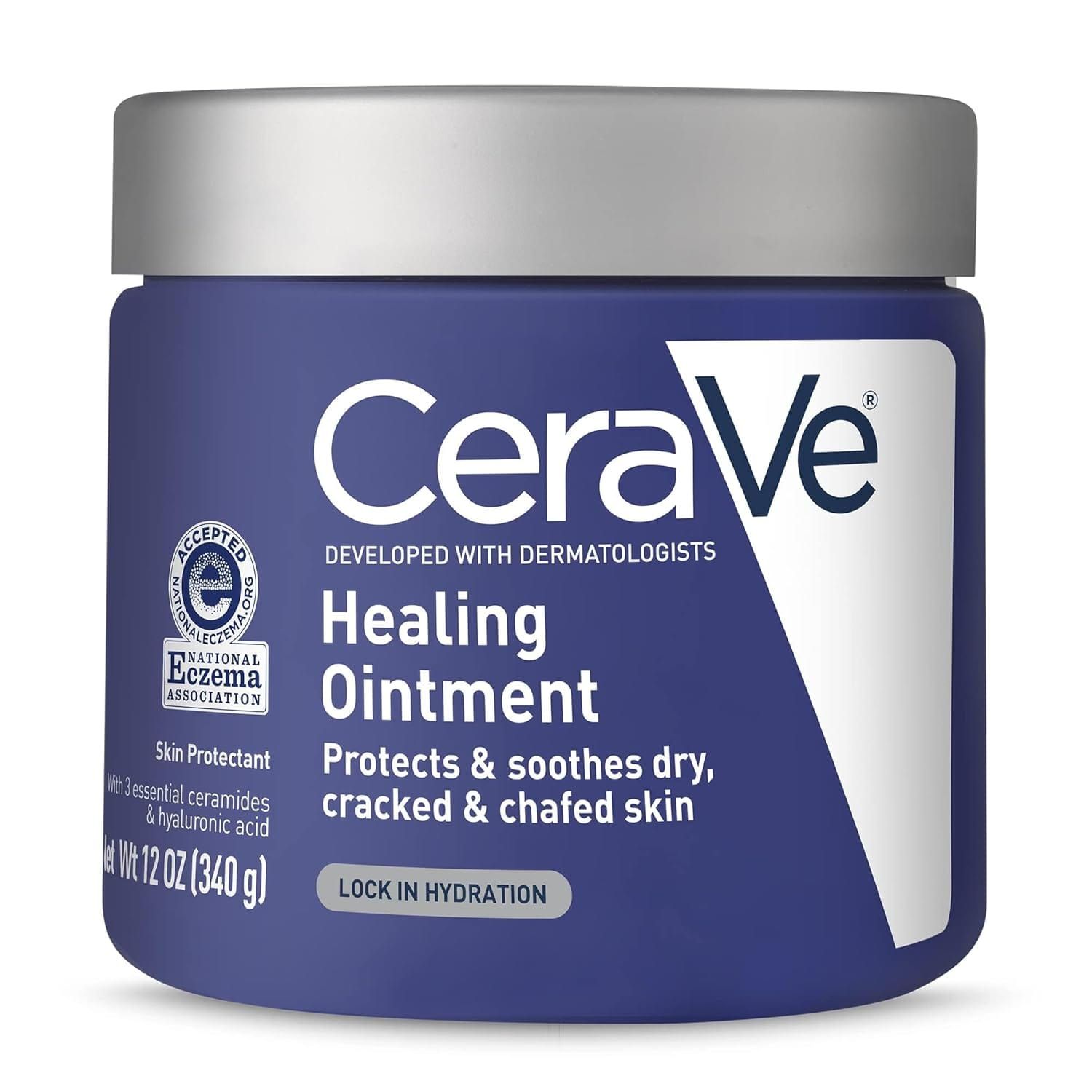
CeraVe Healing Ointment
Best fit: cracked, chapped patches, cheeks and lips in winter.
Why compare: a fragrance-free petrolatum ointment with ceramides that seals in moisture after the bath.
Watch: it’s greasy; use a thin layer, mostly at night.
Check on AmazonFirst Breakouts: Acne in Tweens
First pimples often show up around the nose and forehead between 9 and 12. Start with the basics: wash twice a day with a gentle cleanser, use an oil-free or non-comedogenic moisturizer and sunscreen, and don’t pick. If that isn’t enough, ask a doctor about a benzoyl peroxide wash or gel, introduced slowly. For older kids, see my skincare for teens guide. Get help sooner if acne leaves marks or scars, or starts to affect your child’s confidence.
How to Talk to Your Kid About Skincare
Skincare can be a fun, healthy habit, or the start of worrying about “flaws” that aren’t there. A few ideas from pediatric dermatology teams:
- Ask why they want a product, and what they think it does.
- Read the label together and look for the “skip” ingredients.
- Frame skincare as keeping skin clean, comfortable and protected, not fixing it.
- Let them pick one fun basic, like a lip balm or a kids’ cleanser, instead of a serum.
- Step in if the routine becomes long, expensive or tied to how they feel about their looks.
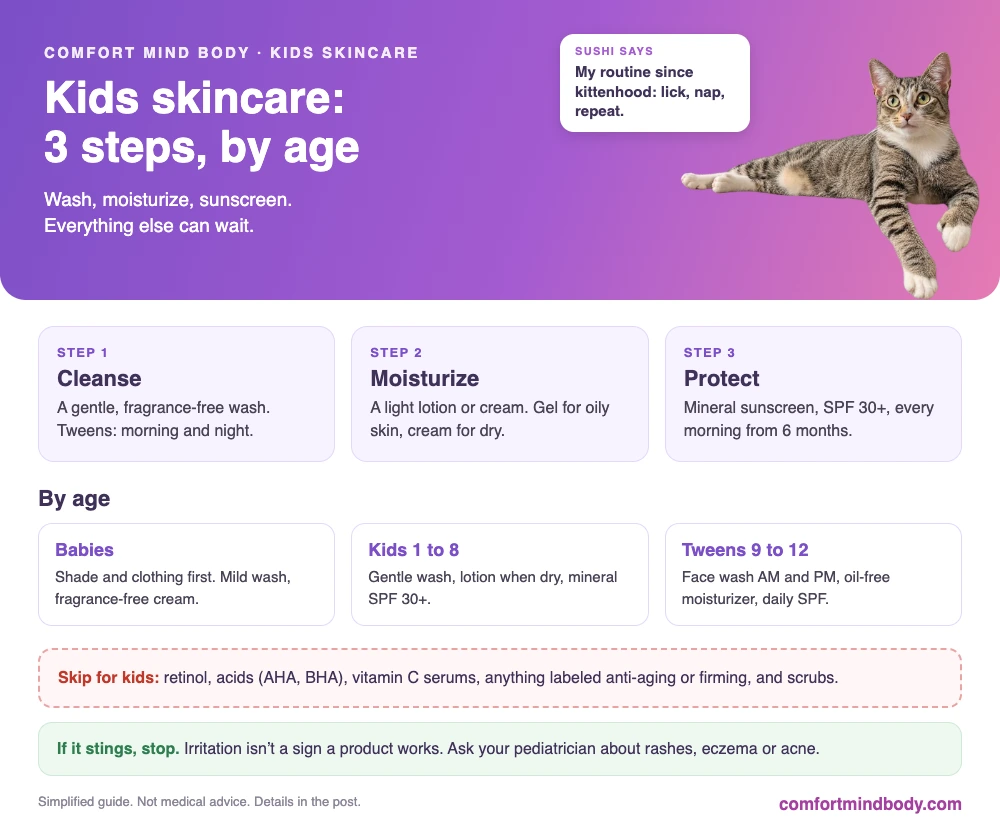
Read the infographic text
Sushi says: My routine since kittenhood: lick, nap, repeat.
Step 1, cleanse: a gentle, fragrance-free wash. Tweens: morning and night.
Step 2, moisturize: a light lotion or cream. Gel for oily skin, cream for dry.
Step 3, protect: mineral sunscreen, SPF 30+, every morning from 6 months.
Babies: shade and clothing first; a mild wash and fragrance-free cream.
Kids 1 to 8: gentle wash, lotion when dry, mineral SPF 30+.
Tweens 9 to 12: face wash morning and night, oil-free moisturizer, daily SPF.
Skip for kids: retinol, acids (AHA, BHA), vitamin C serums, anything labeled anti-aging or firming, and scrubs.
If it stings, stop. Irritation isn’t a sign a product works. Ask your pediatrician about rashes, eczema or acne.

When to See a Pediatrician or Dermatologist
See your child’s pediatrician or a board-certified dermatologist for a rash that spreads, blisters or won’t settle, eczema that keeps flaring, acne that leaves marks, a bad sunburn (in a baby, it’s an emergency), or a mole that changes. Bring the products your child uses, so the doctor can check the ingredients.
Frequently Asked Questions
At what age should a child start a skincare routine?
What is a good skincare routine for a 10 year old?
Is retinol safe for kids?
Can kids use vitamin C serum?
What sunscreen is best for kids?
Can kids use adult moisturizer?
Are kids’ skincare brands worth it?
How do I say no to an expensive serum?
Final Thoughts
A skincare routine for kids should be short: wash, moisturize, sunscreen. Skip the serums, read labels together, and call the doctor when skin needs more than the basics.
Keep it simple, keep it gentle, and save the serums for when they’re old enough to complain about taxes.
Safety Notes
Safety Notes
- This guide is general information and doesn’t replace advice from your child’s pediatrician or dermatologist.
- Patch-test new products on a small area for a few days. Stop anything that stings, burns or causes a rash.
- Babies under 6 months: shade and clothing first; ask your pediatrician before using sunscreen.
- Don’t use retinoids, acids or vitamin C on children unless a doctor prescribes them.
- A severe sunburn in a baby needs medical care right away.
- Keep skincare products out of reach of small children.
Helpful Resources
- HealthyChildren.org (AAP): Trendy skin care for tweens and teens: is it safe?
- Children’s Mercy Kansas City: Kids’ skincare myths
- HealthyChildren.org (AAP): Sun safety for families
- HealthyChildren.org (AAP): Baby sunburn prevention
- American Academy of Dermatology: Eczema tips to help your child feel better
- HealthyChildren.org (AAP): How to treat and control eczema rashes in children