
Hi, and welcome! We’re so glad you’re here. Maybe there’s a cleanser, a toner, an essence, and a serum lined up on your shelf, and you’re still not sure what goes first. Or you’ve seen the famous 10 steps and wondered whether you really need all of them.
Anna's Note: I have problematic skin, and I've tried many options over the years. Some worked and some didn't. Ten steps was always too much for me. What I wanted, in short, was a routine that actually works and that I can keep doing.
This guide turns the 10 steps into a short routine that fits your skin. We’ll go through the right order for morning and night, which steps to keep and which to skip, where a treatment like tretinoin goes, and what to do when skin starts to feel unhappy.
Quick Navigation
ToggleQuick Answer: What Is the Right Order for a Korean Skincare Routine?
Cleanse gently, use any treatment as directed, then moisturize, and finish the morning with sunscreen. That short core is the routine. The AAD’s general order follows the same pattern: cleanser first, then any medication or treatment, then moisturizer and sunscreen (AAD). If a product label or your prescriber gives a different order, follow that.
Everything else in the Korean routine is optional: a second cleanser, toner, essence, serum, ampoule, eye cream, masks. Thin, watery layers go before thicker ones. Each extra step stays only if it does a real job and the skin is happy with it.
What Are the 10 Steps, and Which Do You Actually Need?
The famous 10-step routine is a list of product types, not a rule. Seeing all ten at once makes it easier to choose.
The 10 Korean Skincare Steps: Keep, Optional or Skip
Swipe left or right to view the full table on mobile.
| Step | What it does | Do you need it? | Good to have when |
|---|---|---|---|
| 1. Oil cleanser or balm | Melts sunscreen and makeup | Optional | You wear waterproof sunscreen or makeup |
| 2. Water-based cleanser | Washes away sweat, oil and residue | Keep | Every evening; mornings as needed |
| 3. Exfoliator | Clears dead skin cells | Optional; how often depends on the product, your skin and any retinoid you use | Skin looks dull or rough, and you aren't already using tretinoin or acids |
| 4. Toner | A first light layer of hydration | Optional | Skin feels tight after cleansing |
| 5. Essence | Watery hydration, sometimes with ferments | Optional | You want one more light layer; one toner or essence is often enough |
| 6. Serum or ampoule | Targets one concern | Optional | You can name the concern it treats |
| 7. Sheet mask | A short boost of hydration | Optional, occasional | Skin feels dry or stressed |
| 8. Eye cream | Moisture for the eye area | Optional | You like the texture. If a product stings near your eyes, keep it off that area first |
| 9. Moisturizer | Holds hydration in and supports the barrier | Keep | Every routine |
| 10. Sunscreen | Protects from UV | Keep, every morning | Always, as the last skincare step of the morning |
Three steps are the core: cleanse, moisturize, and apply sunscreen in the morning. Most people who enjoy Korean skincare add one or two hydrating layers on top. Very few need all ten every day.
How Do Korean Dermatologists and Stars Actually Do It?
The famous 10 steps peaked about a decade ago. Today, even people who grew up with Korean skincare talk about fewer steps done well.
- Korean-American dermatologist Jane Yoo, MD, calls sunscreen the single most evidence-backed step in any routine. She says the number of steps matters far less than choosing the right products and using them consistently (Dr. Jane Yoo).
- Actress Song Hye-kyo has said that cleansing her face thoroughly is the most important thing, followed by enough night cream before bed (The Korea Times).
- In Korea itself, a ‘skip care’ trend had shoppers cutting steps on purpose. Mintel beauty analyst Hwa Jun Lee links it to a backlash against complicated routines (CosmeticsDesign-Asia).
None of them start with ten bottles. They start with cleansing, moisture, and sunscreen, the same core this guide builds on.
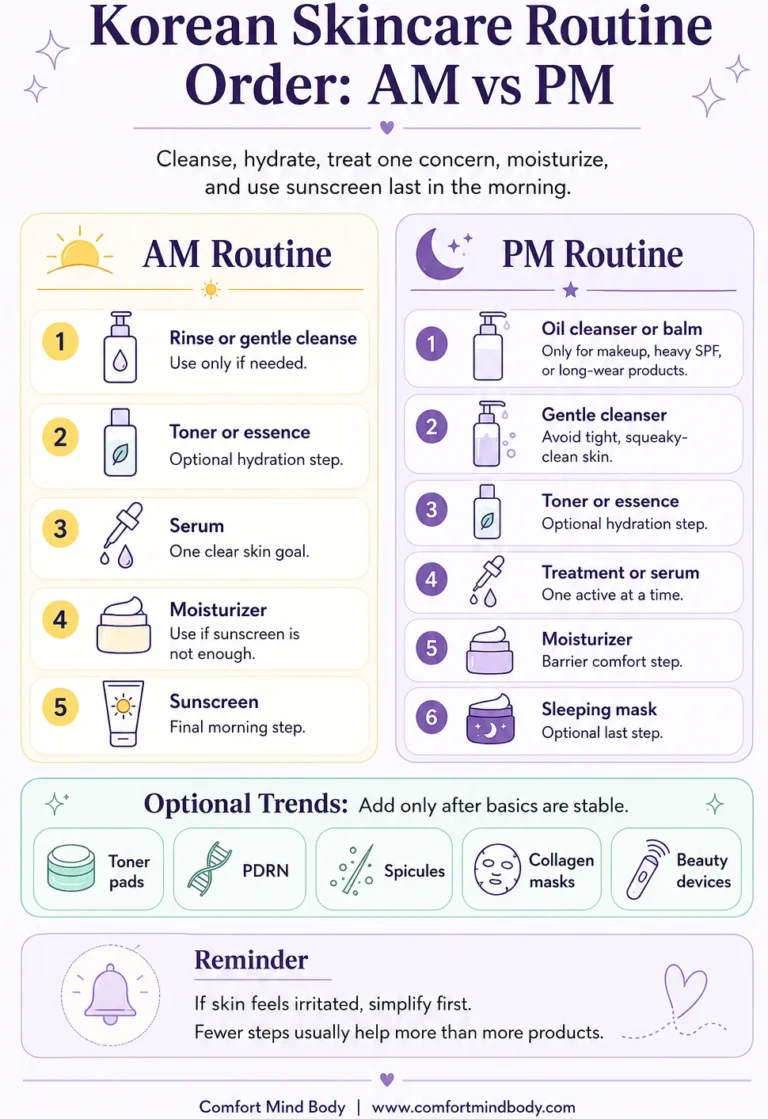
What Does a Simple Korean Routine Look Like, Morning and Night?
A short routine is easier to repeat. When something irritates the skin, it’s much easier to find the cause in four products than in ten.
Morning
- Cleanse gently, or rinse with water if skin isn’t oily.
- Optional: a hydrating toner or essence if skin feels tight.
- Moisturizer.
- Sunscreen, broad-spectrum SPF 30 or higher, as the last skincare step (AAD).
Night
- Remove sunscreen and makeup. Start with an oil cleanser if your makeup is waterproof.
- A gentle water-based cleanser.
- Your treatment, if you use one, right after cleansing unless its label or your prescriber says otherwise.
- Optional: one hydrating layer.
- Moisturizer.
Anna's Note: Most of my shelf is Medicube, because it's the brand that fits my skin best. My own mornings are cleanse, toner, moisturizer, my Numbuzin eye cream and SPF, and my sunscreen is the Abib Airy Sunstick. At night I do more: a double cleanse, toner, essence, tretinoin or another active, a cream, and my Medicube AGE-R Booster Pro, which I also use during the day. I alternate toners: an azelaic acid and niacinamide toner in the morning, and the AGE-R glutathione toner at night. My actives are tretinoin, a spicule serum, vitamin C and niacinamide. That's my routine because my skin is used to it, not a list to copy.
On my shelf right now
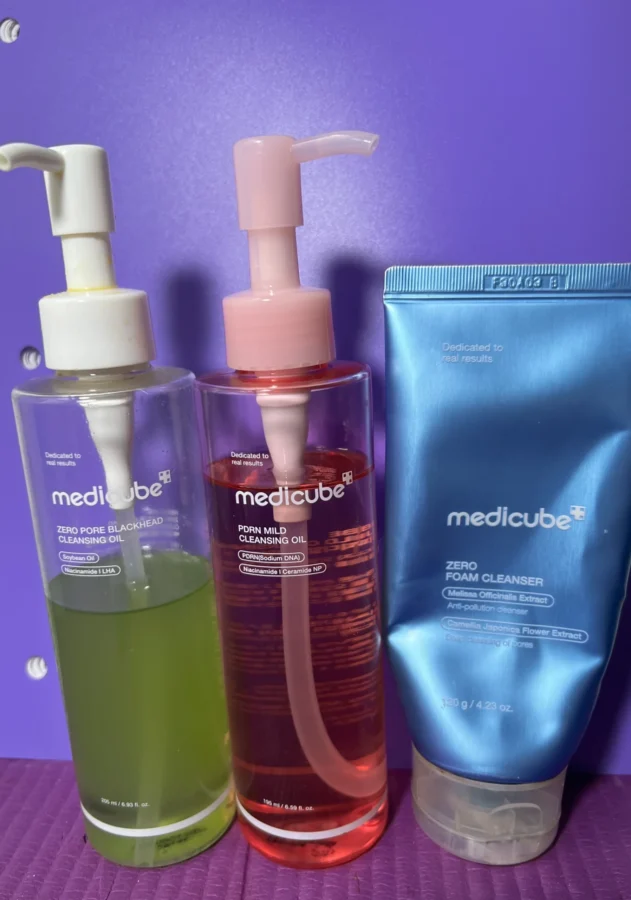 Oils + foamNight double cleanse
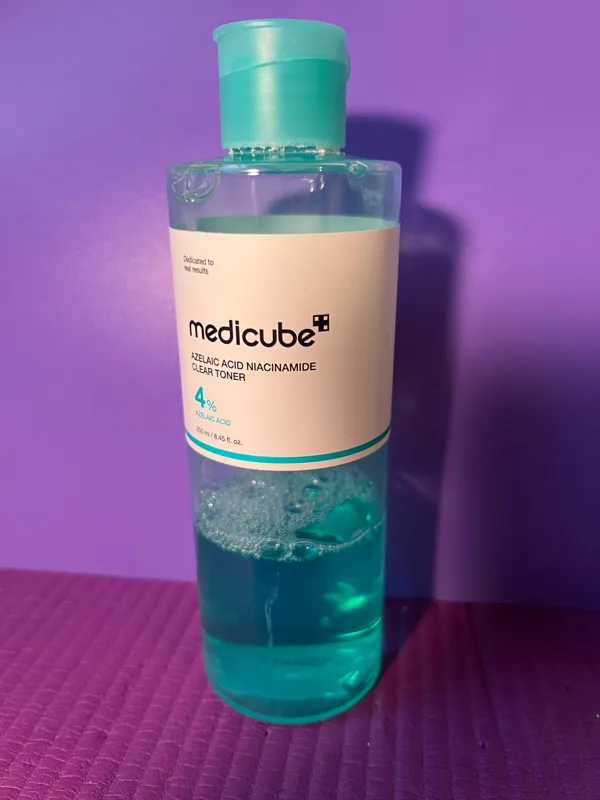 Azelaic acid tonerMorning toner
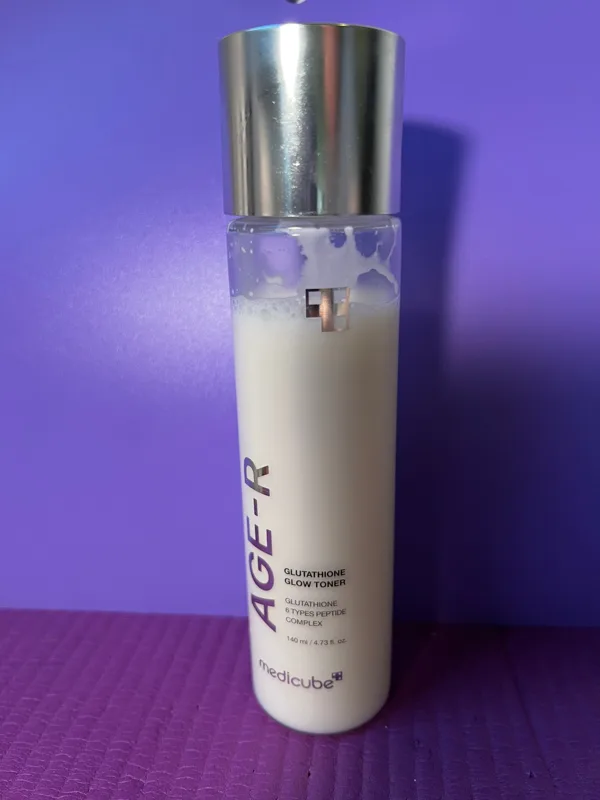 Glutathione tonerNight toner
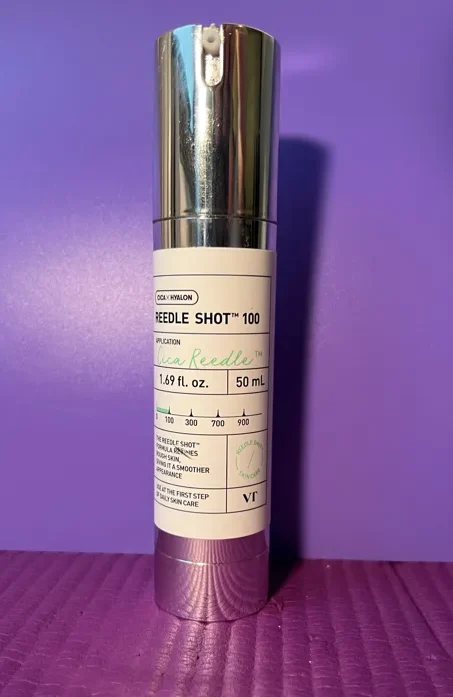 VT Reedle Shot 100Spicule, alternated
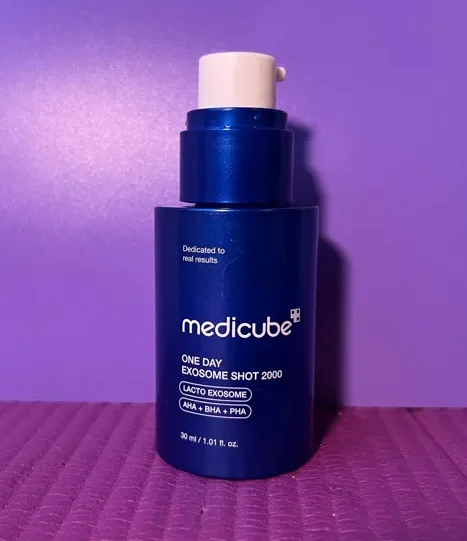 Exosome Shot 2000Spicule, alternated
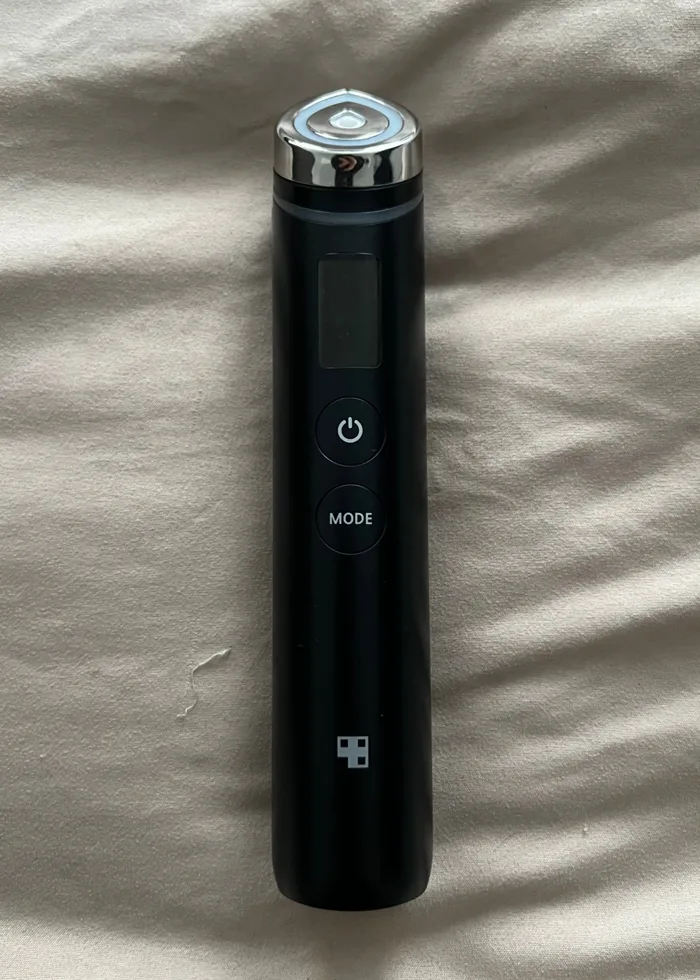 AGE-R Booster ProDaily, by mode
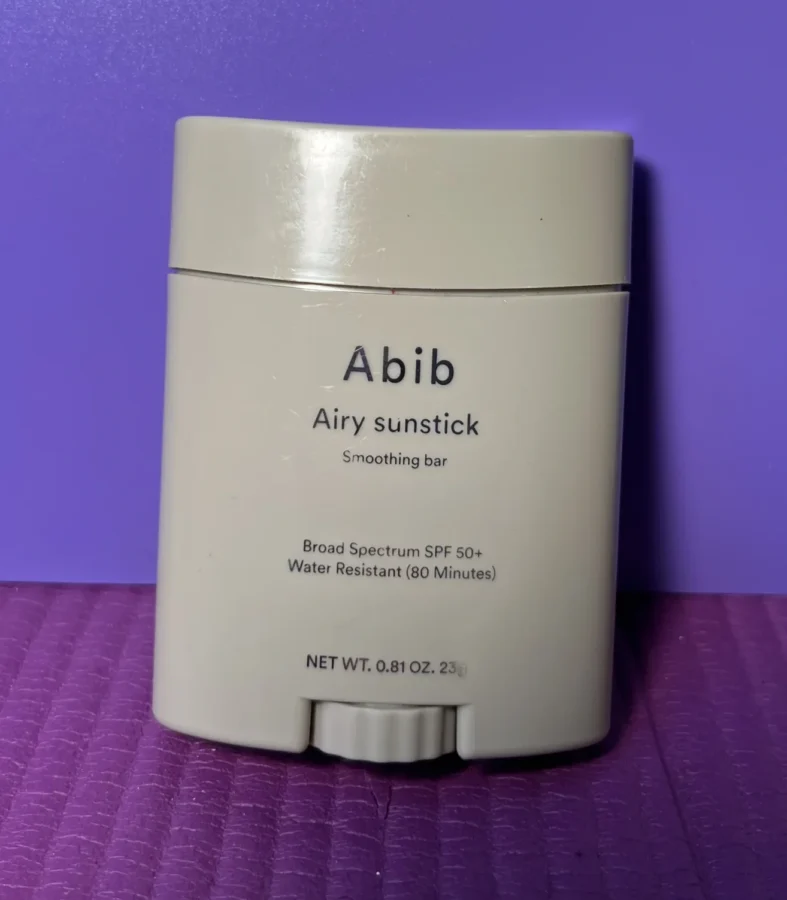 Abib Airy SunstickMorning SPF
Tap a product to see it in my Korean skincare picks.
Devices and spicule serums come with their own directions, and those come first. Medicube’s Booster Pro page puts Air Shot mode on dry skin before any products, while the Booster and microcurrent modes go over your skincare. It also says to start at level 1 and keep it at level 1 around the eyes, nose, and mouth.
For sunscreen textures and finishes, see the sunscreen match guide.
Where Do Toner, Essence, Serum, and Ampoule Go?
These are the steps that confuse most people because the names overlap. The general rule is thinnest to thickest: toner, then essence, then serum or ampoule, then moisturizer. A full explanation of layering is in How to Layer Skincare Products.
Read the label before deciding that every bottle needs its own step:
- A hydrating toner and an essence often do the same job. One is usually enough.
- An exfoliating toner is a treatment, not a hydrating layer. It doesn’t belong on tretinoin nights without a plan.
- A serum and an ampoule are similar. An ampoule is usually a more concentrated serum.
Tap to flip
Keep or Skip? The Optional Korean Steps
Not sure about a step? Tap a card to see whether it earns a spot on your shelf.
Tap a card again to flip it back.
Where Does a Retinoid or Acne Treatment Go?
The AAD puts any medication or treatment right after cleansing and before moisturizer (AAD). With a prescription, the prescriber’s directions come first. Some people put a hydrating toner on first and wait until it dries; others apply the retinoid to clean, dry skin. Ask your dermatologist which order suits your skin.
Retinoids need a slow start. The AAD suggests the least intense formula first, every other night, with moisturizer and daily sunscreen, and says retinoids should not be used during pregnancy (AAD).
Anna's Note: Tretinoin is part of my evening, and with my oily skin it has been a gem. I use tretinoin every other night, and a spicule serum on the nights in between, without tretinoin. My AGE-R I use every day, a few times a day so far. About three days a week I combine all three, and I skip the spicule and the combo on days when my skin and body feel way too sensitive. VT says not to use Reedle Shot 100 with a beauty device, and on my combo days I use a spicule serum and the AGE-R together anyway. That goes against the label, so it's my skin's routine, not one to copy. I alternate two spicule serums: the VT Reedle Shot 100 and the Medicube One Day Exosome Shot 2000.
That pairing works for one person’s skin, and it goes beyond the label. VT’s own page says not to use Reedle Shot 100 with a beauty device, such as an LED mask or another skincare device, because the heat, light, and stimulation can cause severe irritation.
It also says not to use it right after a dermatology procedure or on broken skin (VT Cosmetics). Stacking a retinoid with spicules, acids, or an exfoliating toner is too much for many people. If you use a prescription retinoid, ask your prescriber before adding spicules, and check the product labels to avoid mixing incompatible actives.
Do You Need to Double Cleanse?
Usually not. Dermatologist Jane Wu, MD, told Cleveland Clinic that double cleansing is usually not necessary (Cleveland Clinic). It helps with waterproof makeup or waterproof sunscreen, and some oily skin types like it. Washing too much can dry and irritate skin, and acne-prone skin should be careful with oil cleansers.
How Do You Decide Whether to Add a Step?
A new product is easier to judge when you can name the gap it fills. Four questions to ask before buying anything:
- What is it for?
- Does something already on the shelf do that?
- How will you notice whether it suits you?
- Can you follow its directions alongside the rest of the routine?
Comfort Mind Body Take: A step earns its place when you can name its job, nothing else on the shelf does it, and your skin tolerates it.
Choose, Wait or Skip a New Step
Swipe left or right to view the full table on mobile.
| Your situation | Next move | Why wait or skip |
|---|---|---|
| Basics feel comfortable and one goal is clear | Try one product for that goal | Several products for the same job add cost and hide reactions |
| A toner and an essence both promise light hydration | Keep the one you like | You don't need both |
| You just started a prescription | Follow it and add nothing new for a while | It's hard to tell what caused a reaction |
| A new product stings, itches or swells | Stop it and wash it off | Adding another active won't tell you what caused it |
Test each new product on a small spot twice a day for 7 to 10 days before it goes on the whole face (AAD). Once a step has a clear job, compare options among the best Korean skincare products.
Anna's Note: Way too many layers is bad. If a friend asked me where to start, I'd tell her to try a Korean toner or essence first, and a sheet mask now and then. Those are the easiest Korean steps to love.
Free Skincare Checklist
Your Korean Skincare Routine, In Order
Your morning and night order in a short printable checklist, with space to note which optional steps you keep.
Educational only. Not medical advice.
Korean Skincare Routine by Skin Type
The core stays the same for every skin type. What changes is the texture of each step and which optional layer earns a place.
Korean Routine Tweaks by Skin Type
Swipe left or right to view the full table on mobile.
| Skin type | Cleanser | Optional layer worth trying | Moisturizer | Watch for |
|---|---|---|---|---|
| Oily | Gentle gel or foam | A light watery essence | Gel or light lotion | Heavy layers that sit on top |
| Combination | Gentle gel | Toner on dry areas only | Light lotion, a little more on cheeks | Treating the whole face as oily |
| Dry | Cream or milk cleanser | Hydrating toner or essence | Richer cream | Foaming cleansers that leave skin tight |
| Sensitive | One mild cleanser | Usually none at first | Simple barrier cream | Fragrance, acids, spicules, many new products |
| Acne-prone | Gentle cleanser | A light hydrating layer | Non-comedogenic gel or lotion | Oil cleansers that clog, too many actives |
For full acne routines, see the skincare routine for acne.
Try it
Build Your Korean Routine
Pick your skin type and the time of day. You'll see the steps in order, and which ones you can skip for now.
1. Your skin type
2. Morning or night
Your morning routine
Educational only, not medical advice. Patch test anything new, and follow your dermatologist's directions for any prescription.
Can a Korean Routine Give You Glass Skin?
Glass skin describes well-hydrated, smooth skin that reflects light. A routine can help skin look more hydrated and even: gentle cleansing, a light hydrating layer, moisturizer, and daily sunscreen, kept up for weeks.
It can’t erase pores, and glass skin doesn’t mean skin with no acne or dark spots. Many glass-skin photos also involve clinic treatments, good lighting, and filters. More on that, from a dermatologist’s view, is in Korean vs. American skincare.
For what’s new in K-beauty once a routine feels steady, see new Korean skincare products and trends.
What Should You Pause When Skin Feels Irritated?
If a new product causes a reaction, stop using it. The AAD advises gently washing it off right away and seeing a dermatologist if a severe reaction doesn’t improve (AAD). Until your skin settles, go back to the core: a gentle cleanser, a plain moisturizer, and sunscreen. Leave every optional step out for now.
How to protect your skin barrier explains the recovery steps.
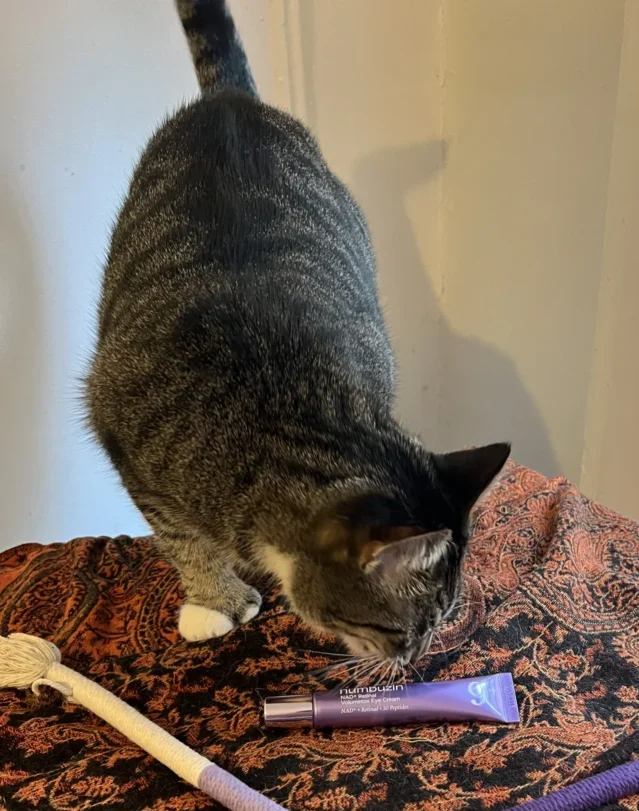
Sushi's Note: Every new tube that lands on the bed gets my inspection. This one passed: no tuna, no treats, a mild smell. Mommy says that's not how she picks skincare. She reads the label first.
See a dermatologist for:
- Burning, swelling, blistering, or a spreading rash after a new product
- Acne that’s painful, scarring, or not better after two to three months
- Skin that reacts to almost everything
- A prescription that seems to clash with the rest of the routine
- Pregnancy or breastfeeding before adding new actives
Frequently Asked Questions
How many steps does a Korean skincare routine need?
What is the 4-2-4 rule in skincare?
What is the most important step in Korean skincare?
Should my routine change with the seasons?
Can I use American products in a Korean routine?
Is there a Korean skincare routine for men?
Is there a cheap Korean skincare routine?
How long before I see a difference?
Is Korean skincare different from Japanese skincare?
Final Thoughts: A Routine You Can Keep
A Korean skincare routine doesn’t have to mean ten bottles. The core is short: cleanse, treat if needed, moisturize, and protect with sunscreen every morning. Everything else is optional, and each extra step has to earn its place.
The best routine is the one you’ll still be doing next month. Start with the core, add one Korean step you enjoy, and let your skin decide what stays. For the habits behind Korean skincare, see why Koreans have good skin.
With care,
Anna

One-step routine: Sushi
P.S. from Sushi: Korean skincare has ten steps. Mine has one: find the sunny spot and stay there. Mommy says I should be wearing SPF.
How this guide was made: researched from the dermatology sources below, drafted and deeply researched with AI help, then checked and written up by Anna.
Safety Notes
This article is for general skincare education and isn’t medical advice. Patch test new products and introduce one at a time. Retinoids, exfoliating acids, spicule products, and exfoliating toners can irritate skin when used too often or combined too quickly. Retinoids should not be used during pregnancy.
Use sunscreen daily, especially with retinoids or acids. Follow the directions for any prescription and ask the prescriber before adding new actives. Stop a product that causes a reaction, and see a doctor for severe or lasting irritation.
Helpful Resources
- American Academy of Dermatology: How to Apply Skin Care Products in the Right Order
- American Academy of Dermatology: How to Test Skin Care Products
- American Academy of Dermatology: How to Select a Sunscreen
- American Academy of Dermatology: Retinoid or Retinol?
- American Academy of Dermatology: Sunscreen FAQs
- Cleveland Clinic: Double Cleansing Explained (2022)
- Mayo Clinic: Nonprescription Acne Treatment (2024)